 Back
BIO110 Exam III Study Guide: Animal Behavior, Ecology, Plant Diversity, Photosynthesis, and Ecosystem Ecology
Study Guide - Smart Notes
 Tailored notes based on your materials, expanded with key definitions, examples, and context.
Chapter 51: Animal Behavior
Proximate vs. Ultimate Causation
Animal behavior can be explained at two levels: proximate causation (how a behavior occurs) and ultimate causation (why a behavior occurs in terms of evolutionary significance).
Proximate causation: Focuses on the immediate physiological or environmental triggers for a behavior (e.g., hormonal changes, neural mechanisms).
Ultimate causation: Explains the evolutionary advantage or adaptive value of the behavior (e.g., increased survival or reproductive success).
Example: Birds sing in spring because increased daylight triggers hormonal changes (proximate), which helps attract mates and defend territory (ultimate).
Fixed Action Pattern (FAP)
A fixed action pattern is a sequence of unlearned, innate behaviors that is unchangeable and usually carried to completion once initiated.
Triggered by a specific stimulus known as a sign stimulus.
Example: A stickleback fish attacks any red object that enters its territory, responding to the red color as a sign stimulus.
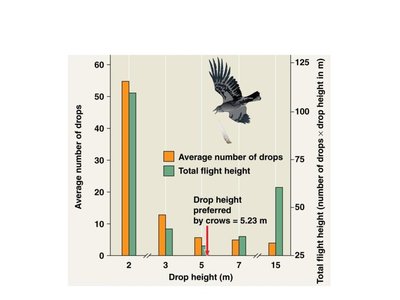
Optimal Foraging Model
The optimal foraging model predicts how an animal behaves when searching for food, balancing the benefits of nutrition with the costs of obtaining food (e.g., energy expenditure, risk of predation).
Animals are expected to maximize their net energy intake per unit time.
Considers trade-offs between food quality, search time, and handling time.
Example: Crows dropping whelks from different heights to minimize energy expenditure while maximizing food gain.
Mating Behavior, Mate Choice, and Parental Care Models
Mating systems and parental care strategies are shaped by natural selection to maximize reproductive success.
Mating behavior: Includes mate choice, courtship rituals, and competition for mates.
Parental care models: Predict how much care parents provide based on the costs and benefits to their fitness.
Example: In many bird species, both parents care for offspring, increasing survival rates.
Experimental Design in Animal Behavior
Understanding animal behavior often involves hypothesis-based science, including identifying research questions, hypotheses, variables, and drawing conclusions from data.
Research question: What is being investigated? (e.g., Do crows display optimal foraging behavior?)
Hypothesis: A testable prediction (e.g., Crows choose drop heights that minimize energy expenditure).
Independent variable: The manipulated factor (e.g., drop height).
Dependent variable: The measured outcome (e.g., number of drops, total flight height).
Conclusion: Data interpretation (e.g., Crows prefer a drop height that balances energy cost and success rate, supporting optimal foraging theory).
Chapter 52: Introduction to Ecology
Key Factors Driving Global Climates
Global climate patterns are determined by solar energy input, Earth's rotation, and atmospheric and oceanic circulation.
Solar radiation: Varies with latitude, causing temperature gradients.
Atmospheric circulation: Drives wind and precipitation patterns.
Ocean currents: Redistribute heat and influence coastal climates.
Species Distributions: Abiotic vs. Biotic Factors
The distribution of organisms is influenced by both abiotic factors (non-living, e.g., temperature, water, sunlight, soil) and biotic factors (living, e.g., competition, predation, mutualism).
Abiotic factors: Limit where species can survive and reproduce.
Biotic factors: Include interactions with other organisms that can facilitate or inhibit survival.
Ecology and Evolution Interactions
Ecological interactions can drive evolutionary change, and evolutionary adaptations can alter ecological relationships.
Example: Predation pressure can lead to the evolution of defensive traits in prey species.
Chapter 54: Community Ecology
Interspecific Interactions
Species interact in communities in various ways, affecting their survival and reproduction.
Competition (-/-): Both species are harmed by shared resource use.
Competitive exclusion: Two species competing for the same resource cannot coexist indefinitely.
Niche: The role an organism plays in its environment. Fundamental niche is the full range of conditions a species can use; realized niche is what it actually uses due to competition.
Exploitation (+/-): Includes predation, herbivory, and parasitism.
Mutualism (+/+): Both species benefit.
Commensalism (+/0): One species benefits, the other is unaffected.
Species Richness and Abundance
Species richness is the number of different species in a community, while abundance refers to the number of individuals per species.
Trophic Structures and Energetic Hypothesis
Trophic structure describes the feeding relationships among organisms in a community. The energetic hypothesis explains the length of food chains by the inefficiency of energy transfer between trophic levels.
Fundamental vs. Keystone Species
Keystone species have a disproportionate effect on community structure relative to their abundance. Fundamental species are abundant and have a large impact due to their biomass.
Top-Down vs. Bottom-Up Control
Top-down control occurs when predators control community structure, while bottom-up control is driven by resource availability at lower trophic levels.
Chapter 29: Plant Diversity I: How Plants Colonized Land
Evolution from Green Algae
Plants evolved from green algae, sharing traits such as cellulose cell walls and chlorophyll a and b. Derived traits include multicellular embryos, cuticles, and stomata.
Mosses and Nonvascular Plants
Mosses and related plants lack vascular tissue and are dominated by the gametophyte stage in their life cycle.
Ferns and Seedless Vascular Plants
Ferns were the first plants to grow tall due to the evolution of vascular tissue (xylem and phloem).
Chapter 30: Plant Diversity II: The Evolution of Seed Plants
Seed Adaptations for Life on Land
Seeds protect and nourish the embryo, allowing plants to disperse and survive in diverse environments.
Life Cycles of Gymnosperms and Angiosperms
Both groups have reduced gametophytes and dominant sporophytes, but angiosperms have flowers and fruits for reproduction and dispersal.
Reproductive Adaptations of Angiosperms
Flowers: Specialized for pollination.
Fruits: Aid in seed dispersal.
Seed dormancy: Allows seeds to survive unfavorable conditions.
Chapter 36: Resource Acquisition and Transport in Vascular Plants
Transport Mechanisms
Vascular plants transport water, minerals, and sugars via specialized tissues: xylem (water and minerals) and phloem (sugars).
Transpiration: Loss of water vapor from leaves, driving water uptake.
Stomata: Pores that regulate gas exchange and water loss.
Chapter 38: Angiosperm Reproduction
Flower Structure and Function
Flowers contain reproductive organs: stamens (male), carpels (female), petals, and sepals.
Pollination: Transfer of pollen from anther to stigma, often aided by animals or wind.
Angiosperm life cycle: Involves double fertilization, producing a zygote and endosperm.
Seed germination: The process by which a seed develops into a new plant.
Chapter 10: Photosynthesis
Steps of Photosynthesis
Photosynthesis converts light energy into chemical energy in chloroplasts. It consists of the light reactions and the Calvin cycle.
Inputs: Light, water, carbon dioxide.
Outputs: Oxygen, ATP, NADPH, glucose.
Light reactions: Occur in the thylakoid membranes; produce ATP and NADPH.
Calvin cycle: Occurs in the stroma; uses ATP and NADPH to fix CO2 into sugars.
Alternative carbon fixation: C4 and CAM plants have adaptations to minimize water loss and photorespiration.
Chapter 55: Ecosystem Ecology
Energy Flow and Chemical Cycling
Energy flows through ecosystems in one direction, while nutrients cycle between biotic and abiotic components.
Laws of thermodynamics: Govern energy flow (energy cannot be created or destroyed; energy transfer is inefficient).
Primary production: The rate at which producers convert solar energy to chemical energy.
Limiting factors: Light, nutrients, and water can limit primary production.
Energy transfer efficiency: Only about 10% of energy is transferred between trophic levels due to metabolic losses.
Main nutrient cycles: Carbon, nitrogen, phosphorus, and water cycles are essential for ecosystem function.
