 Back
BIO116 Lecture 1 Slides: Structured Study Notes
Study Guide - Smart Notes
 Tailored notes based on your materials, expanded with key definitions, examples, and context.
Introduction to BIO116
Course Orientation and Structure
BIO116 is a foundational course in General Biology, focusing on biological concepts at the molecular, cellular, and organismal levels. The course introduces students to the structure and function of living systems, scientific inquiry, and the unifying themes of biology.
Course Materials: Slides and textbook are accessible via Canvas; Pearson platform is used for homework and assessments.
Knowledge Checks: Participation-based polls conducted during class to reinforce learning.
Supplemental Instruction: Weekly sessions to support student success.
Deadlines: Staying on top of assignments is crucial for success in BIO116.
Unifying Themes of Biology
Levels of Biological Organization
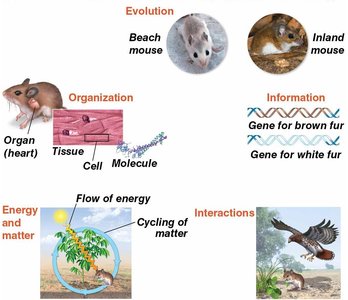
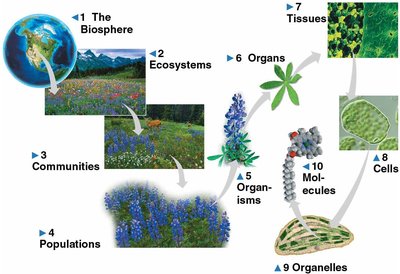
Biology examines life at multiple levels, from molecules to the biosphere. Understanding these levels helps students appreciate the complexity and interconnectedness of living systems.
Reductionism: A scientific approach that breaks down complex systems into simpler components for study.
Hierarchy: The levels include molecules, organelles, cells, tissues, organs, organisms, populations, communities, ecosystems, and the biosphere.
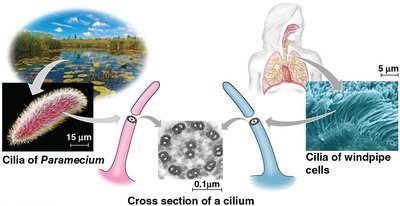
Emergent Properties: New properties arise at each level that are not present in the preceding level.
Example: A cell is an emergent property of nucleotides and molecules.
Expression of Genetic Information
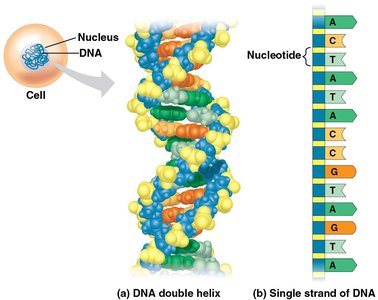
Genetic information is stored in DNA and expressed through cellular processes, resulting in inherited traits and biological functions.
DNA: The molecule that carries genetic instructions for life.
Gene Expression: The process by which information from a gene is used to synthesize functional products like proteins.
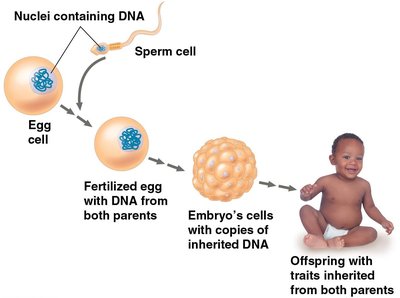
Inheritance: Offspring inherit DNA from both parents, leading to traits passed through generations.
Example: Fertilization combines DNA from egg and sperm, resulting in a new organism with inherited traits.
Energy and Matter in Biological Systems
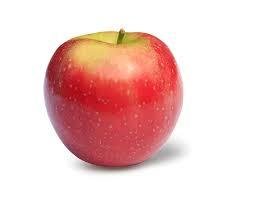
Living organisms transform matter into energy to sustain life. Carbohydrates, such as fructose, are key molecules in these processes.
Metabolism: The set of chemical reactions that convert matter into energy and build cellular structures.
Carbohydrates: Organic molecules like fructose provide energy for cells.
Example: Fructose is metabolized in the human body to produce energy.
Evolution: Unity and Diversity of Life
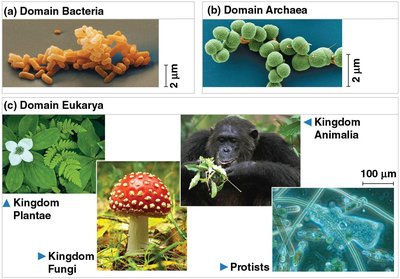
Evolution explains both the similarities and differences among living organisms. It is a central theme in biology, accounting for adaptation and speciation.
Unity: All life shares common features due to shared ancestry.
Diversity: Evolution leads to the variety of life forms observed today.
Adaptation: Organisms evolve traits that enhance survival and reproduction in their environments.
Example: Beach and inland mice have different fur colors due to genetic variation and adaptation.
Scientific Inquiry and Success Strategies
Approaches to Scientific Inquiry
Scientific inquiry involves asking questions, forming hypotheses, conducting experiments, and analyzing data. This process is fundamental to understanding biological concepts.
Observation: Gathering information about natural phenomena.
Hypothesis: A testable explanation for an observation.
Experimentation: Testing hypotheses through controlled experiments.
Analysis: Interpreting data to draw conclusions.
Strategies for Success in BIO116
Effective study habits and engagement with course resources are essential for mastering biology concepts.
Stay Organized: Keep track of deadlines and assignments.
Participate: Attend class, SI sessions, and office hours.
Use Resources: Access textbook, slides, and online platforms for learning.
Appendix: Course Logistics
Accessing Course Materials
Course materials, including the textbook and lecture slides, are available through Canvas and Pearson. Students should log in with their university email and familiarize themselves with the platforms.
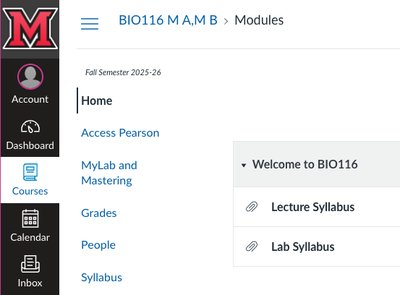
Homework and Assessments
Homework assignments are completed on Pearson, with deadlines clearly stated. Knowledge Checks are conducted via PollEverywhere during class.
Late Policy: Designed to encourage timely completion and support student success.
Participation: Required for Knowledge Checks; questions and answers are discussed only in class.
Supplemental Instruction and Office Hours
Supplemental Instruction (SI) sessions and office hours provide additional support for students. Attendance is encouraged to reinforce learning and address questions.
Summary Table: Levels of Biological Organization
The following table summarizes the hierarchical levels of biological organization:
Level | Description |
|---|---|
Biosphere | All life on Earth and its environments |
Ecosystem | Community of organisms and their physical environment |
Community | All organisms in a particular area |
Population | Individuals of the same species in an area |
Organism | Individual living entity |
Organ | Body part with a specific function |
Tissue | Group of cells with a common function |
Cell | Basic unit of life |
Organelle | Functional component within a cell |
Molecule | Chemical structure consisting of atoms |
Additional info: These notes expand on brief points from the syllabus and introductory slides, providing academic context and examples for each theme. Images included are directly relevant to the explanation of each paragraph, reinforcing key concepts in biological organization, genetic information, energy and matter, and evolution.
