 Back
BackBiochemistry of Lipid and Nucleotide Metabolism
Study Guide - Smart Notes
 Tailored notes based on your materials, expanded with key definitions, examples, and context.
Fatty Acid Metabolism
Introduction to Lipids
Lipids are a diverse group of hydrophobic biomolecules essential for energy storage, membrane structure, and signaling in mammals. The most significant lipids include triacylglycerols (triglycerides), phospholipids, and steroids. Triacylglycerols are primarily stored in adipocytes, forming large globules that occupy most of the cell's volume, while smaller amounts are found in muscle tissue.
Structural components: Phospholipids, glycolipids, and cholesterol are major constituents of cell membranes.
Energy storage: Fats yield more energy per gram (9.3 cal) than carbohydrates or proteins due to their higher carbon and hydrogen content and hydrophobic nature.
Transport: Lipoproteins transport lipids in the bloodstream; the liver and adipose tissue are principal metabolic sites.
Other functions: Lipids act as emulsifying agents, precursors for vitamins and hormones, and participate in second messenger systems (e.g., phosphatidylinositol derivatives).
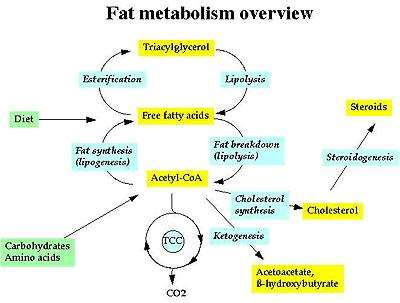
Overview of Fatty Acid Metabolism
Fatty acid metabolism involves the breakdown (catabolism) and synthesis (anabolism) of fatty acids, which are crucial for energy production and storage.
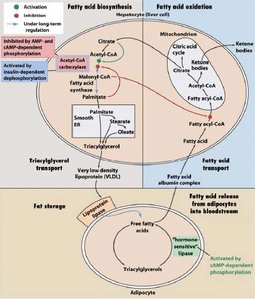
Catabolic pathway: Fatty acids are released from triacylglycerols, activated, transported into mitochondria, and degraded to acetyl-CoA via β-oxidation.
Anabolic pathway: Fatty acids are synthesized from acetyl-CoA in the cytosol, primarily in the liver, adipose tissue, and lactating mammary glands.

Stages of Fatty Acid Processing
Lipolysis: Triacylglycerols are hydrolyzed to release fatty acids and glycerol into the blood for transport to energy-requiring tissues.
Activation and Transport: Fatty acids are activated to acyl-CoA and transported into mitochondria for oxidation.
β-Oxidation: Fatty acids are degraded to acetyl-CoA, which enters the citric acid cycle for further energy production.
Hormonal Regulation and Lipolysis
Hormonal Control of Fatty Acid Release
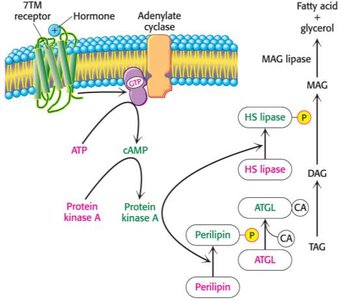
Hormones such as adrenaline, glucagon, and ACTH signal the mobilization of fatty acids from adipose tissue. These hormones activate adenylyl cyclase, increasing cAMP levels, which in turn activate protein kinase A. This kinase phosphorylates hormone-sensitive lipase, initiating lipolysis.
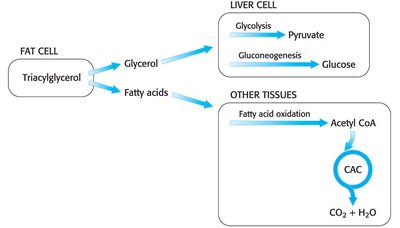
Fate of Lipolysis Products
Fatty acids are transported to tissues for oxidation, while glycerol is taken up by the liver for glycolysis or gluconeogenesis.
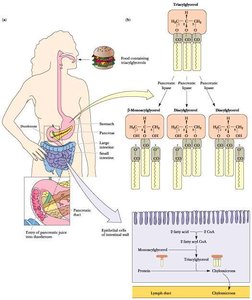
Digestion and Absorption of Dietary Fats
Digestion in the Small Intestine
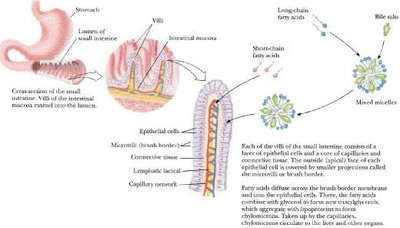
Dietary triacylglycerols are hydrolyzed by pancreatic and intestinal lipases in the duodenum, with the aid of bile salts that emulsify fats and facilitate enzyme action. Short-chain fatty acids are absorbed directly, while long-chain fatty acids form mixed micelles for absorption.
Fatty Acid Activation and Transport
Activation of Fatty Acids
Fatty acids are activated to acyl-CoA by acyl-CoA synthetase (thiokinase) in an ATP-dependent reaction, forming a high-energy thioester bond.
Equation:

Transport into Mitochondria
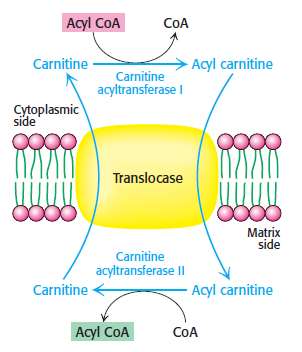
Long-chain acyl-CoA cannot cross the inner mitochondrial membrane directly. Carnitine acyltransferase I converts acyl-CoA to acylcarnitine, which is transported into the matrix by a translocase. Carnitine acyltransferase II then regenerates acyl-CoA inside the mitochondria.
β-Oxidation of Fatty Acids
Steps of β-Oxidation
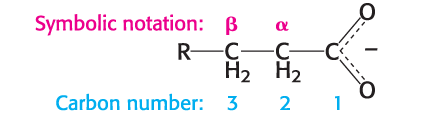
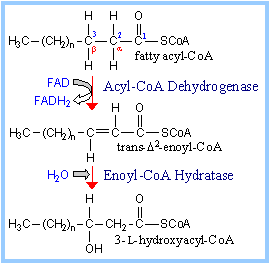
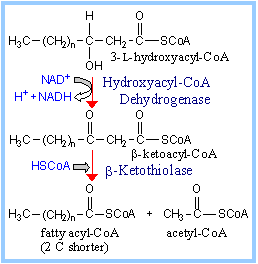
β-Oxidation is a cyclic process that shortens fatty acids by two carbons per cycle, producing acetyl-CoA, NADH, and FADH2.
Oxidation: Acyl-CoA dehydrogenase forms a trans double bond between C2 and C3 (Δ2 position).
Hydration: Enoyl-CoA hydratase adds water across the double bond, forming L-3-hydroxyacyl-CoA.
Oxidation: Hydroxyacyl-CoA dehydrogenase oxidizes the hydroxyl group to a keto group, forming 3-ketoacyl-CoA.
Thiolysis: β-Ketothiolase cleaves the bond, releasing acetyl-CoA and a shortened acyl-CoA.
Energy Yield from Fatty Acid Oxidation
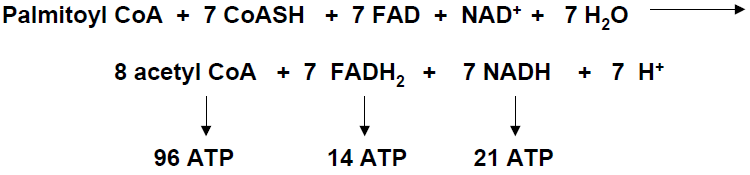
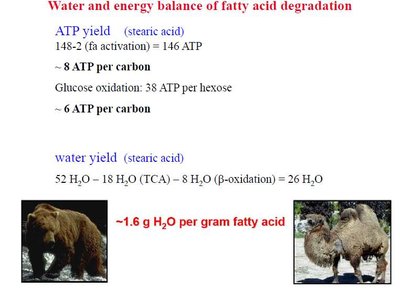
Complete oxidation of palmitoyl-CoA (C16) yields 129 ATPs, significantly more than glucose oxidation. β-oxidation also produces metabolic water, which is vital for certain animals in arid environments.
β-Oxidation in Peroxisomes
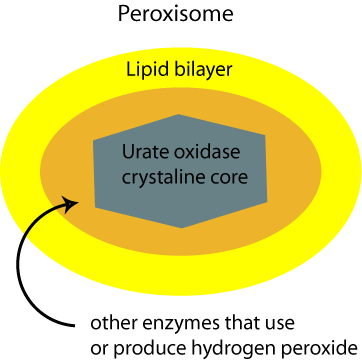
Peroxisomes oxidize very long-chain fatty acids, producing hydrogen peroxide (H2O2) instead of ATP. Catalase degrades H2O2 to water and oxygen.

Ketone Bodies and Ketogenesis
Formation and Utilization of Ketone Bodies
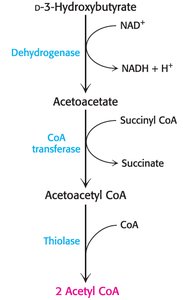
When acetyl-CoA accumulates (e.g., during fasting or diabetes), the liver converts it to ketone bodies: acetoacetate, β-hydroxybutyrate, and acetone. These are important alternative fuels for the brain, heart, and muscles during glucose scarcity.
Ketogenesis Pathway
Ketone body synthesis occurs in the mitochondrial matrix and involves the condensation of acetyl-CoA units, formation of HMG-CoA, and subsequent cleavage to yield acetoacetate and β-hydroxybutyrate.
Ketone Bodies in Diabetes
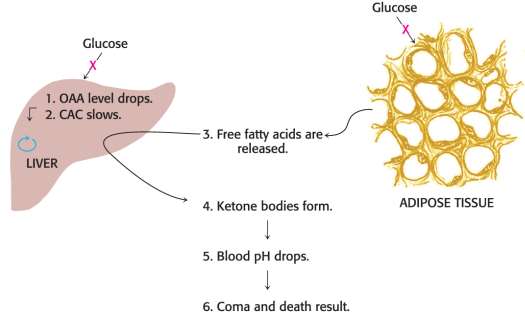
In uncontrolled diabetes, lack of insulin leads to increased fatty acid breakdown and excessive ketone body production, resulting in diabetic ketoacidosis, a potentially fatal condition.
Biosynthesis of Fatty Acids
Overview of Fatty Acid Synthesis
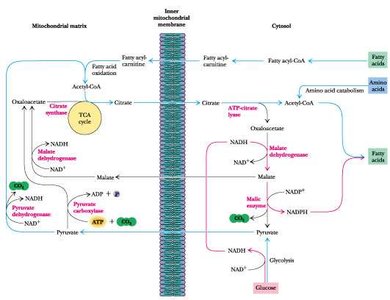
Fatty acid synthesis is the anabolic process of creating fatty acids from acetyl-CoA and NADPH in the cytosol. The process involves three main stages: production of acetyl-CoA and NADPH, conversion of acetyl-CoA to malonyl-CoA, and chain elongation by the fatty acid synthase complex.
Formation of Malonyl-CoA
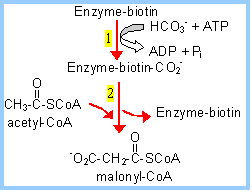
Acetyl-CoA carboxylase catalyzes the ATP-dependent carboxylation of acetyl-CoA to malonyl-CoA, a key regulatory step in fatty acid synthesis. Biotin acts as a prosthetic group in this reaction.
Fatty Acid Synthase Complex
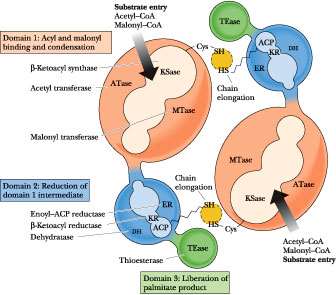
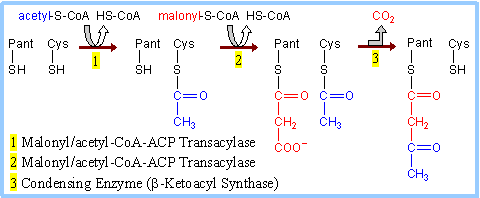
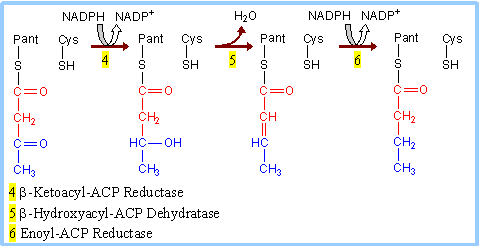
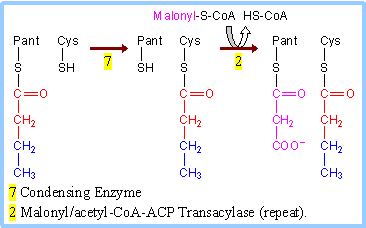
The fatty acid synthase complex is a multifunctional enzyme that catalyzes the sequential addition of two-carbon units to a growing fatty acid chain, using malonyl-CoA as the donor. The process continues until palmitate (C16) is formed.
Eicosanoids
Overview and Biological Roles
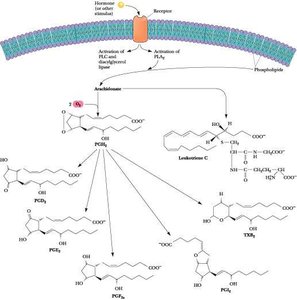
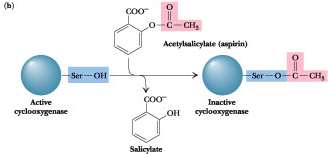
Eicosanoids are signaling molecules derived from 20-carbon fatty acids, such as arachidonic acid. They include prostaglandins, thromboxanes, and leukotrienes, and play roles in inflammation, immunity, and other physiological processes. Aspirin inhibits prostaglandin synthesis by acetylating cyclooxygenase.
Cholesterol Biosynthesis and Lipoproteins
Cholesterol Synthesis
Cholesterol is synthesized from acetyl-CoA in a multi-step process involving the formation of mevalonate, isopentenyl pyrophosphate, squalene, and finally cholesterol. The liver is the primary site of synthesis. HMG-CoA reductase is the rate-limiting enzyme and a target for statin drugs.
Lipoprotein Transport
Lipoproteins are complexes of lipids and proteins that transport cholesterol and triacylglycerols in the blood. They are classified by density: chylomicrons, VLDL, IDL, LDL, and HDL. LDL is the main carrier of cholesterol to tissues, while HDL returns cholesterol to the liver for excretion.
Disorders of Lipid Metabolism
Common Disorders
Familial hypercholesterolemia: Inherited defects leading to high LDL cholesterol and increased cardiovascular risk.
Diabetic dyslipidemia: Characterized by low HDL, high VLDL, and small, dense LDL particles.
Atherosclerosis: Accumulation of fatty material in arteries, leading to cardiovascular disease.
Obesity: Excessive body fat associated with increased risk of metabolic diseases.
Nucleic Acid Metabolism
Biosynthesis of Purines
Purine nucleotides (AMP and GMP) are synthesized de novo from simple precursors, including amino acids, CO2, and tetrahydrofolate derivatives. The pathway involves multiple steps, with inosine monophosphate (IMP) as a key intermediate. Salvage pathways recycle purine bases from nucleic acid turnover.
Biosynthesis of Pyrimidines
Pyrimidine nucleotides (UMP, CMP, TMP) are synthesized by first forming the pyrimidine ring and then attaching it to ribose-5-phosphate. The pathway uses carbamoyl phosphate and aspartate as precursors. Thymidylate synthase and dihydrofolate reductase are important drug targets in cancer therapy.
Degradation and Disorders
Purine degradation: Leads to uric acid, which can accumulate and cause gout.
Pyrimidine degradation: Produces β-alanine and other metabolites.
Disorders: ADA deficiency causes severe combined immunodeficiency (SCID); Lesch-Nyhan syndrome results from HGPRT deficiency; hyperuricemia leads to gout.
Deoxyribonucleotide Synthesis
Deoxyribonucleotides are synthesized by reduction of ribonucleoside diphosphates, catalyzed by ribonucleotide reductase. These are essential for DNA synthesis and cell division.
Clinical Relevance
Anticancer drugs: Inhibit nucleotide biosynthesis (e.g., methotrexate, 5-fluorouracil).
Antibiotics: Target bacterial nucleotide synthesis pathways.
