 Back
Biochemistry: Structure and Properties of Water & Biological Macromolecules
Study Guide - Smart Notes
 Tailored notes based on your materials, expanded with key definitions, examples, and context.
Structure of Water and Hydrogen Bonding
Water: The Molecule That Supports Life
Water is the biological medium for all life on Earth. Most cells are surrounded by water, and cells themselves are composed of 70–95% water. The abundance of water is a primary reason Earth is habitable.
Key Point: Water is essential for all living organisms.
Key Point: Water's unique properties arise from its molecular structure and hydrogen bonding.
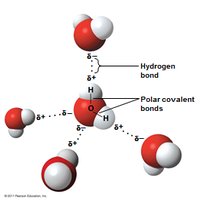
Four Properties of Water That Contribute to Earth's Suitability for Life
Cohesive and adhesive behavior
High heat capacity (specific heat)
Expansion upon freezing
Versatility as a solvent
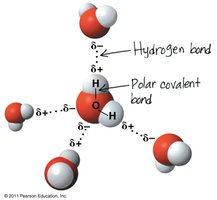
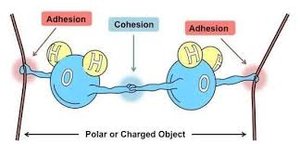
Property 1: Cohesion and Adhesion
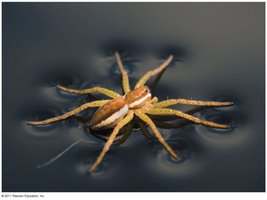
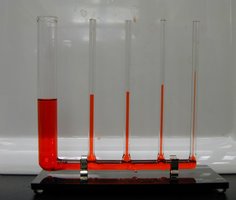
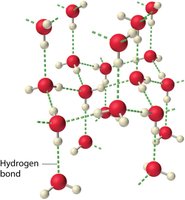
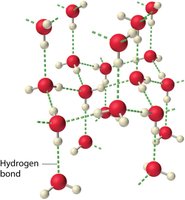
Cohesion is the tendency of water molecules to stick to each other due to hydrogen bonding. Adhesion is the tendency of water molecules to stick to other substances, such as plant cell walls.
Surface tension: The measure of how hard it is to break the surface of a liquid, resulting from cohesion.
Capillary action: Water moves up tubes or porous surfaces due to cohesion and adhesion.
Property 2: High Heat Capacity (Specific Heat)
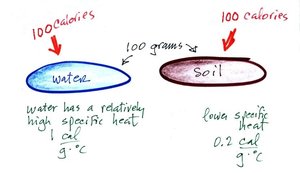
Water has a high specific heat, meaning it can absorb large quantities of heat with minimal temperature change. This property allows water to moderate temperature and act as a thermoregulator.
Definition: Specific heat is the amount of heat required to raise 1 gram of water by 1°C (1 calorie = 4.184 J).
Hydrogen bonding: Each water molecule can form two hydrogen bonds, requiring more energy to increase molecular motion.
Formula: (where q is heat absorbed, m is mass, c is specific heat, ΔT is temperature change)

Heat Capacity and Environmental Effects
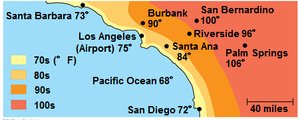
Large bodies of water absorb heat from warmer air and release stored heat to cooler air, moderating climate. Water vapor in the air (humidity) also affects heat absorption.

Heat of Vaporization and Evaporative Cooling
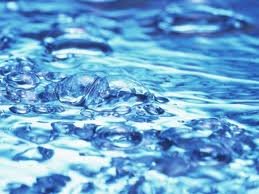
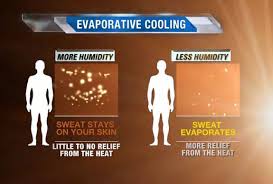
Heat of vaporization is the heat a liquid must absorb for 1g to be converted to vapor. Evaporative cooling occurs as water evaporates, cooling the surface and stabilizing temperatures in organisms and bodies of water.
Property 3: Water’s Expansion Upon Freezing
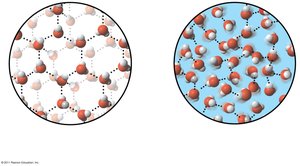
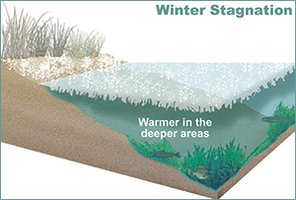
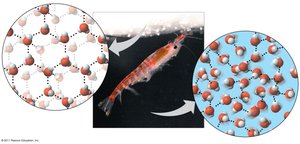
Unlike most substances, water expands when it freezes. Ice is less dense than liquid water due to stable hydrogen bonds forming a hexagonal structure, allowing ice to float.
Key Point: Water reaches its greatest density at 4°C.
Example: Fish benefit from ice floating, as it insulates the water below.
Property 4: Water’s Versatility as a Solvent
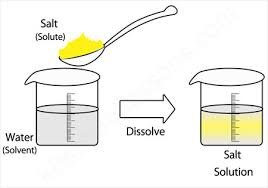
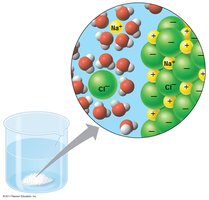
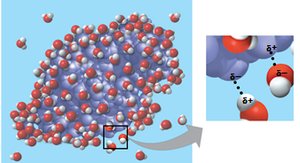
Water is a versatile solvent due to its polarity, allowing it to dissolve ionic and polar substances. When ionic compounds dissolve, each ion is surrounded by a hydration shell.
Definitions:
Solution: Homogenous mixture
Solute: Substance being dissolved
Solvent: Substance doing the dissolving (usually water)
Soluble: Can be dissolved
Insoluble: Cannot be dissolved
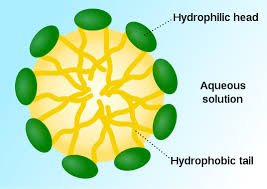
Hydrophilic: Affinity for water
Hydrophobic: Repels water (e.g., oil molecules)
Acidic and Basic Conditions Affect Living Organisms
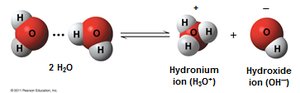
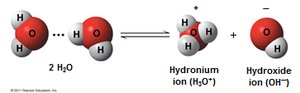
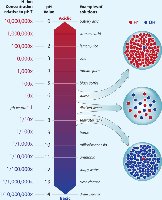
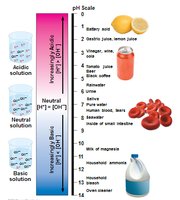
A hydrogen atom in water can shift between molecules, forming hydronium (H3O+) and hydroxide (OH–) ions. The concentrations of these ions determine the pH of a solution.
Acid: Increases H+ concentration (H+ donor)
Base: Reduces H+ concentration or contains OH–
pH scale: Measures acidity or alkalinity; acidic solutions have pH < 7, basic solutions have pH > 7
Buffer: Substance that resists changes in pH
Human Impact: Acidification and Water Quality
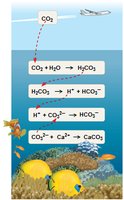
Burning fossil fuels releases CO2, which dissolves in oceans to form carbonic acid, leading to ocean acidification. Acid precipitation from sulfur and nitrogen oxides damages aquatic and terrestrial ecosystems.
Elements of Life
Carbon: The Backbone of Life
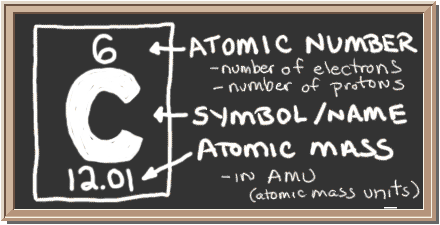
Living organisms consist mostly of carbon-based compounds. Carbon's ability to form large, complex molecules is unparalleled, making it the foundation of proteins, DNA, carbohydrates, and other biomolecules.
Organic Chemistry and Compound Shapes
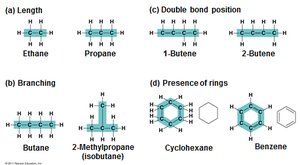
Organic chemistry studies carbon compounds, which range from simple to complex. Carbon chains form the skeletons of most organic molecules and vary in length and shape.
Hydrocarbons and Isomers
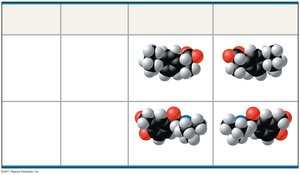
Hydrocarbons are molecules consisting only of carbon and hydrogen. Isomers are compounds with the same molecular formula but different structures, resulting in different properties.
Structural isomers: Different covalent arrangements
Cis-trans isomers: Same bonds, different spatial arrangements
Enantiomers: Mirror images, rotate light differently
Functional Groups
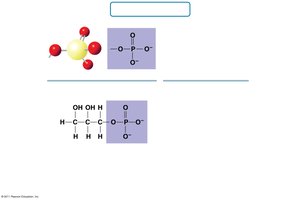
Functional groups are key chemical groups involved in reactions. Their number and arrangement give each molecule unique properties and affect intermolecular forces (IMFs).
Hydroxyl: Polar, forms hydrogen bonds, dissolves organic compounds
Carbonyl: Found in sugars, structural isomers (ketoses, aldoses)
Carboxyl: Acts as an acid, donates H+
Amino: Acts as a base, picks up H+
Sulfhydryl: Forms covalent bonds, stabilizes protein structure
Phosphate: Contributes negative charge, releases energy
Methyl: Affects gene expression and hormone function
Introduction to Biological Macromolecules
The Four Classes of Large Biomolecules
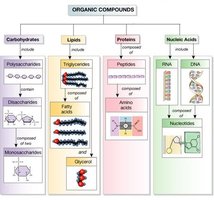
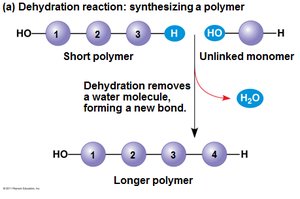
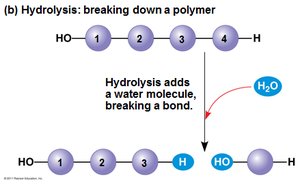
All living things are made up of four classes of large biological molecules: carbohydrates, lipids, proteins, and nucleic acids. Macromolecules are polymers built from monomers, except for lipids.
Polymer: Long molecule of many similar building blocks (monomers)
Monomer: Small building-block molecule
Properties of Biological Macromolecules
Nucleic Acids
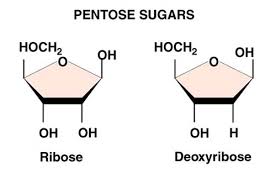
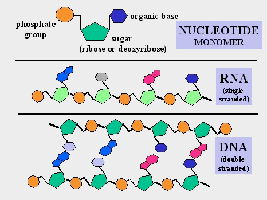
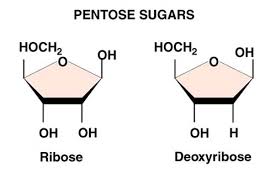
Nucleic acids are polymers of nucleotides, which consist of a nitrogenous base, a pentose sugar, and one or more phosphate groups. DNA is double-stranded, RNA is single-stranded.
Nucleotide: Monomer of RNA & DNA
Nucleoside: Sugar ring with attached nitrogenous base
Phosphodiester bond: Covalent bond linking nucleotides
Proteins
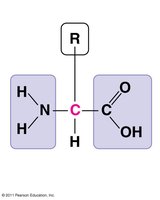
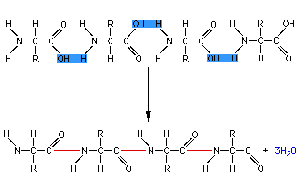
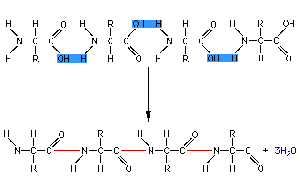
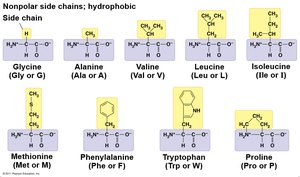
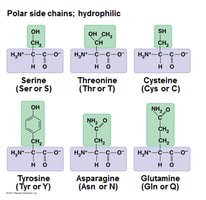
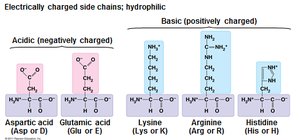
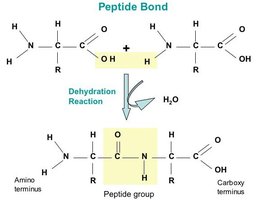
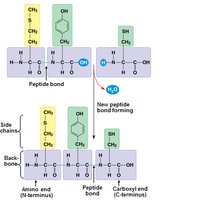
Proteins are polymers of amino acids, which have carboxyl and amino groups. The properties of amino acids are determined by their side chains (R groups).
Polypeptide: Unbranched polymer of amino acids
Peptide bond: Covalent bond linking amino acids
Categories of amino acids: Hydrophobic, hydrophilic, ionic
Carbohydrates
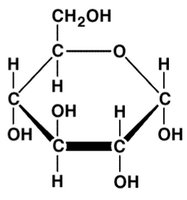
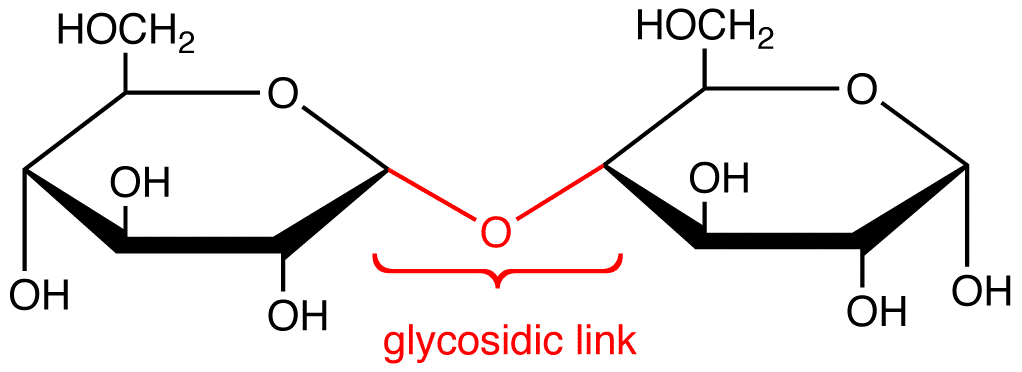
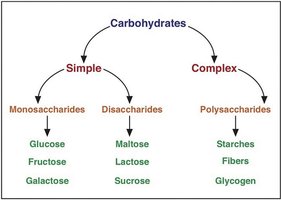
Carbohydrates include sugars and polymers of sugars. Monosaccharides are single sugars, disaccharides are two sugars joined by a glycosidic linkage, and polysaccharides are many sugars.
Monosaccharide: Simple sugar (e.g., glucose)
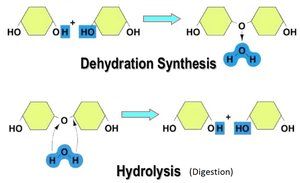
Disaccharide: Two monosaccharides joined by dehydration synthesis
Polysaccharide: Polymer of sugars with storage and structural roles
Lipids
Lipids are a diverse group of hydrophobic molecules that do not form polymers. The most important lipids are fats, phospholipids, and steroids.
Fat: Constructed from glycerol and fatty acids
Phospholipid: Major component of cell membranes
Steroid: Lipid with four fused rings (e.g., cholesterol)
Structure and Function of Biological Macromolecules
Nucleic Acids: Structure
Nucleotides are linked by phosphodiester bonds between the 5’ carbon of one nucleotide and the 3’ hydroxyl of another. DNA is double-stranded, with A-T (2 H bonds) and C-G (3 H bonds) base pairing.
Proteins: Structure and Function
Proteins have four levels of structure: primary (sequence of amino acids), secondary (α-helix or β-sheet), tertiary (folding), and quaternary (multiple polypeptide chains). Protein function depends on structure.
Protein Denaturation
Changes in temperature, pH, or chemicals can disrupt protein structure, causing denaturation. Sometimes, denaturation can be reversed if optimal conditions are restored.
Protein Functions
Enzymatic: Catalyze reactions (enzymes)
Storage: Store amino acids
Hormonal: Coordinate activities (e.g., insulin)
Defensive: Protect against disease (antibodies)
Transport: Move substances (e.g., hemoglobin)
Receptor: Respond to chemical stimuli
Structural: Support (e.g., collagen, keratin)
Carbohydrates: Structure and Function
Polysaccharides can be linear or branched, with different functions:
Storage: Starch (plants), glycogen (animals)
Structure: Cellulose (plants), chitin (arthropods, fungi)
Nucleic Acids: DNA vs RNA
Comparison of DNA and RNA
DNA: Double-stranded, deoxyribose sugar, bases A, T, C, G
RNA: Single-stranded, ribose sugar, bases A, U, C, G
Additional info: This study guide covers the structure and properties of water, elements of life, biological macromolecules, and their functions, providing foundational knowledge for General Biology students.
