Back
BackBiodiversity and Conservation Biology: Study Guide
Study Guide - Smart Notes
 Tailored notes based on your materials, expanded with key definitions, examples, and context.
Biodiversity & Conservation Biology
Introduction to Biodiversity
Biodiversity refers to the variety of living organisms on Earth, encompassing multiple levels: genes, species, populations, communities, and ecosystems. Understanding biodiversity is crucial for appreciating the complexity and resilience of life.
Species Diversity: The number of different species in a particular area. It has two components:
Species Richness: The total number of species.
Evenness: The relative abundance of each species.
Genetic Diversity: Variability in the DNA among individuals within a population. Populations with greater genetic diversity are more likely to persist over time.
Ecosystem Diversity: The number of different ecosystems present in a region.
Patterns of Biodiversity
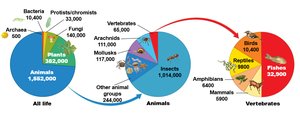
Biodiversity is not evenly distributed across all groups of organisms or geographic regions. Insects, especially beetles, are the most diverse group, while vertebrates are less diverse, with fish being the most varied among them.
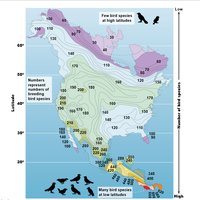
Biodiversity is highest near the equator, particularly in tropical rainforests and coral reefs. This is due to warm, wet climates, lack of glaciation, and long-term stability allowing for niche diversification.
Estimating Biodiversity
Currently, about 1.8 million species have been identified, but estimates range from 3 to 100 million total species. Many unidentified species are small organisms such as bacteria and insects. The lack of biologists studying new areas limits our knowledge.
Importance of Biodiversity
Biodiversity provides numerous benefits to humans, including:
Sources of drugs and medicines
Foods and agricultural products
Ecosystem services (e.g., pollination, water purification)
Aesthetic and recreational value
Loss of key species can cause cascading effects throughout ecosystems.
Extinction and Extirpation
Extinction is the complete disappearance of a species, while extirpation refers to local disappearance. Although extinction is a natural process, current rates are unprecedented and largely driven by human activities.
Characteristics of Winning and Losing Species
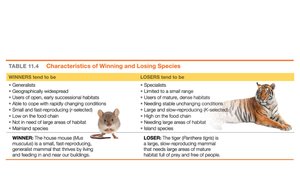
Some species are more likely to survive environmental changes than others. Generalists tend to thrive, while specialists are more vulnerable.
Winners | Losers |
|---|---|
Generalists, geographically widespread, fast-reproducing, adaptable to various habitats | Specialists, limited range, slow-reproducing, require stable environments |
Example: House mouse (Mus musculus) | Example: Tiger (Panthera tigris) |
Trends in Biodiversity
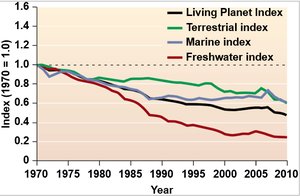
Indices such as the Living Planet Index show a decline in biodiversity across terrestrial, marine, and freshwater ecosystems since 1970.
Causes of Biodiversity Loss
The primary threats to biodiversity include:
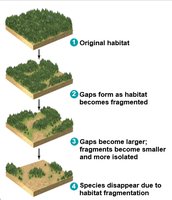
Habitat Loss: Destruction, conversion, degradation, and fragmentation of habitats are the leading causes of population declines.
Habitat Fragmentation: Continuous habitats are broken into smaller, isolated patches, reducing species survival.
Pollution: Contaminants degrade habitat quality and harm organisms.
Overharvest: Excessive legal and illegal harvesting reduces populations.
Invasive Species: Non-native species outcompete and displace native species.
Climate Change: Alters habitats, making it difficult for some species to survive or migrate.
Mixture of Factors: Often, multiple threats interact to exacerbate biodiversity loss.
Conservation Biology
Conservation biology is a scientific discipline focused on protecting biodiversity at all levels. Efforts include:
Endangered Species Act: Stabilizes and recovers populations of threatened species.
International treaties
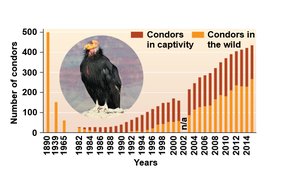
Captive breeding and re-introduction programs
Strategies to Protect Biodiversity
Effective conservation strategies include:
Umbrella Species: Protecting one species indirectly protects many others sharing its habitat.
Indicator Species: Used to assess ecosystem health; their decline signals environmental problems.
Biodiversity Hotspots: Regions with high numbers of endemic species are prioritized for conservation.
Parks and Protected Areas: Establishing and linking protected areas supports species movement and adaptation.
Ecological Restoration: Restoring degraded ecosystems to their original state.
Community-Based Conservation: Engaging local people in conservation efforts.
A Final Word on Extinction
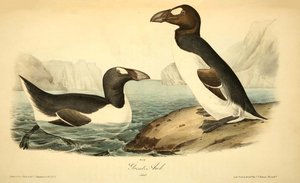
Extinction is irreversible; once a species is lost, it cannot be recovered. The Great Auk was the first species to go extinct due to human activity in North America in 1844.