 Back
Biodiversity and Ecosystem Services: Structure, Function, and Conservation
Study Guide - Smart Notes
 Tailored notes based on your materials, expanded with key definitions, examples, and context.
Biodiversity & Ecosystem Services
Introduction to Biodiversity
Biodiversity refers to the variety of life forms within a given ecosystem, biome, or the entire planet. It encompasses the diversity of species, their genetic makeup, and the ecological roles they play. Understanding biodiversity is crucial for maintaining ecosystem function and resilience.
Biodiversity: The total variety of life, including species, genetic, and functional diversity.
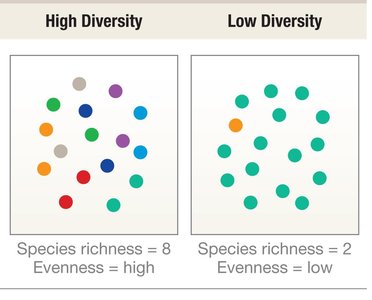
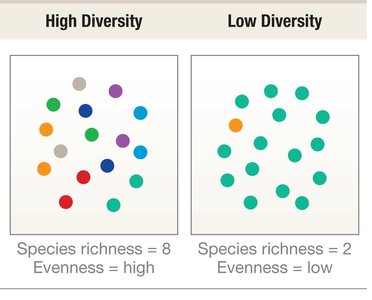
Species Diversity: Includes both species richness (number of species) and species evenness (relative abundance of each species).
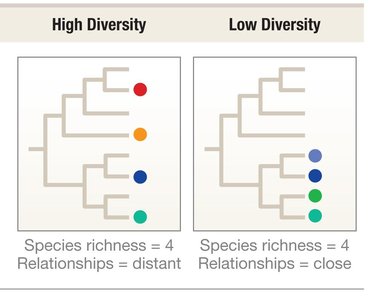
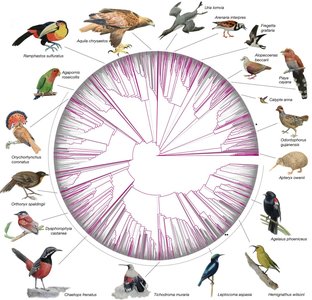
Phylogenetic Diversity: Measures the evolutionary distinctiveness of species within a community.
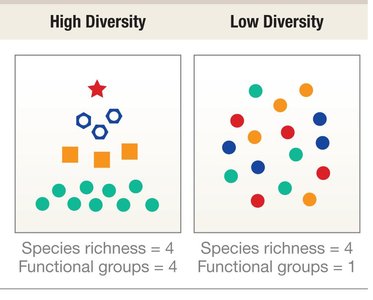
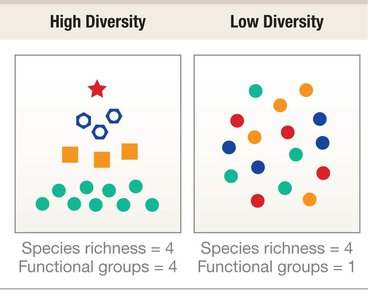
Functional Diversity: Refers to the range of functional traits or ecological roles present in a community.
Types of Biodiversity
Biodiversity can be classified into three main types, each providing a unique perspective on ecosystem structure and function.
Species Diversity: High species richness and evenness contribute to a more balanced and resilient ecosystem.
Phylogenetic Diversity: Communities with distantly related species are more likely to possess unique evolutionary traits.
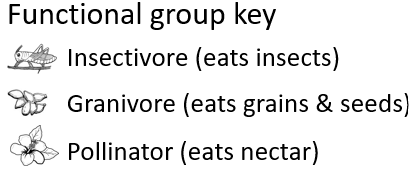
Functional Diversity: Communities with diverse functional groups (e.g., pollinators, granivores, insectivores) are more likely to perform a wider range of ecosystem functions.
Comparing Diversity in Communities
The diversity of a community can be measured and compared using species richness, evenness, phylogenetic relationships, and functional groups.
Species Richness: The number of different species present.
Species Evenness: The relative abundance of each species.
Phylogenetic Diversity: How distantly related the species are.
Functional Diversity: The number of distinct functional groups present.
Biodiversity is Dynamic
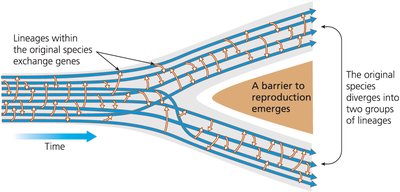
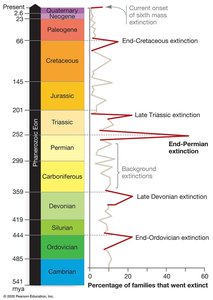
Biodiversity changes over time due to speciation and extinction.
Speciation: The process by which new species arise, increasing biodiversity.
Extinction: The loss of species, decreasing biodiversity.
Background Extinction: The normal rate of extinction due to evolutionary and ecological processes.
Mass Extinction: Rapid extinction of many species globally, often due to catastrophic events.
Current Extinction Rates
Current extinction rates are significantly higher than background rates, indicating a potential sixth mass extinction.
Current Extinction Rate: At least 100 times higher than the background rate.
Causes: Habitat loss, climate change, pollution, overexploitation, and invasive species.
Ecosystem Function and Services
Biodiversity is essential for maintaining ecosystem function, productivity, and stability. Ecosystem services are the benefits humans derive from ecosystems, classified into four main types:
Provisioning Services: Direct benefits such as food, water, timber, and raw materials.
Regulating Services: Indirect benefits from natural processes like pollination, climate regulation, and disease control.
Cultural Services: Benefits from human interaction with ecosystems, including recreation, spiritual value, and education.
Supporting Services: Processes that enable other ecosystem services, such as nutrient cycling and soil formation.
Mechanisms by Which Biodiversity Supports Ecosystem Function
Resource Use Efficiency: Diverse species use different resources and niches, maximizing ecosystem productivity.
Facilitation: Some species improve conditions for others, enhancing overall ecosystem function.
Chance Inclusion: High diversity increases the likelihood of including highly productive species.
Ecosystem Stability
Stability is a key property of ecosystems, measured by resilience and resistance.
Resilience: The speed at which an ecosystem recovers after a disturbance.
Resistance: The ability of an ecosystem to remain unchanged during a disturbance.
Nutrient Flow in Ecosystems
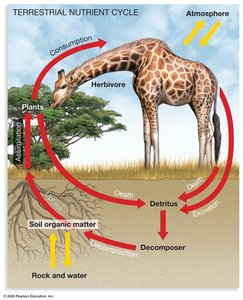
Nutrients cycle through biotic (living) and abiotic (non-living) reservoirs in ecosystems.
Biotic Reservoirs: Plants, animals, decomposers.
Abiotic Reservoirs: Soil, water, atmosphere.
Key Processes: Consumption, assimilation, decomposition, excretion, and atmospheric exchange.
Direct and Indirect Effects of Climate Change
Climate change affects ecosystems both directly and indirectly.
Direct Effects: Changes in temperature, precipitation, and extreme weather events.
Indirect Effects: Altered species interactions, shifts in habitat ranges, and changes in ecosystem processes.
Species Responses: Adaptation, migration, or extinction.
Summary Table: Types of Biodiversity
Type | Definition | Example |
|---|---|---|
Species Diversity | Number and abundance of species | Forest with many tree species |
Phylogenetic Diversity | Evolutionary distinctiveness | Community with distantly related birds |
Functional Diversity | Range of ecological roles | Grassland with pollinators, grazers, decomposers |
Summary Table: Ecosystem Services
Service Type | Description | Example |
|---|---|---|
Provisioning | Direct benefits from raw materials | Timber, crops, livestock |
Regulating | Indirect benefits from ecosystem processes | Pollination, climate regulation |
Cultural | Benefits from human interaction | Recreation, spiritual value |
Supporting | Processes enabling other services | Nutrient cycling, soil formation |
Conclusion
Biodiversity is fundamental to ecosystem function, productivity, and stability. Its loss threatens ecosystem services and human well-being. Conservation efforts must consider species, phylogenetic, and functional diversity to maintain healthy ecosystems. Additional info: Expanded explanations and context were added to ensure completeness and clarity for exam preparation.
