 Back
Bioenergetics and Photosynthesis: Energy Flow and Cellular Processes
Study Guide - Smart Notes
 Tailored notes based on your materials, expanded with key definitions, examples, and context.
Unit 4: Bioenergetics
Introduction to Bioenergetics
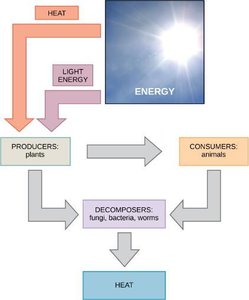
Bioenergetics is the study of how energy flows through living systems, such as cells. Virtually every task performed by living organisms requires energy, which is obtained from the environment and transformed into usable forms through biochemical reactions. Understanding these processes is fundamental to biology, as it explains how cells obtain, use, and replenish energy efficiently.

Energy & Metabolism
Metabolic Pathways
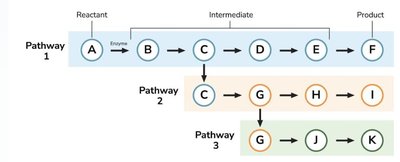
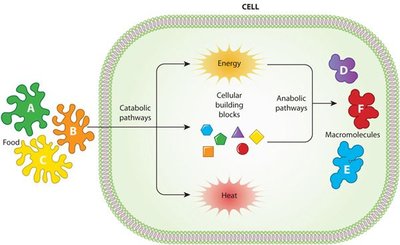
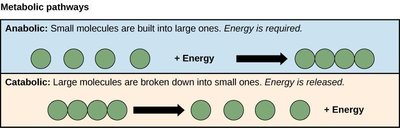
Metabolic pathways are series of chemical reactions that modify a starting molecule step-by-step, through metabolic intermediates, to yield a final product. These pathways are essential for cellular function and are categorized as either catabolic or anabolic.
Catabolic pathways: Break down polymers into monomers, releasing energy (e.g., cellular respiration, fermentation).
Anabolic pathways: Build polymers from monomers, requiring energy input (e.g., photosynthesis, DNA replication).
Energy: Forms and Utilization
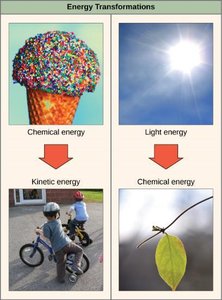
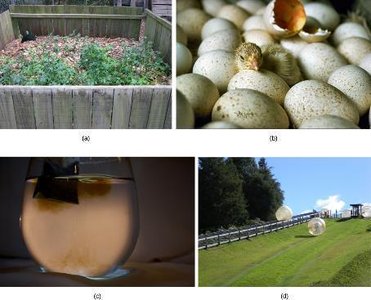
Energy is defined as the ability to do work or create change. It exists in various forms, including kinetic and potential energy. Living systems utilize chemical energy, a form of potential energy stored in chemical bonds.
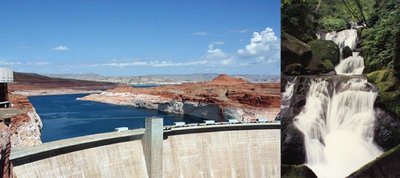
Kinetic energy: Energy associated with objects in motion (e.g., moving water, molecular movement).
Potential energy: Stored energy based on location or structure (e.g., chemical bonds, still water).
Thermodynamics in Biology
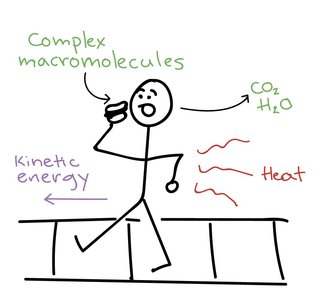
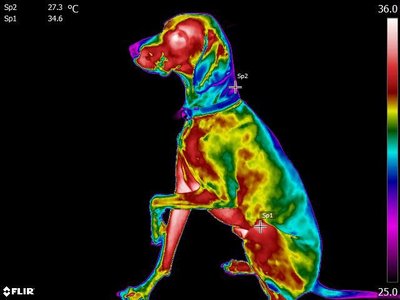
Thermodynamics is the study of energy and its transfer involving physical matter. Biological systems are open systems, exchanging energy and matter with their surroundings.
First Law of Thermodynamics: The total amount of energy in the universe is constant and conserved. Energy can be transferred or transformed, but not created or destroyed.
Second Law of Thermodynamics: In every energy transfer, some energy is lost as heat, increasing the disorder (entropy) of the system.
Free Energy and Chemical Reactions
Free energy is the measurable energy released in energy transfers, available to do work. Chemical reactions are classified based on their energy changes:
Exergonic reactions: Release free energy; products have lower potential energy than reactants. These reactions are spontaneous.
Endergonic reactions: Absorb energy; products have higher potential energy than reactants. These reactions are non-spontaneous and require energy input.
Enzymes: Structure, Function, and Regulation
Enzyme Structure and Function
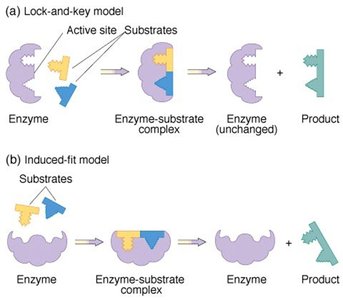
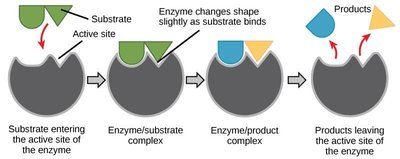
Enzymes are globular protein molecules that act as molecular catalysts, speeding up biochemical reactions without being consumed. They are highly specific, usually binding only one substrate at their active site.
Substrate: The chemical reactant to which an enzyme binds.
Active site: The location on the enzyme where the substrate binds.
Enzyme Catalysis
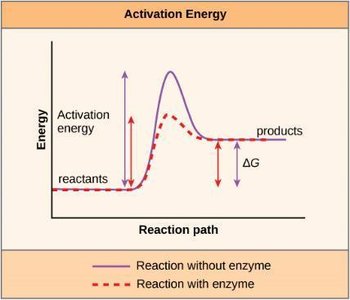
Enzymes increase reaction rates by lowering the activation energy required for a reaction. They do not change the free energy of reactants or products, but make reactions more likely to occur.
Activation energy (Ea): The energy required to initiate a reaction.
Enzyme action: Lowers activation energy, making reactions more spontaneous.
Enzyme Regulation
Enzyme activity can be regulated by environmental factors (pH, temperature, salinity) and regulatory molecules. Regulation ensures proper cellular function and metabolic control.
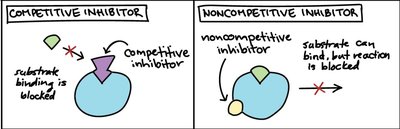
Competitive inhibition: Inhibitor blocks the active site, preventing substrate binding.
Noncompetitive inhibition: Inhibitor binds elsewhere, altering enzyme function without blocking the active site.
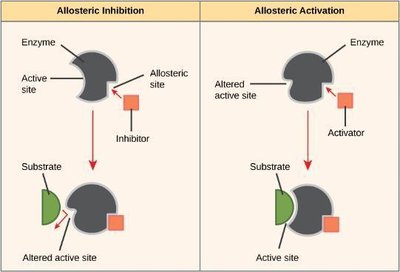
Allosteric inhibition: Inhibitor induces a conformational change, reducing substrate affinity.
Allosteric activation: Activator modifies the active site for better substrate fit.
Cofactors, Coenzymes, and Feedback Inhibition
Cofactors: Non-protein helper molecules, often inorganic ions (e.g., Fe2+, Ca2+).
Coenzymes: Organic molecules, often vitamins, that assist enzyme function (e.g., Vitamin C).
Feedback inhibition: End product of a metabolic pathway inhibits an upstream enzyme, regulating pathway activity.
ATP: The Energy Currency of Cells
Structure and Function of ATP
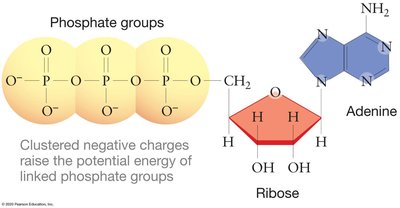
Adenosine triphosphate (ATP) is the primary energy carrier in cells. It consists of three phosphate groups, ribose, and adenine. The bonds between phosphate groups store significant potential energy due to repulsion between negative charges.
ATP Hydrolysis and Energy Release
ATP hydrolysis releases free energy by breaking the bond between the outermost phosphate group and its neighbor, forming ADP. This highly exergonic reaction releases about 7.3 kilocalories per mole.
Phosphorylation: Addition of a phosphate group to a target molecule, increasing its potential energy and coupling exergonic and endergonic reactions.
Photosynthesis: Energy Capture and Conversion
Chlorophyll and Chloroplasts
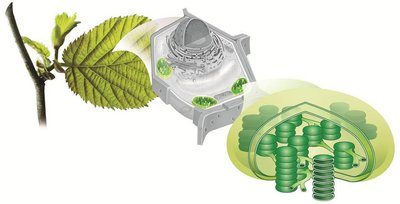
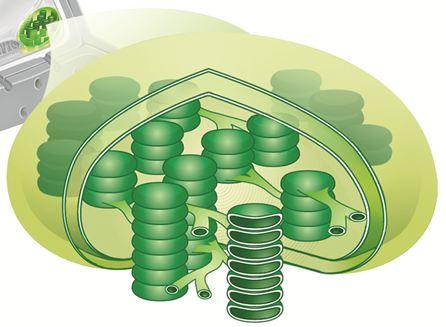
Photosynthesis occurs in chloroplasts, where light energy is captured by pigments such as chlorophyll. Sunlight is a mixture of wavelengths, and photosynthetic organisms use pigments to absorb specific wavelengths for energy conversion.

Electron Carriers in Photosynthesis
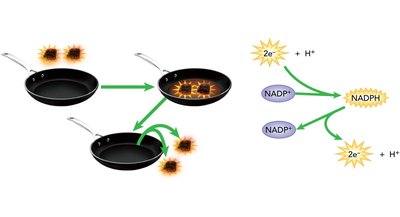
High-energy electrons produced by chlorophyll are transferred by electron carrier molecules, such as NADPH, to other chemical reactions in the cell. These carriers are essential for the transfer and utilization of energy during photosynthesis.
Overview of Photosynthesis
Photosynthesis uses sunlight to convert water and carbon dioxide into high-energy sugars and oxygen. The overall reaction is:
Photosynthesis Reactions
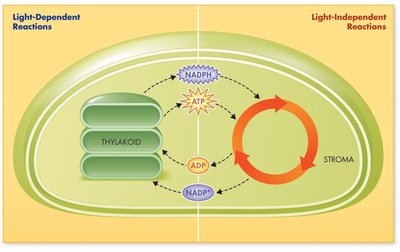
Light-dependent reactions: Require light and pigments; produce ATP and NADPH, and release oxygen.
Light-independent reactions: Use ATP and NADPH to convert carbon dioxide into high-energy sugars.
Interdependence of Photosynthetic Reactions
Light-dependent and light-independent reactions are interdependent. The products of the light-dependent reactions (ATP and NADPH) are used in the light-independent reactions to synthesize sugars.
Summary Table: Metabolic Pathways
Pathway | Process | Energy Change | Example |
|---|---|---|---|
Anabolic | Builds large molecules from small ones | Requires energy | Photosynthesis, DNA replication |
Catabolic | Breaks down large molecules into small ones | Releases energy | Cellular respiration, fermentation |
Summary Table: Enzyme Regulation
Type | Mechanism | Effect |
|---|---|---|
Competitive Inhibition | Inhibitor blocks active site | Prevents substrate binding |
Noncompetitive Inhibition | Inhibitor binds elsewhere | Alters enzyme function |
Allosteric Inhibition | Inhibitor changes active site shape | Reduces substrate affinity |
Allosteric Activation | Activator changes active site shape | Enhances substrate affinity |
Key Terms and Concepts
Bioenergetics: Study of energy flow in living systems.
Metabolism: All chemical reactions in cells.
Catabolic pathway: Energy-releasing breakdown of molecules.
Anabolic pathway: Energy-consuming synthesis of molecules.
ATP: Cellular energy currency.
Enzyme: Protein catalyst for biochemical reactions.
Photosynthesis: Conversion of light energy to chemical energy in plants.
Additional info: Academic context was added to clarify the mechanisms of energy transfer, enzyme regulation, and photosynthesis, ensuring the notes are self-contained and suitable for exam preparation.
