 Back
BackBioenergetics, Enzymes, Cellular Respiration, Photosynthesis, and Cell Signaling
Study Guide - Smart Notes
 Tailored notes based on your materials, expanded with key definitions, examples, and context.
Bioenergetics and Metabolism
Thermodynamics in Biology
Biological systems obey the laws of thermodynamics, which govern energy transformations in living organisms.
First Law of Thermodynamics: Energy cannot be created or destroyed, only transformed.
Second Law of Thermodynamics: Energy transformations increase the entropy (disorder) of the universe; some energy becomes unavailable to do work.
Forms of Energy in Biology
Chemical Energy: Stored in bonds; released during hydrolysis of polymers.
Electrical Energy: Separation of charges; electrical gradients drive ion movement across membranes.
Heat: Transfer due to temperature differences; released by chemical reactions.
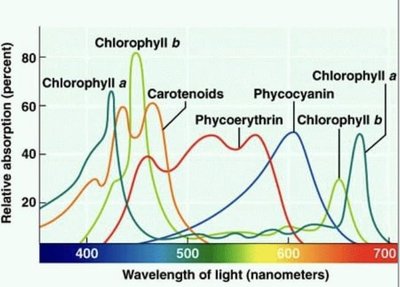
Light: Electromagnetic radiation; captured by pigments (e.g., in photosynthesis or vision).
Mechanical: Energy of motion; used in muscle contraction.
Metabolism: Catabolic and Anabolic Pathways
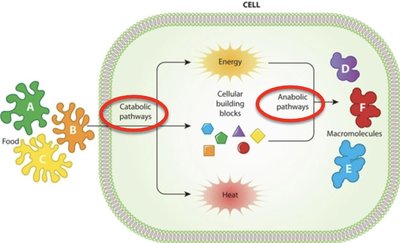
Metabolism is the sum of all biochemical reactions in an organism, divided into two main types:
Catabolic Pathways: Break down molecules, releasing energy (exergonic).
Anabolic Pathways: Build complex molecules from simpler ones, requiring energy (endergonic).
Free Energy and Reaction Types
Spontaneous (Exergonic) Reactions: ; energy is released.
Nonspontaneous (Endergonic) Reactions: ; energy is consumed.
ATP: The Energy Currency
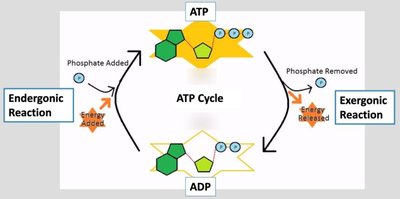
ATP (adenosine triphosphate) stores energy in its phosphate bonds. Hydrolysis of ATP releases energy for cellular work.
ATP Structure: Adenine + ribose sugar + three phosphate groups.
ATP Hydrolysis: ATP + H2O → ADP + Pi + energy (catabolic, exergonic).
ATP Synthesis: ADP + Pi + energy → ATP (anabolic, endergonic).
Coupling of Reactions
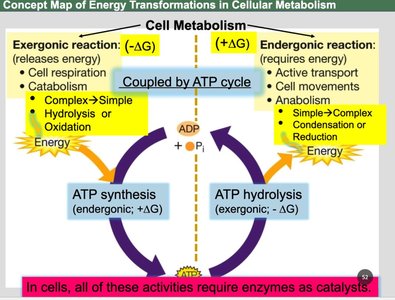
Cells couple exergonic and endergonic reactions, often using ATP hydrolysis to drive endergonic processes.
Enzymes and Biochemical Reactions
Enzyme Function
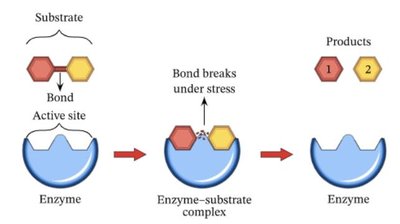
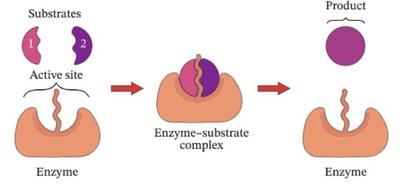
Enzymes are biological catalysts that speed up biochemical reactions by lowering activation energy.
Active Site: Region where substrate binds and reaction occurs.
Enzyme-Substrate Complex: Temporary association during catalysis.
Product Formation: Substrate is converted to product, enzyme is unchanged.
Enzyme Regulation
Competitive Inhibition: Inhibitor resembles substrate and binds active site, blocking substrate.
Allosteric Regulation: Regulatory molecule binds elsewhere, changing enzyme shape and activity.
Cofactors: Nonprotein molecules (e.g., metal ions, coenzymes) required for enzyme function.
Metabolic Pathways
Metabolic pathways are series of linked biochemical reactions, each catalyzed by a specific enzyme, leading to the synthesis or breakdown of molecules.
Cellular Respiration
Overview of Cellular Respiration
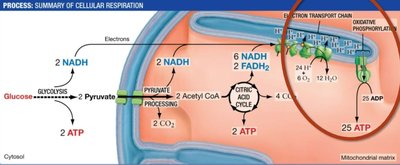
Cellular respiration is the process by which cells extract energy from glucose to produce ATP. It consists of glycolysis, pyruvate processing, the citric acid cycle, and oxidative phosphorylation.
Glycolysis
Location: Cytosol
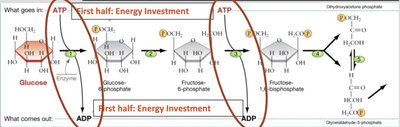
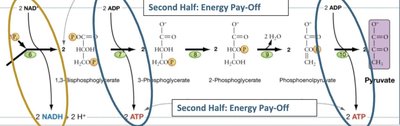
Inputs: Glucose, 2 NAD+, 2 ATP, 4 ADP + 4 Pi
Outputs: 2 Pyruvate, 2 NADH, 4 ATP (2 net ATP)
Substrate-Level Phosphorylation: Direct transfer of phosphate to ADP to form ATP.
Regulation: Inhibited by excess ATP.
Pyruvate Processing and Citric Acid Cycle
Pyruvate Processing: Pyruvate is transported into mitochondria, oxidized to acetyl-CoA, producing NADH and CO2.
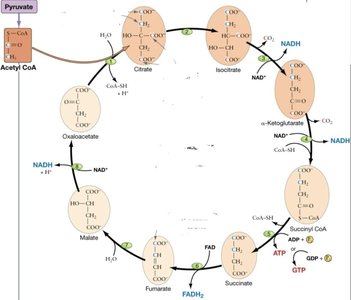
Citric Acid Cycle (TCA/Krebs Cycle): Acetyl-CoA is oxidized, producing NADH, FADH2, ATP, and CO2.
Main Purpose: Reduce NAD+ and FAD to NADH and FADH2.
Electron Transport Chain and Oxidative Phosphorylation
Electron Transport Chain (ETC): NADH and FADH2 donate electrons to protein complexes, which use the energy to pump H+ ions, creating a gradient.
ATP Synthase: H+ flows back through ATP synthase, driving ATP production (chemiosmosis).
Oxygen: Final electron acceptor, forming water.

Anaerobic Respiration and Fermentation
Anaerobic Respiration: Occurs without oxygen; less ATP produced.
Fermentation: Regenerates NAD+ so glycolysis can continue (e.g., lactic acid fermentation in humans, alcoholic fermentation in yeast).
Photosynthesis
Historical Experiments
Von Helmont: Plants grow by absorbing water.
Priestley: Plants change air composition (produce oxygen).
Ingenhousz: Light is required for plants to produce oxygen.
De Saussure: Plants absorb water and CO2 to increase in mass.
Chloroplast Structure and Function
Chloroplasts: Triple membrane system; site of photosynthesis.
Thylakoids: Internal membrane stacks (grana) where light reactions occur.
Photosynthesis Overview
Endergonic, Anabolic Process: Converts light energy to chemical energy.
Redox Reactions: CO2 is reduced to glucose; H2O is oxidized to O2.
Light Reactions
Location: Thylakoid membranes
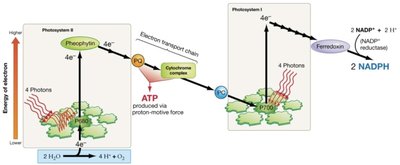
Inputs: Light, H2O, NADP+, ADP + Pi
Outputs: O2, ATP, NADPH
Photosystems I & II: Capture light energy, excite electrons, drive electron transport chain, and produce ATP and NADPH.
Calvin Cycle (Light-Independent Reactions)
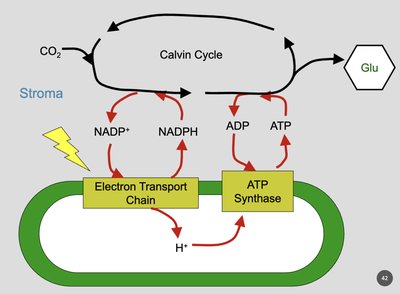
Location: Stroma of chloroplast
Inputs: CO2, ATP, NADPH
Outputs: Carbohydrates (G3P)
Key Enzyme: Rubisco (fixes carbon from CO2)
Phases: Carbon fixation, reduction, regeneration of RuBP
Photorespiration and Adaptations
Photorespiration: Rubisco binds O2 instead of CO2, leading to carbon loss.
CAM Plants: Fix carbon at night, Calvin cycle during day.
C4 Plants: Separate carbon fixation and Calvin cycle in different cell types.
Cell-Cell Interactions and Signaling
Extracellular Structures
Plants: Primary cell wall (cellulose, pectin), secondary cell wall (lignin, waxes).
Animals: Extracellular matrix (ECM) of proteins, glycoproteins, proteoglycans (e.g., collagen).
Cell-Cell Attachments
Plants: Middle lamella (pectins), plasmodesmata (channels for communication).
Animals:
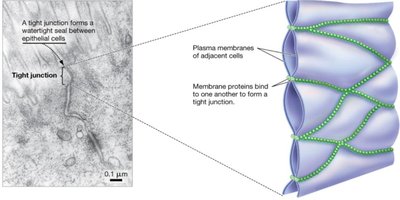
Tight Junctions: Water-tight seals between cells.
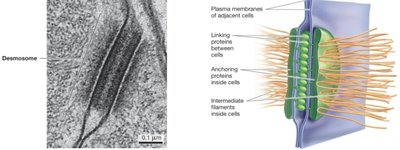
Desmosomes: Strong adhesion points.
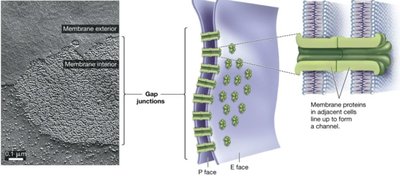
Gap Junctions: Channels for ions and small molecules.
Cell Signaling Pathways
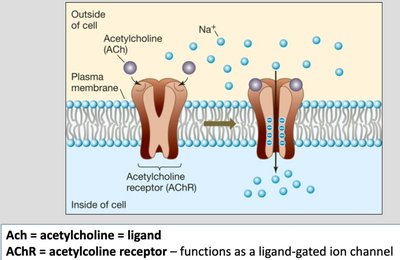
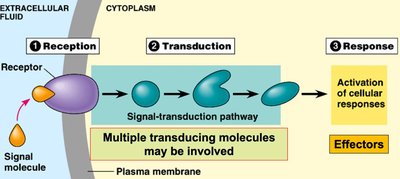
Reception: Signal (ligand) binds to receptor protein, causing a conformational change.
Transduction: Signal is relayed and amplified by secondary messengers and protein cascades.
Response: Cellular activity is altered (e.g., gene expression, metabolism, movement).
Types of Receptors
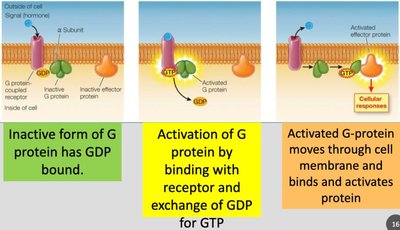
G-Protein Coupled Receptors (GPCRs): Activate G-proteins by exchanging GDP for GTP, triggering downstream effects.
Receptor Tyrosine Kinases (RTKs): Ligand binding leads to phosphorylation of tyrosine residues, activating signaling cascades.
Signal Transduction and Second Messengers
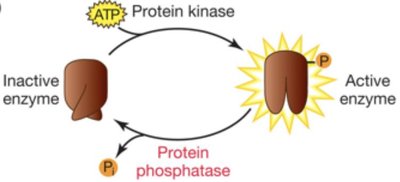
Kinase Cascades: Sequential phosphorylation events amplify the signal.
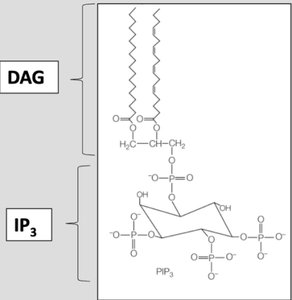
Second Messengers: Small molecules like cAMP, DAG, and IP3 relay and amplify signals inside the cell.
Cellular Responses and Regulation
Cells respond by altering metabolism, gene expression, movement, division, or secretion.
Signaling pathways are tightly regulated and can interact with each other for complex responses.
Cell Cycle Overview
Cell Theory and Division
All living organisms are composed of cells, which arise from pre-existing cells.
Mitotic cell division produces two genetically identical daughter cells for growth, replacement, and repair.
Phases of the Cell Cycle
Interphase: G1 (growth), S (DNA synthesis), G2 (preparation for division), G0 (resting/differentiated state).
Mitotic Phase: Physical separation of chromosomes and cell division.
