 Back
Biogeography: Patterns and Processes in Species Distribution
Study Guide - Smart Notes
 Tailored notes based on your materials, expanded with key definitions, examples, and context.
Biogeography: Variation in Species Diversity and Distribution Across Space
Introduction to Biogeography
Biogeography is the study of the distribution of species and ecosystems across geographic space and through geological time. It seeks to understand the patterns and processes that determine where organisms live, how they got there, and why certain regions are more diverse than others.
Distribution: Refers to how organisms are arranged over space.
Key Influences: History, evolution, climate, physiology, and local interactions all shape biogeographic patterns.
Environmental Factors Limiting Distribution
Both past and present environmental factors, such as climate, topography, and biotic interactions, limit the distribution of organisms. The primary drivers of species distribution globally are temperature and precipitation, which determine the suitability of habitats for different species.
Latitudinal Diversity Gradient
Patterns of Species Diversity by Latitude
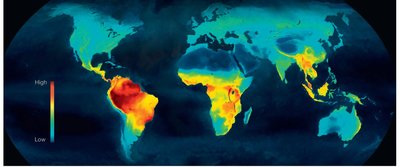
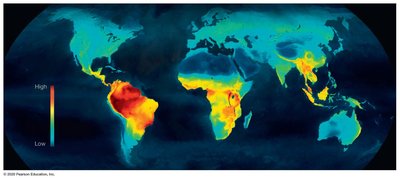
Species diversity is not evenly distributed across the globe. One of the most consistent patterns is the latitudinal diversity gradient, where biodiversity is highest in the tropics and decreases toward the poles. This pattern is observed in both terrestrial and marine environments, though terrestrial diversity is generally higher.
Biodiversity Hotspots: The tropics, especially equatorial regions, support the greatest number of species.
Terrestrial vs. Marine: Approximately 90% of species are terrestrial.
Hypotheses Explaining the Latitudinal Diversity Gradient
Several hypotheses have been proposed to explain why the tropics are more diverse:
1. Energy Hypothesis: Higher solar energy input in the tropics increases productivity and supports more species.
2. Earth History Hypothesis: The tropics have been climatically stable for longer periods, allowing more time for diversification.
3. Evolutionary History Hypothesis: Faster evolutionary rates and lower extinction rates in the tropics promote higher diversity.
4. Ecological Interactions Hypothesis: More intense species interactions (e.g., competition, predation) in the tropics drive niche specialization and coexistence.
Historical Biogeography
Impact of Geological Time and Continental Drift
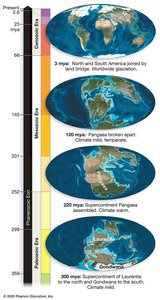
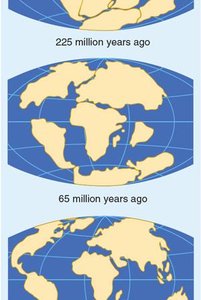
Historical biogeography examines how past environmental changes, such as continental drift and glaciation, have shaped current species distributions. The movement of tectonic plates has separated and rejoined landmasses, leading to vicariance (separation of populations) and long-distance dispersal events.
Vicariance: The splitting of populations by geological events, such as the breakup of continents, leading to speciation.
Dispersal: The movement of organisms across barriers, resulting in colonization of new areas.
Examples of Biogeographic Regions
Regions that have remained connected for long periods tend to have more closely related species, while isolated regions develop unique biotas. For example, the Nearctic and Palearctic regions share some species due to past land bridges, while the Neotropical, Ethiopian, and Australian regions have distinctive faunas due to long-term isolation.
The Theory of Island Biogeography
Species-Area Relationship
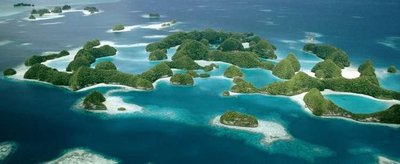
The species-area relationship describes how larger areas tend to support more species due to greater habitat diversity and resources. This relationship is foundational to the theory of island biogeography.
More Niche Space: Larger areas provide more ecological niches.
Lower Extinction Rates: Larger populations are less likely to go extinct.
Equilibrium Theory of Island Biogeography
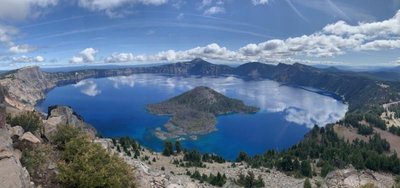
Developed by MacArthur and Wilson, this theory predicts the number of species on an island based on a balance between immigration and extinction rates. Immigration rates are higher for islands closer to the mainland, while extinction rates are lower on larger islands.
Immigration Rate: Determined by proximity to a source population (mainland).
Extinction Rate: Determined by island size; smaller islands have higher extinction rates.
Equilibrium Number of Species: The point where immigration and extinction rates balance.
Factor | Effect on Species Richness |
|---|---|
Island Size (Area) | Larger islands support more species (lower extinction rates) |
Distance from Mainland | Closer islands have higher immigration rates and more species |
Applications and Experimental Evidence
The equilibrium theory has been tested experimentally, such as in Simberloff & Wilson's mangrove island study, where species richness returned to equilibrium after all insects and spiders were removed. The theory also applies to habitat fragments and other isolated ecosystems, not just true islands.
Summary Table: Key Concepts in Biogeography
Concept | Definition | Example |
|---|---|---|
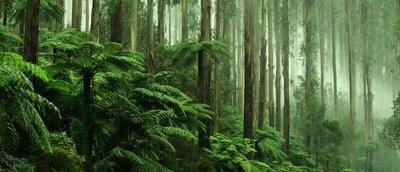
Latitudinal Diversity Gradient | Biodiversity is highest at the equator and decreases toward the poles | Tropical rainforests have more species than temperate forests |
Vicariance | Separation of populations by geological events | Continental drift splitting populations |
Dispersal | Movement of organisms across barriers | Colonization of islands by birds |
Species-Area Relationship | Larger areas support more species | Large islands have more species than small islands |
Island Biogeography | Species richness determined by immigration and extinction rates | Simberloff & Wilson's mangrove experiment |
Additional info: These notes integrate foundational concepts from ecology, evolution, and geology to provide a comprehensive overview of biogeography, suitable for college-level biology students.
