 Back
BackBIOL 1002 Final Exam Study Guide: Key Concepts in Animal Physiology, Ecology, and Population Biology
Study Guide - Smart Notes
 Tailored notes based on your materials, expanded with key definitions, examples, and context.
Digestive System
Stages of Food Processing in Animals
Food processing in animals involves four main stages: ingestion, digestion, absorption, and elimination. These stages ensure that nutrients are extracted from food and waste is expelled.
Ingestion: Intake of food into the mouth.
Digestion: Mechanical and chemical breakdown of food into smaller molecules.
Absorption: Uptake of nutrients by cells lining the digestive tract.
Elimination: Removal of undigested material from the body.
Nutrient Absorption in the Intestine
The small intestine is specialized for nutrient absorption, featuring villi and microvilli that increase surface area. Blood capillaries and lymph vessels transport absorbed nutrients.
Villi: Finger-like projections that maximize surface area for absorption.
Blood Capillaries: Absorb amino acids and sugars.
Lymph Vessels: Absorb fatty acids and glycerol.
Hepatic Portal Vein: Transports nutrients from the intestine to the liver for processing.
Example: Glucose absorbed in the intestine enters the blood capillaries and is transported to the liver via the hepatic portal vein. 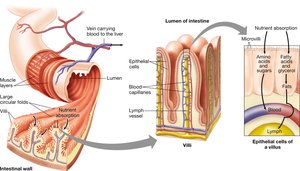
Amylase
Amylase: An enzyme that catalyzes the breakdown of starch into sugars, found in saliva and pancreatic secretions.
Respiration
Mechanisms of Gas Exchange
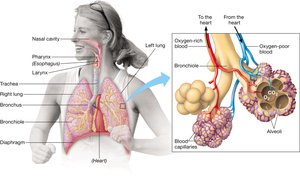
Gas exchange occurs across respiratory surfaces, such as alveoli in mammals, gills in fish, and tracheae in insects. Efficient gas exchange depends on surface area and concentration gradients.
Surface Area: Larger surface area increases efficiency of gas exchange.
Capillaries: Surround alveoli to facilitate exchange of O2 and CO2.
Lymph Vessels: Help remove excess fluid from tissues.
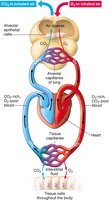
Pathway of Carbon Dioxide Out of the Human Body
Carbon dioxide travels from tissue cells to the lungs via blood, passing through the following structures:
Tissue cells → blood → heart → pulmonary arteries → lungs (alveoli) → bronchi → trachea → pharynx → nasal cavity → exhaled air
Circulatory System
Key Terms and Concepts
The circulatory system transports nutrients, gases, and wastes throughout the body.
Diastole: Relaxation phase of the heart.
Systole: Contraction phase of the heart.
AV (Atrioventricular) Node: Coordinates heart contractions.
SA (Sinoatrial) Node: Pacemaker of the heart.
Heart Murmur: Abnormal heart sound due to valve issues.
ECG (Electrocardiogram): Measures electrical activity of the heart.
Plasma: Liquid component of blood.
Red Blood Cells: Transport oxygen.
White Blood Cells: Defend against pathogens.
Phagocytes: Engulf and digest pathogens.
Platelets: Aid in blood clotting.
Immunoglobulins: Antibodies involved in immune response.
Electrolytes: Minerals that maintain fluid balance.
Immune System
Innate and Adaptive Immunity
The immune system protects against pathogens through innate and adaptive mechanisms.
Innate Immunity: Non-specific defense mechanisms (e.g., skin, phagocytes).
Adaptive Immunity: Specific responses involving lymphocytes and antibodies.
Phagocytosis: Process by which phagocytes engulf pathogens.
Complement System: Proteins that enhance immune responses.
Inflammation: Localized response to infection or injury.
Antigen: Molecule recognized by the immune system as foreign.
Antibody: Protein that binds to antigens and helps neutralize pathogens.
Herd Immunity: Protection of a population when a sufficient proportion is immune.
Autoimmune Disorder: Condition where the immune system attacks the body's own cells.
Endocrine System
Hormone Transport and Targeting
Hormones are chemical messengers carried by the bloodstream to target tissues. Cells respond to hormones if they have specific receptors.
Receptors: Proteins on or in target cells that bind hormones.
Permeable Membranes: Some hormones can cross cell membranes; others require surface receptors.
Regulation of Blood Glucose
Blood glucose is regulated by antagonistic hormones: insulin and glucagon.
Insulin: Lowers blood glucose by promoting uptake into cells.
Glucagon: Raises blood glucose by stimulating release from liver.
Example: After a meal, rising glucose triggers insulin release, promoting storage and lowering blood glucose. 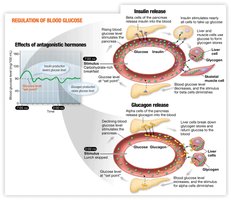
Reproduction
Key Terms and Processes
Budding: Asexual reproduction where offspring form from a parent.
Hermaphrodite: Organism with both male and female reproductive organs; advantage is increased reproductive flexibility.
Endometrium: Uterine lining where embryo implants.
Oogenesis vs. Spermatogenesis: Oogenesis occurs before birth and periodically after puberty; spermatogenesis is continuous after puberty.
Nervous System
Structure and Function of Neurons
Neurons are specialized cells for transmitting electrical signals.
Structures: Dendrites, cell body, axon, synaptic terminals.
Sensory Receptors: Detect stimuli.
Sensory Neurons: Transmit signals to CNS.
Interneurons: Integrate information within CNS.
Motor Neurons: Carry signals to effectors.
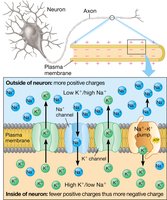
Action Potential
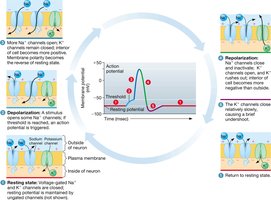
Action potentials are rapid changes in membrane potential that transmit signals along neurons.
Resting State: High K+ inside, high Na+ outside.
Depolarization: Na+ channels open, membrane potential rises.
Repolarization: K+ channels open, membrane potential falls.
Threshold: Minimum stimulus required to trigger action potential.
Synaptic Transmission
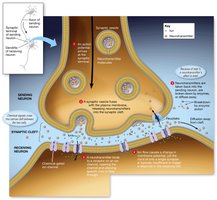
Synapses are junctions where neurons communicate via neurotransmitters.
Excitatory Signals: Open Na+ channels, move membrane potential closer to threshold.
Inhibitory Signals: Open K+ or Cl- channels, move membrane potential farther from threshold.
Biosphere and Ecology
Levels of Ecological Organization
Ecology studies interactions among organisms and their environment.
Organism: Individual living thing.
Population: Group of same species in an area.
Community: All populations in an area.
Ecosystem: Community plus abiotic factors.
Abiotic Factors
Solar Energy: Drives photosynthesis.
Nutrients: Essential for growth.
Wind, Fire, Temperature, Water: Influence distribution and survival.
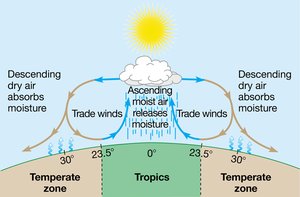
Global Air Circulation and Precipitation
Trade winds and air circulation patterns affect precipitation and climate zones.
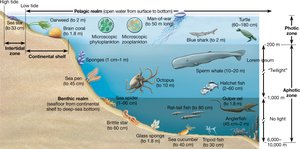
Aquatic Biomes
Photic Zone: Sunlit upper layer.
Phytoplankton: Photosynthetic organisms in water.
Aphotic Zone: Deeper, no light.
Benthic Realm: Bottom of aquatic environment.
Pelagic Realm: Open water.
Estuary: Where freshwater meets saltwater.
Population Biology
Patterns of Population Dispersal
Populations may exhibit clumped, random, or uniform dispersal patterns.
Clumped: Individuals grouped together.
Random: Unpredictable distribution.
Uniform: Even spacing due to competition.
Carrying Capacity and Population Growth
Carrying Capacity (K): Maximum population size an environment can sustain.
Density-Dependent Factors: Factors that limit population growth as density increases (e.g., competition).
Intraspecific Competition: Competition among individuals of the same species.
r-Selected vs. K-Selected Species
r-Selected: High reproductive rate, low investment per offspring, short-lived.
K-Selected: Low reproductive rate, high investment per offspring, long-lived, parental care.
Example: Many insects are r-selected; elephants are K-selected. Additional info: Academic context was added to clarify definitions and processes for each topic.
