 Back
BIOL 120 Study Guide: Cells, Metabolism, and Genetics (Course Syllabus & Structure)
Study Guide - Smart Notes
 Tailored notes based on your materials, expanded with key definitions, examples, and context.
Course Overview
Introduction to Biological Concepts: Cells, Metabolism, and Genetics
This course provides a foundational understanding of biochemistry, cell biology, molecular biology, and genetics for biology and science majors. The curriculum emphasizes cellular organization and processes, metabolism, DNA structure and replication, and Mendelian and population genetics. Students will gain the ability to recognize and describe biological molecules, compare cellular energetics, and understand inheritance principles.
Biochemistry: Study of the chemical processes within and related to living organisms.
Cell Biology: Examination of cell structure, function, and processes.
Molecular Biology: Focus on molecular mechanisms, including DNA and protein synthesis.
Genetics: Principles of inheritance and population diversity.
Course Learning Objectives
Key Competencies
Upon completion, students will be able to:
Recognize and describe the structure and function of biological molecules (proteins, nucleic acids, carbohydrates, lipids).
Outline and compare cellular energetics, cellular metabolism, and photosynthesis.
Describe the structure and function of prokaryotic and eukaryotic cells, including subcellular organization.
Explain the synthesis, structure, and function of nucleic acids and proteins in both prokaryotes and eukaryotes.
Apply principles of inheritance from molecular mechanisms to population consequences.
Evaluate biological knowledge in ethical and social contexts.
Course Materials
Textbook and Access
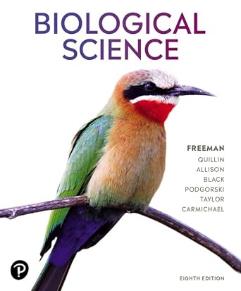
The required textbook is Biological Science, 8th Edition by Scott Freeman et al., accessible via Pearson’s Mastering platform. Students may use the Big Red Backpack Program or purchase directly from Pearson. Access to the e-text and Mastering Biology is essential for homework and assignments.
Course Structure and Schedule
Weekly Topics and Assignments
The course follows a structured schedule, covering major topics in general biology. Key chapters align with the following areas:
Ch. 1: Biology: The Study of Life
Ch. 2: Water and Carbon: The Chemical Basis of Life
Ch. 3: Protein Structure and Function
Ch. 4: Nucleic Acids and the RNA World
Ch. 5–7: Carbohydrates, Lipids, Membranes, and Cell Structure
Ch. 8–10: Metabolism, Cellular Respiration, and Photosynthesis
Ch. 11–16: Cell Cycle, Meiosis, Mendelian Genetics, DNA Synthesis, and Gene Expression
Exams and assignments are scheduled throughout the semester, with flexibility for missed quizzes and homework (lowest grades dropped).
Grading and Assessment
Components and Weighting
Course Component | Percent of Final Grade |
|---|---|
In-class activities/quizzes (lowest 2 dropped) | 20% |
Homework assignments (lowest 2 dropped) | 30% |
4 unit exams (lowest 1 dropped) | 35% |
Comprehensive Final Exam | 15% |
The grading scale is as follows:
A: 90% or higher
B: 80–89%
C: 70–79%
D: 60–69%
F: 59% or below
Technology Requirements
Software and Exam Procedures
Students must have access to a PC or Mac with Microsoft Office. Exams are taken using Respondus Lockdown Browser via Blackboard. Chromebooks and smartphones are not permitted for exams. All course content, including grades and assignments, is managed through Blackboard.
Academic Integrity and AI Policy
Collaboration and Use of AI Tools
Collaboration is encouraged for homework and studying, but quizzes and exams must be completed individually. AI tools may be used for studying, but not for graded assessments. Students are advised to critically evaluate AI-generated information and avoid over-reliance on such tools.
Communication and Support
Instructor Contact and University Resources
Students are encouraged to reach out via email for assistance. Professional communication is expected. University policies regarding accommodations, academic integrity, and student support are accessible online.
Strategies for Success
Study Habits and Course Engagement
Attend class regularly; exams and quizzes are based on lecture and textbook material.
Take written notes for better retention.
Establish a consistent study routine early in the semester.
Complete all assignments and quizzes to maximize points.
Colonnade Program and Essential Skills
General Education Requirements
This course fulfills a natural science requirement and emphasizes scientific inquiry, application of principles, and relevance to personal and public issues. Students will develop competency in knowledge application, connecting theoretical content to career-relevant skills.
Visual Supplement
Cell Structure and Organization
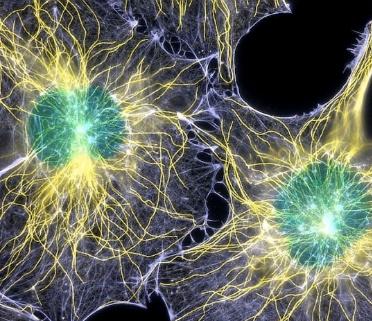
Understanding cell structure is fundamental to biology. The cytoskeleton, visible in microscopy images, is essential for maintaining cell shape, enabling movement, and organizing cellular components.
 Additional info: The syllabus aligns closely with the General Biology course topics, covering chapters on biochemistry, cell structure, metabolism, genetics, and molecular biology. The included images are directly relevant: the textbook cover (image_1) and a microscopy image of cell structure (image_3). Image_2 is not included, as it is not directly relevant to the academic content.
