 Back
BackBIOL211 Exam 1 Review: Foundations of Biology, Chemistry of Life, and Cell Structure
Study Guide - Smart Notes
 Tailored notes based on your materials, expanded with key definitions, examples, and context.
Key Themes of Biology
Cell Theory
The cell theory is a fundamental concept in biology, stating that cells are the lowest level of biological organization capable of performing all activities required for life. All living organisms are composed of one or more cells, and all cells arise from pre-existing cells.
Cells are the basic units of structure and function in living things.
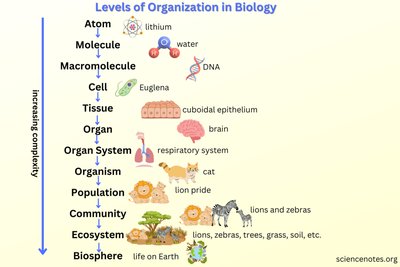
Biological organization increases in complexity from atoms to the biosphere.
DNA and Heredity
DNA (deoxyribonucleic acid) is the molecule that stores genetic information in all living organisms. Genes, which are segments of DNA, serve as units of inheritance, ensuring the continuity of life from one generation to the next.
Chromosomes are structures within cells that contain DNA.
Genes encode instructions for building proteins and are passed from parents to offspring.
Evolution
Evolution explains both the unity and diversity of life. It is the process by which populations of organisms change over generations through inherited characteristics. Charles Darwin's observations and inferences form the foundation of evolutionary theory.
Evolution accounts for adaptation and speciation.
Natural selection is a key mechanism of evolution.
Emergence vs. Reductionism
Emergence refers to new properties that arise when individual components interact at higher levels of organization. Reductionism involves breaking down complex systems into simpler parts for study.
Emergent properties are not present at lower levels but arise from interactions at higher levels.
Reductionism helps in understanding the function of individual components.
Properties of Life and Scientific Methods
Characteristics of Life
All living organisms share seven key characteristics:
Order
Evolutionary adaptation
Regulation (homeostasis)
Reproduction
Response to the environment
Growth and development
Energy processing
Scientific Method
The scientific method is a systematic approach to inquiry in biology.
Hypothesis: A testable and falsifiable proposed explanation.
Theory: A broad, well-supported scientific explanation.
Independent variable: The factor manipulated in an experiment.
Dependent variable: The factor measured or observed.
Feedback Mechanisms
Feedback mechanisms regulate biological systems:
Positive feedback: Amplifies changes (e.g., blood clotting).
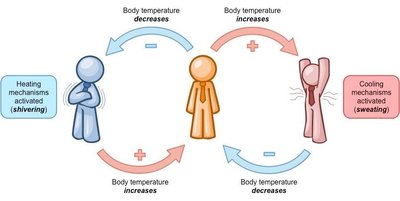
Negative feedback: Counteracts changes, maintaining homeostasis (e.g., body temperature regulation).
Chemistry of Water
Structure and Properties of Water
Water is a polar covalent molecule, with hydrogen bonds forming between molecules. These properties are essential for life.
High specific heat: Water resists temperature changes, stabilizing environments.
High heat of vaporization: Large amounts of energy are needed for evaporation.
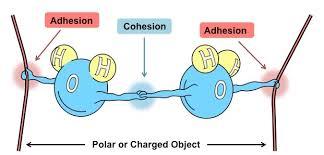
Cohesion: Water molecules stick to each other due to hydrogen bonding.
Adhesion: Water molecules stick to other polar or charged substances.
Solubility: Water is the "universal solvent" due to its polarity.
pH, Buffers, and Ocean Acidification
pH and Buffers
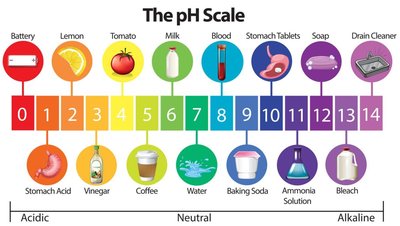
The pH scale measures the concentration of hydrogen ions (H+) in a solution.
pH 7 is neutral; pH < 7 is acidic; pH > 7 is basic (alkaline).
Acids donate H+; bases accept H+.
Buffers resist changes in pH, maintaining homeostasis (e.g., carbonic acid system in blood).
Ocean Acidification
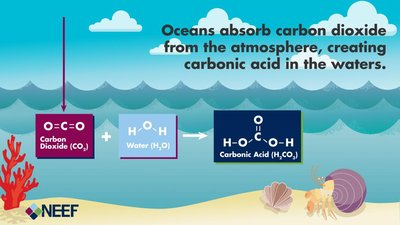
Ocean acidification is caused by increased CO2 absorption by oceans, forming carbonic acid and lowering pH. This process threatens marine life, including coral reefs.
CO2 + H2O → H2CO3 (carbonic acid)
Leads to coral bleaching and ecosystem disruption.
Functional Groups in Organic Molecules
Major Functional Groups
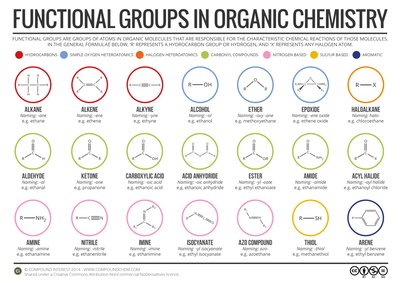
Functional groups are specific groups of atoms within molecules that determine the chemical properties and reactions of organic compounds.
Hydroxyl (-OH): Polar, found in alcohols.
Carbonyl (C=O): Polar, found in ketones and aldehydes.
Carboxyl (-COOH): Acidic, found in amino acids and fatty acids.
Amino (-NH2): Basic, found in amino acids.
Sulfhydryl (-SH): Forms disulfide bonds, found in some proteins.
Phosphate (-PO43-): Found in ATP and nucleic acids.
Methyl (-CH3): Nonpolar, affects gene expression.
Cell Structure and Types
Prokaryotes vs. Eukaryotes
Cells are classified as prokaryotic or eukaryotic based on their internal structure.
Prokaryotes: Lack a nucleus and membrane-bound organelles; generally smaller and simpler (e.g., bacteria).
Eukaryotes: Have a nucleus and membrane-bound organelles; usually larger and more complex (e.g., plants, animals, fungi, protists).
Key Organelles
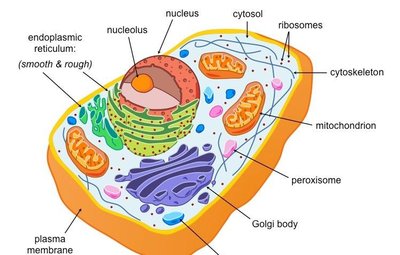
Mitochondria: Site of ATP (energy) production.
Plasma membrane: Phospholipid bilayer controlling entry and exit of substances.
Nucleus: Contains genetic material (DNA).
Endomembrane system: Includes the nuclear envelope, endoplasmic reticulum, Golgi apparatus, lysosomes, and vesicles.
Endomembrane System
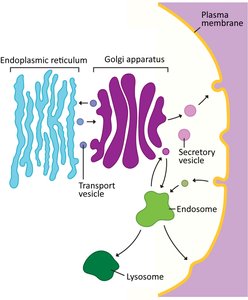
The endomembrane system is responsible for protein and lipid synthesis, transport, and detoxification.
Protein pathway: nuclear envelope → endoplasmic reticulum (ER) → transport vesicles → Golgi apparatus → plasma membrane/lysosome/vacuole.
Smooth ER: Synthesizes lipids and carbohydrates, detoxifies poisons, stores calcium ions.
Macromolecules and Elements of Life
Major Macromolecules
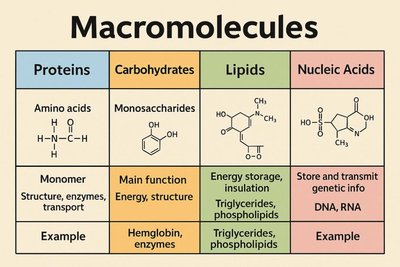
Living organisms are composed of four major classes of macromolecules, each with distinct functions and building blocks.
Proteins: Enzymes, transport, signaling, structure (monomer: amino acids).
Carbohydrates: Short-term energy, structure (monomer: monosaccharides).
Lipids: Membranes, energy storage, hormones (not true polymers; include triglycerides, phospholipids).
Nucleic acids: Genetic information storage (DNA, RNA; monomer: nucleotides).
Macromolecule | Monomer | Main Function | Example |
|---|---|---|---|
Proteins | Amino acids | Structure, enzymes, transport | Hemoglobin, enzymes |
Carbohydrates | Monosaccharides | Energy, structure | Starch, cellulose |
Lipids | Fatty acids, glycerol | Energy storage, insulation | Triglycerides, phospholipids |
Nucleic Acids | Nucleotides | Store and transmit genetic info | DNA, RNA |
Elements of Life
About 96% of living matter is composed of carbon (C), hydrogen (H), oxygen (O), and nitrogen (N).
Carbon's four valence electrons allow it to form large, complex molecules.
Proteins and Protein Folding
Levels of Protein Structure
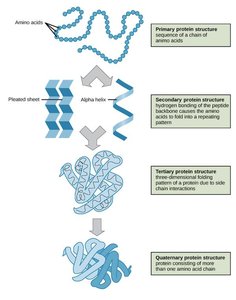
Proteins must fold into specific shapes to function properly. The structure of a protein is organized into four levels:
Primary structure: Linear sequence of amino acids.
Secondary structure: Local folding into alpha helices and beta sheets due to hydrogen bonding.
Tertiary structure: Overall 3D shape formed by R-group interactions.
Quaternary structure: Association of multiple polypeptide chains.
Cell Membrane Structure and Function
Plasma Membrane (Phospholipid Bilayer)
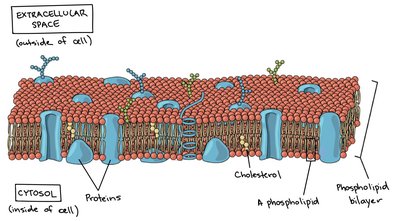
The plasma membrane is a selectively permeable barrier composed of a phospholipid bilayer with embedded proteins. It separates the cell's interior from the external environment.
Hydrophilic heads face outward; hydrophobic tails face inward.
Fluid mosaic model: Membrane is flexible (fluid) and contains a mosaic of proteins.
Allows selective passage of small, non-polar molecules.
Membrane Transport Mechanisms
Diffusion
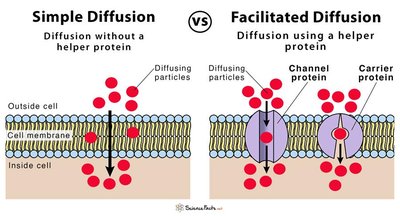
Diffusion is the passive movement of molecules from an area of higher concentration to lower concentration.
Simple diffusion: Direct movement through the membrane; no protein or ATP required.
Facilitated diffusion: Movement via membrane proteins; no ATP required.
Active transport: Movement against the concentration gradient; requires ATP.
Secondary active transport: Uses ion gradients (symport and antiport mechanisms).
Bulk transport: Endocytosis (phagocytosis, pinocytosis, receptor-mediated) and exocytosis (requires ATP).
Osmosis and Tonicity
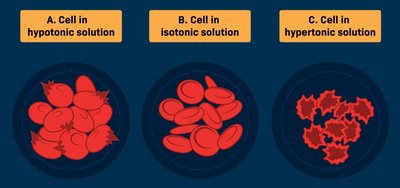
Osmosis is the diffusion of water across a selectively permeable membrane. Tonicity describes the relative concentration of solutes in solutions inside and outside the cell.
Hypertonic: Higher solute concentration outside; water leaves cell, causing shrinkage (crenation in animals, plasmolysis in plants).
Hypotonic: Lower solute concentration outside; water enters cell, causing swelling (lysis in animals, turgid in plants).
Isotonic: Equal solute concentration; no net water movement.
Aquaporins: Membrane proteins that facilitate rapid water movement.
High Yield Concepts (Areas of Focus)
Endomembrane System
Cell structure (prokaryotes vs eukaryotes)
Water
Proteins
Diffusion
Osmosis and Tonicity
pH and buffers
Scientific Methods
