 Back
Biological Macromolecules: Structure, Function, and Laboratory Identification
Study Guide - Smart Notes
 Tailored notes based on your materials, expanded with key definitions, examples, and context.
Biological Macromolecules
Overview of Biological Macromolecules
Biological macromolecules are large, complex molecules essential for life, including carbohydrates, lipids, proteins, and nucleic acids. All are organic molecules, meaning they are carbon-based, and are typically composed of smaller units called monomers that join to form polymers.
Carbohydrates: Energy storage and structural support
Lipids: Long-term energy storage, membrane structure, signaling
Proteins: Enzymatic activity, structural support, transport, signaling
Nucleic Acids: Information storage and transmission

Monomers and Polymers
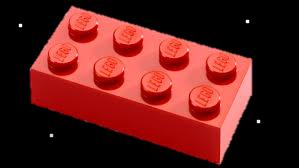
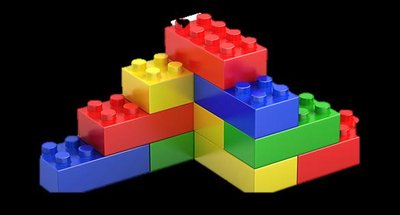
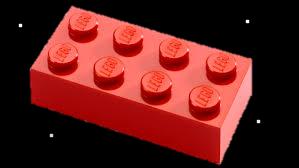
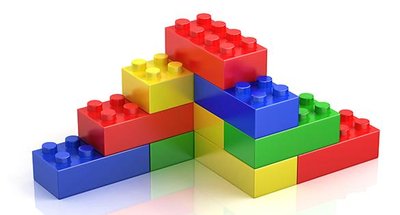
Monomers are the basic building blocks of macromolecules, while polymers are chains of monomers linked together. This relationship can be illustrated using building blocks, where individual blocks (monomers) combine to form larger structures (polymers).
Monomer: Single unit (e.g., amino acid, nucleotide, monosaccharide)
Polymer: Multiple units joined (e.g., protein, DNA, polysaccharide)
Dehydration Synthesis and Hydrolysis
Macromolecules are assembled and broken down through two key reactions:
Dehydration Synthesis: Joins monomers by removing water (), forming covalent bonds.
Hydrolysis: Breaks polymers into monomers by adding water.
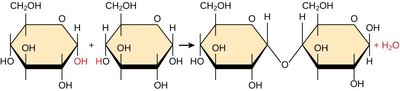
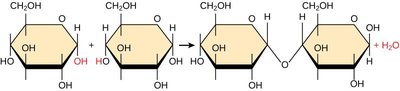
Example: Formation of maltose from two glucose molecules via dehydration synthesis.
Carbohydrates
Structure and Types
Carbohydrates are composed of carbon, hydrogen, and oxygen, and serve as energy sources and structural materials. They are classified based on the number of sugar units:
Monosaccharides: Single sugar units (e.g., glucose, fructose, galactose)
Disaccharides: Two sugar units (e.g., sucrose, maltose)
Polysaccharides: Many sugar units (e.g., starch, cellulose, chitin)
Monosaccharides
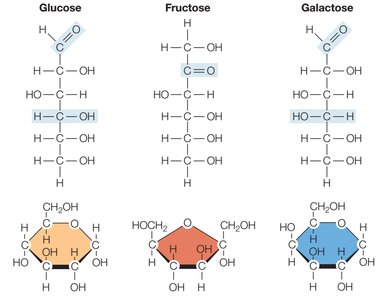
Monosaccharides are the simplest carbohydrates and serve as the primary energy source for cells. Common examples include glucose, fructose, and galactose.
Glucose: Main energy source for cells
Fructose: Found in fruits
Galactose: Component of milk sugar
Disaccharides and Polysaccharides
Disaccharides are formed by joining two monosaccharides via dehydration synthesis. Polysaccharides are long chains of monosaccharides and serve as energy storage or structural materials.
Starch: Energy storage in plants
Glycogen: Energy storage in animals
Cellulose: Structural component in plant cell walls
Chitin: Structural component in arthropod exoskeletons
Functions and Laboratory Identification
Carbohydrates are identified in the lab using specific tests:
Benedict's Test: Detects reducing sugars (monosaccharides)
Iodine Test: Detects starch (polysaccharide)
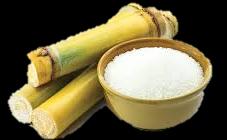
Example: Sugar cane is a source of sucrose, a disaccharide.
Lipids
Structure and Types
Lipids are hydrophobic molecules, meaning they do not dissolve in water. They include fats, oils, waxes, phospholipids, and steroids. Lipids do not have true monomers or polymers but are composed of subunits such as fatty acids and glycerol.
Fats and Oils: Long-term energy storage
Waxes: Waterproofing
Phospholipids: Major component of cell membranes
Steroids: Structure and communication (e.g., cholesterol, hormones)

Saturated vs. Unsaturated Fats
Saturated fats have no double bonds in their fatty acid chains and are solid at room temperature. Unsaturated fats have one or more double bonds and are liquid at room temperature.
Saturated fats: Most animal fats (e.g., butter)
Unsaturated fats: Plant and fish oils
Proteins
Structure and Function
Proteins are polymers made of amino acid monomers. They perform a wide variety of functions in living organisms, including catalyzing reactions (enzymes), providing structure, transporting molecules, and signaling.
Monomer: Amino acid
Polymer: Polypeptide/protein
Functions: Enzymes, structural proteins, transport, defense, signaling
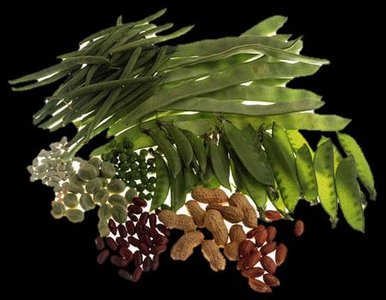
Protein Structure
Proteins have four levels of structure: primary, secondary, tertiary, and quaternary. The shape of a protein is critical to its function and can be altered (denatured) by heat, acid, or salt.
Primary structure: Sequence of amino acids
Secondary structure: Alpha helices and beta sheets
Tertiary structure: Three-dimensional folding
Quaternary structure: Multiple polypeptides joined
Nucleic Acids
Structure and Function
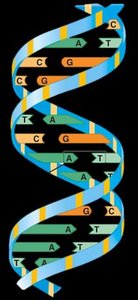
Nucleic acids, including DNA and RNA, are polymers of nucleotide monomers. They store and transmit genetic information and provide instructions for building proteins.
Monomer: Nucleotide (composed of a sugar, phosphate, and nitrogenous base)
Polymer: Nucleic acid (DNA or RNA)
Function: Information storage and transmission
Laboratory Concepts
Indicators and Controls
Indicators are substances used to detect the presence of specific macromolecules in laboratory tests. Positive controls contain the target molecule and should yield a positive result, while negative controls lack the target molecule and should yield a negative result.
Example of positive control: Glucose solution for Benedict's test
Example of negative control: Distilled water
Summary Table: Biological Macromolecules
Macromolecule | Monomer | Polymer | Function | Example |
|---|---|---|---|---|
Carbohydrates | Monosaccharide | Polysaccharide | Energy storage, structure | Starch, cellulose |
Lipids | No true monomer | No true polymer | Energy storage, membranes, signaling | Butter, oils, cholesterol |
Proteins | Amino acid | Polypeptide/protein | Enzymes, structure, transport | Keratin, insulin |
Nucleic Acids | Nucleotide | DNA/RNA | Information storage | DNA, RNA |
Practice Questions and Applications
Insulin is a protein molecule.
Glucose is a carbohydrate molecule.
Type 2 diabetes is related to abnormal protein function.
Example: Grapes are a source of glucose, a monosaccharide.
Additional info: The notes expand on brief points from the original materials, providing definitions, examples, and context for each macromolecule. Laboratory identification methods and the importance of controls are also included for completeness.
