 Back
Biological Membranes and Transport Across Them
Study Guide - Smart Notes
 Tailored notes based on your materials, expanded with key definitions, examples, and context.
Biological Membranes and Transport Across Them
Structure and Composition of Biological Membranes
Biological membranes are essential structures that define the boundaries of cells and organelles, regulate the passage of substances, and maintain cellular integrity. The primary component of these membranes is the phospholipid bilayer, which is supplemented by proteins, cholesterol, and carbohydrate chains.
Phospholipids: Amphipathic molecules with a hydrophilic (polar) head and two hydrophobic (nonpolar) tails. This dual nature drives the formation of bilayers in aqueous environments.
Cholesterol: Embedded within the bilayer, cholesterol modulates membrane fluidity and stability.
Proteins: Integral and peripheral proteins serve functions such as transport, signaling, and structural support.
Carbohydrate Chains: Attached to proteins or lipids on the membrane's exterior, these chains act as cellular identity tags.
Phospholipid Structure and Behavior in Water
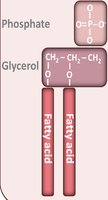
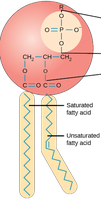
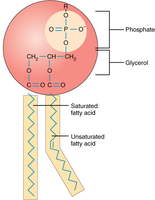
Phospholipids consist of a glycerol backbone, two fatty acid tails, and a phosphate group. The hydrophilic head interacts with water, while the hydrophobic tails avoid water, resulting in bilayer formation.
Hydrophilic Head: Contains a phosphate group, which is polar and interacts with water.
Hydrophobic Tails: Comprised of fatty acids, which are nonpolar and repel water.
Amphipathic Nature: Drives self-assembly into bilayers, with heads facing outward toward water and tails inward away from water.
Types of Lipids in Biological Membranes
Lipids are hydrophobic organic molecules. The three main types found in nature are:
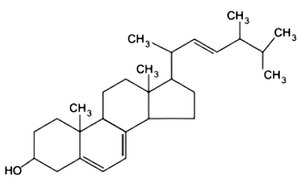
Sterols: e.g., cholesterol, testosterone, estrogen
Triglycerides: e.g., animal fats, plant oils
Phospholipids: Main component of biological membranes
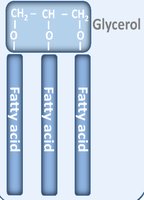
Formation and Properties of Phospholipids
Phospholipids are synthesized in the smooth endoplasmic reticulum. Their amphipathic nature is crucial for membrane formation and function.
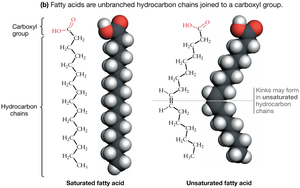
Fatty Acid Tails: Can be saturated (all single bonds) or unsaturated (one or more double bonds), affecting membrane fluidity.
Phosphate Group: Adds polarity to the head region.
Phospholipid Bilayer Formation
The amphipathic property of phospholipids leads to bilayer formation in water. Hydrophilic heads face the aqueous environment, while hydrophobic tails face inward, away from water.
Bilayer Structure: Provides a flexible, fluid-like barrier.
Self-Assembly: Driven by the avoidance of water by hydrophobic tails.
Fluidity and Permeability of Membranes
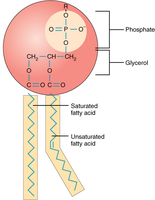
Membrane fluidity and permeability are influenced by the nature of phospholipid tails, cholesterol content, and temperature.
Unsaturated Tails: Introduce kinks, increasing fluidity and permeability.
Saturated Tails: Pack tightly, reducing fluidity.
Cholesterol: Stabilizes membranes at high temperatures and prevents over-clumping at low temperatures.
Temperature: High temperature increases fluidity; low temperature decreases it.
Fluid Mosaic Model
The fluid mosaic model describes the dynamic nature of biological membranes, where lipids and proteins move laterally within the bilayer, creating a flexible and adaptable structure.
Components: Phospholipids, proteins, cholesterol, and carbohydrates
Movement: Lateral mobility of components allows for membrane flexibility and function
Selective Permeability of Membranes
Biological membranes are selectively permeable, allowing only certain substances to cross. Permeability depends on molecule size, polarity, and charge.
High Permeability: Small, nonpolar molecules (e.g., O2, CO2)
Low Permeability: Large, polar molecules and charged ions
Transport Proteins: Facilitate movement of less permeable substances
Transport Across Membranes
Substances move across membranes via passive or active transport, depending on concentration gradients and energy requirements.
Passive Transport: Diffusion and facilitated diffusion (no energy required)
Active Transport: Movement against concentration gradient (requires energy, typically ATP)
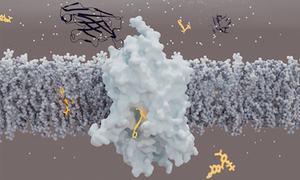
Diffusion
Diffusion is the passive movement of substances from areas of high concentration to low concentration.
Simple Diffusion: Direct movement across the bilayer for permeable substances
Facilitated Diffusion: Movement via transport proteins for less permeable substances
Osmosis
Osmosis is the diffusion of water across a selectively permeable membrane. Water moves from areas of higher concentration to lower concentration.
Hypertonic Solution: Higher solute, lower water concentration outside the cell; water moves out, causing cell shrinkage
Hypotonic Solution: Lower solute, higher water concentration outside the cell; water moves in, causing cell swelling
Isotonic Solution: Equal solute and water concentrations; no net movement
Facilitated Diffusion via Transport Proteins
Transport proteins enable the movement of specific molecules across the membrane.
Channel Proteins: Form pores for small polar molecules and ions
Carrier Proteins: Undergo conformational changes to transport larger molecules like sugars
Pump Proteins: Use energy to move substances against their concentration gradient
Active Transport
Active transport requires energy to move substances from low to high concentration, often using ATP.
Pump Proteins: Highly specific, use energy to transport molecules
Summary Table: Membrane Transport Mechanisms
Transport Type | Energy Required | Direction | Protein Involved | Example |
|---|---|---|---|---|
Simple Diffusion | No | High to Low | No | O2, CO2 |
Facilitated Diffusion | No | High to Low | Yes (Channel/Carrier) | Glucose, ions |
Osmosis | No | High to Low (water) | Yes (Aquaporin) | Water |
Active Transport | Yes (ATP) | Low to High | Yes (Pump) | Na+/K+ pump |
Key Equations
Diffusion: Net movement from high to low concentration
Osmosis: Water moves from high to low concentration
Additional info:
Organisms adapted to hot climates often have membranes with more unsaturated fatty acid tails, shorter tails, and higher cholesterol content to maintain optimal fluidity and permeability.
