 Back
Biological Molecules: Structure, Properties, and Functions
Study Guide - Smart Notes
 Tailored notes based on your materials, expanded with key definitions, examples, and context.
BIG IDEA: Structure Relates to Function
Overview of Biological Molecules
Biological molecules are the fundamental components of cells, each with specific chemical properties that determine their function. The four major classes are carbohydrates, lipids, proteins, and nucleic acids. Their structure, including the arrangement of atoms and functional groups, directly influences their behavior and role in biological systems.
Carbohydrates: Energy storage and structural support
Lipids: Energy storage, membrane structure, signaling
Proteins: Enzymatic activity, structural support, transport
Nucleic Acids: Information storage and transfer
Water, Acids, Bases, and pH
Properties of Water and pH
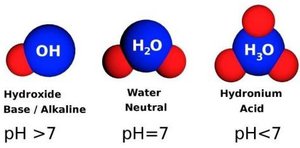
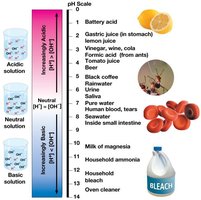
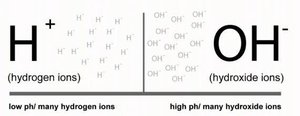
Water is a universal solvent, and its ability to dissociate into H+ and OH- ions is crucial for biological processes. The pH scale measures the concentration of hydrogen ions in a solution, affecting the structure and function of biomolecules.
Acids: Increase H+ concentration (pH < 7)
Bases: Increase OH- concentration (pH > 7)
Neutral: Equal concentrations of H+ and OH- (pH = 7)
Buffers in Biological Systems
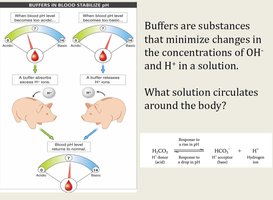
Buffers are substances that minimize changes in pH by absorbing or releasing H+ or OH-. In human blood, the carbonic acid-bicarbonate system is vital for maintaining pH stability.
Buffer system equation:
Buffers contain a weak acid and its conjugate base
Functional Groups and Isomers
Functional Groups
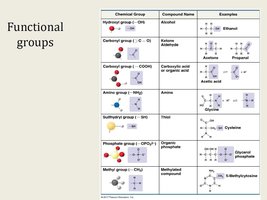
Functional groups are specific groups of atoms within molecules that determine their chemical reactivity and properties. Common functional groups include hydroxyl, carboxyl, amino, phosphate, and methyl. Their presence and charge can change depending on the pH of the environment.
Hydroxyl (-OH): Alcohols, increases solubility
Carboxyl (-COOH): Acids, can donate H+
Amino (-NH2): Bases, can accept H+
Phosphate (-PO4): Energy transfer (ATP)
Methyl (-CH3): Nonpolar, affects gene expression
Isomers
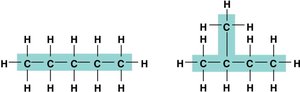
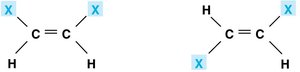
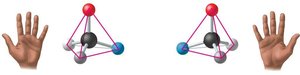
Isomers are molecules with the same molecular formula but different structures, resulting in distinct properties.
Structural isomers: Different covalent arrangements
Cis-trans isomers: Different spatial arrangements around a double bond
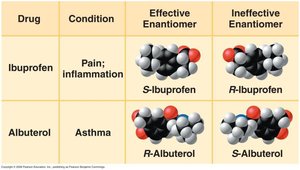
Enantiomers: Mirror images, important in biological specificity
Polymers and Monomers
Making and Breaking Polymers
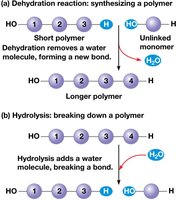
Biological polymers are formed from monomers through dehydration synthesis (condensation), which removes water to create bonds. Hydrolysis breaks polymers into monomers by adding water.
Dehydration synthesis:
Hydrolysis:
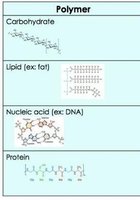
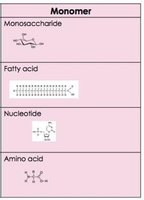
Monomers and Polymers Table
Polymer | Monomer |
|---|---|
Carbohydrate | Monosaccharide |
Lipid (ex: fat) | Fatty acid |
Nucleic acid (ex: DNA) | Nucleotide |
Protein | Amino acid |
Carbohydrates
Structure and Types
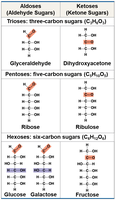
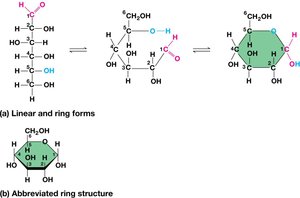
Carbohydrates are composed of carbon, hydrogen, and oxygen, typically in the ratio (CH2O)n. They are classified by the number of sugar units:
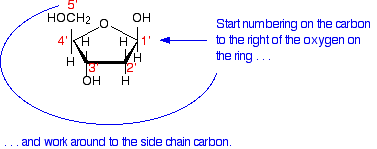
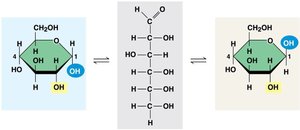
Monosaccharides: Single sugar units (e.g., glucose, fructose, ribose)
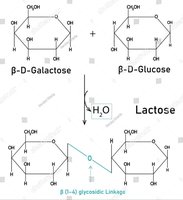
Disaccharides: Two monosaccharides joined by glycosidic linkage (e.g., sucrose, lactose)
Polysaccharides: Many monosaccharides (e.g., starch, glycogen, cellulose, chitin)
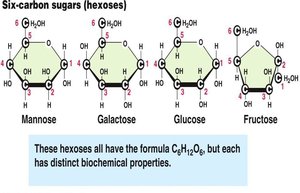
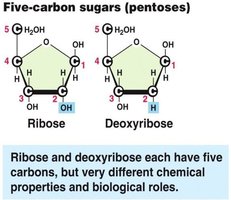
Disaccharides
Disaccharides are formed by dehydration reactions between two monosaccharides, creating a glycosidic bond. Examples include sucrose (glucose + fructose) and lactose (glucose + galactose). 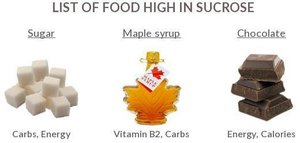
Polysaccharides
Polysaccharides serve as storage or structural molecules.
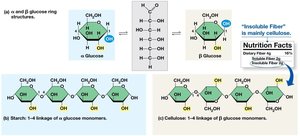
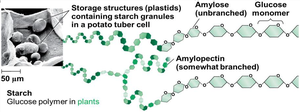
Starch: Storage in plants, composed of α-glucose, somewhat branched
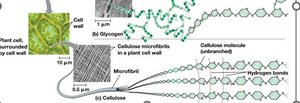
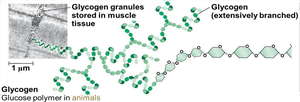
Glycogen: Storage in animals, highly branched α-glucose polymer
Cellulose: Structural in plants, β-glucose, unbranched, forms strong fibers
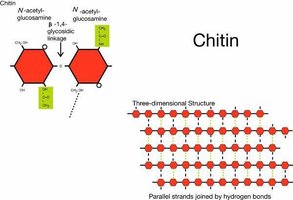
Chitin: Structural in fungi and arthropods, similar to cellulose but with nitrogen groups

Lipids
Structure and Types
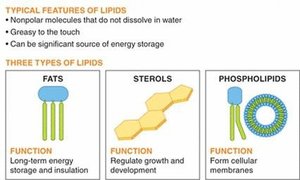
Lipids are hydrophobic molecules, not true polymers, and include fats, phospholipids, and steroids. Their functions include energy storage, membrane structure, and signaling.
Fats (Triglycerides): Glycerol + 3 fatty acids, energy storage
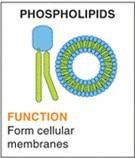
Phospholipids: Glycerol + 2 fatty acids + phosphate group, membrane structure
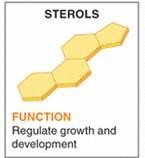
Steroids: Four fused carbon rings, signaling molecules (e.g., cholesterol, hormones)
Fats: Saturated vs. Unsaturated
Saturated fatty acids: No double bonds, solid at room temperature (e.g., butter)
Unsaturated fatty acids: One or more double bonds, liquid at room temperature (e.g., olive oil)
Phospholipids
Phospholipids are amphipathic, with a hydrophilic head and hydrophobic tails. They form bilayers in cell membranes.
Steroids
Steroids have a characteristic four-ring structure. Cholesterol is a key component of animal cell membranes and precursor to steroid hormones.
Summary Table: Biological Molecules
Class | Monomer | Polymer | Function |
|---|---|---|---|
Carbohydrate | Monosaccharide | Polysaccharide | Energy, structure |
Lipid | Fatty acid | Triglyceride, phospholipid, steroid | Energy, membranes, signaling |
Protein | Amino acid | Polypeptide | Enzymes, structure, transport |
Nucleic Acid | Nucleotide | DNA, RNA | Information storage |
Key Vocabulary
Functional group: Atom group affecting molecule properties
Monomer: Small building block
Polymer: Chain of monomers
Condensation (dehydration synthesis): Forms polymers by removing water
Hydrolysis: Breaks polymers by adding water
Glycosidic linkage: Bond between sugar monomers
Saturated/unsaturated fatty acid: With/without double bonds
Triglyceride: Fat molecule
Phospholipid: Membrane lipid
Isomer: Same formula, different structure
Buffer: Maintains pH stability
Additional info:
Enantiomers are critical in pharmacology, as only one form may be biologically active.
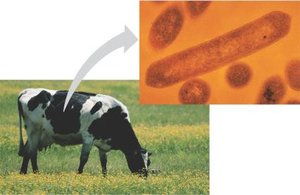
Cellulose is indigestible by most animals, but some (e.g., cows) have symbiotic microbes to break it down.
Chitin is found in both fungi and arthropods, providing structural support.
