 Back
BackBiology 115: Organismal Form and Function – Syllabus Study Guide
Study Guide - Smart Notes
 Tailored notes based on your materials, expanded with key definitions, examples, and context.
Course Overview
Introduction to Organismal Form and Function
Biology 115 at Spelman College explores the diversity of multicellular organisms, focusing on how plants, fungi, and animals respond to fundamental biological and ecological challenges. The course integrates lecture and laboratory activities in a student-centered, active learning format, emphasizing the central role of evolution and the physiological and structural adaptations organisms use to meet challenges such as energy acquisition, gas exchange, homeostasis, reproduction, defense, and information processing.
Course Goals and Objectives
Learning Outcomes
Understand Evolution: Recognize evolution as the major organizing principle in biology.
Identify Challenges: Describe biological and ecological challenges driving evolutionary adaptations.
Compare Mechanisms: Correlate and compare physiological and structural mechanisms in plants and animals.
Organ Systems: Understand the organization and function of major organ systems.
Scientific Skills: Develop analytical, quantitative, and critical thinking skills.
Communication: Use precise terminology and conventions in scientific discussions and presentations.
Specific Objectives
Describe the organization of basic plant and animal organs.
Compare marine, freshwater, and terrestrial environments.
Explain water and mineral transport in vascular plants.
Trace food through the human digestive system and describe chemical changes.
Sketch and annotate the human circulatory system, noting oxygen and carbon dioxide concentrations.
Link stimuli to responses and discuss adaptive significance in plants and animals.
Diagram negative feedback in hormonal control of homeostasis.
Describe effects of diuretics on urine output.
Explain vaccine function and immune response mechanisms.
Discuss hormonal control of the human menstrual cycle.
Compare development of basic body plans in plants and animals.
Present technical lectures with background, content, and relevance.
Identify and describe major structures of the human brain.
Explain ion channel activity in action potentials.
Describe calcium's role in muscle contraction.
Use models and spreadsheets for physiological data analysis.
Course Structure and Materials
Textbook and Resources
Required Text: Campbell Biology in Focus, 4th Edition by Urry et al. (ISBN: 9780138272593 for multi-semester access; 9780138272623 for single semester access).
Access: Use the Bio 115 Canvas page to access Pearson content and enter your access code.
Technology: Desktop versions of Microsoft Word, Excel, and PowerPoint are required for assignments. Spelman students have free access to Microsoft products.
Assessment and Grading
Grading Components
Exams (4) & Optional Final: 50% of total grade. Exams assess knowledge, comprehension, and application, including critical thinking questions.
Presentations (5): 15% of total grade. Includes Concept Challenges and Dissection Videos, graded by rubrics.
Preparation: 10% of total grade. Includes Pearson Activities and Warm-Up Quizzes.
Participation: 25% of total grade. Includes Activity Assessments and Unit Tests.
Grading Scale
Grade | % Points |
|---|---|
A | 93-100 |
A- | 90-92 |
B+ | 87-89 |
B | 83-86 |
B- | 80-82 |
C+ | 76-79 |
C | 70-75 |
D+ | 66-69 |
D | 60-65 |
F | 0-59 |
Course Topics and Schedule
Major Units (with Relevant Campbell Biology Chapters)
What is Life? (Ch. 1)
Nutrient Acquisition: (Ch. 29 & 33)
Gas Exchange: (Ch. 29 & 34)
Transport: (Ch. 29 & 34)
Osmoregulation: (Ch. 32)
Hormones: (Ch. 31 & 39)
Reproduction: (Ch. 30 & 36)
Immune System: (Ch. 31 & 35)
Nervous System: (Ch. 37 & 38)
Motor Mechanisms: (Ch. 39)
Sensory Systems: (Ch. 38)
Each unit includes readings, Pearson assignments, laboratory activities, and unit tests. Laboratory activities include dissections, experiments, and simulations relevant to each topic.
Course Policies
Attendance and Participation
Attendance is required for all class sessions. Absences affect group work and participation grades.
Late arrivals cannot make up missed work, including quizzes.
Submission of Course Work
All assignments must be submitted through Canvas or Pearson in PDF format.
File names must include student or group names; all contributors must be listed.
Make-ups and Dropped Grades
No make-ups for Pearson Activities, Warm-up Quizzes, Activity Assessments, or Unit Tests, even with excused absences.
Lowest grades for these components will be dropped at semester's end.
Make-ups for Concept Challenges, Dissection Videos, and Exams allowed only with excused, documented absences.
Academic Honesty and AI Policy
Strict adherence to Spelman College's Academic Integrity Policy is required.
Cheating and plagiarism are prohibited and will result in disciplinary action.
Generative AI may be used for studying, but copying text from AI or other sources into assignments is not allowed.
Lab Safety and Accommodations
Follow all lab safety guidelines; no eating or drinking in laboratories.
Pregnant students must obtain written permission from their physician before participating in lab activities.
Students with documented disabilities will receive reasonable accommodations through the Student Access Center.
Course Materials
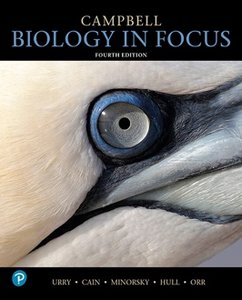
Textbook Cover
The required textbook for Biology 115 is Campbell Biology in Focus, 4th Edition, which provides foundational content for all introductory biology courses at Spelman College.
Summary Table: Assessment Components
Assessment | Collaboration | Submission | Grading | Late Submission | Make-ups | Min # Dropped |
|---|---|---|---|---|---|---|
Pearson Activities (10) | Yes | Individual in Canvas | Auto graded | -20%/day | No make-up | 2 |
Warm-up Quizzes (~10) | No | Individual on Canvas | Auto graded | None | No make-up | 2 |
Activity Assessments | Yes (group) | Group in Canvas or paper | Auto/instructor graded | -20%/day | No make-up | 2 |
Unit Tests (8) | No | Individual in Canvas | Auto graded | None | No make-up | 2 |
Concept Challenges (2) | Yes (prep) | Individual presentation | Rubric | None | Rescheduled (excused) | 0 |
Dissection Videos (3) | Yes (group) | Group video in Canvas | Rubric | -20%/day | Alternative assignment (excused) | 0 |
Exams (4) | No | Individual in class | Auto graded | None | Arranged (excused) | 1 replaced with Final |
Final Exam (optional) | No | Individual in class | Auto graded | None | None | Can replace lowest Exam |
Additional Info
All course policies, including attendance, submission, and academic honesty, are detailed in the syllabus and must be followed strictly.
Office hours and tutoring resources are available for academic support.
Lab safety and privacy policies are enforced to ensure a respectful and secure learning environment.
