 Back
Biology 1408 Lab Practical II Study Guidance
Study Guide - Smart Notes
 Tailored notes based on your materials, expanded with key definitions, examples, and context.
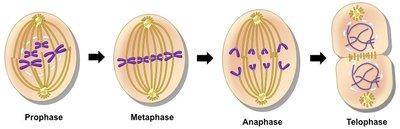
Q1. What are the four stages of mitosis?
Background
Topic: Cell Division – Mitosis
This question tests your understanding of the sequence of events in mitosis, which is the process by which a cell divides to produce two identical daughter cells.
Key Terms:
Mitosis: Division of the nucleus in eukaryotic cells.
Stages: Distinct phases that organize the process of chromosome separation.
Step-by-Step Guidance
Recall that mitosis is divided into four main stages, each with specific events and characteristics.
Think about what happens to the chromosomes and the nuclear envelope during each stage.
Try to visualize or draw the sequence: chromosomes condense, align, separate, and the cell divides.
Review diagrams or images that show the stages of mitosis for clarity.
Try solving on your own before revealing the answer!
Final Answer: Prophase, Metaphase, Anaphase, Telophase
These are the four main stages of mitosis, each with distinct cellular events.
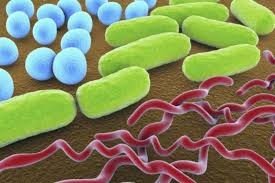
Q4. What are the 3 common shapes of bacteria?
Background
Topic: Microbiology – Bacterial Morphology
This question is about the classification of bacteria based on their shape, which is a fundamental concept in microbiology.
Key Terms:
Coccus: Spherical bacteria
Bacillus: Rod-shaped bacteria
Spirillum: Spiral-shaped bacteria
Step-by-Step Guidance
Recall the three main shapes used to classify bacteria.
Think about how these shapes look under a microscope.
Try to match the names to their visual appearance.
Try solving on your own before revealing the answer!
Final Answer: Coccus, Bacillus, Spirillum
These are the three most common shapes of bacteria.
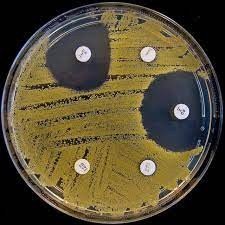
Q38. The clear area around the paper discs soaked in disinfectant/antiseptics is called _____.
Background
Topic: Microbiology – Antibiotic Sensitivity Testing
This question tests your knowledge of how bacterial resistance is measured in the lab using the disc diffusion method.
Key Terms:
Zone of inhibition: The area where bacteria do not grow around a disc containing an antimicrobial agent.
Step-by-Step Guidance
Recall what happens when bacteria are exposed to a disc with antibiotics or disinfectants.
Think about the term used to describe the clear area where bacteria growth is prevented.
Visualize or review images of petri dishes with discs and clear zones.
Try solving on your own before revealing the answer!
Final Answer: Zone of inhibition
This is the area where bacterial growth is prevented by the antimicrobial agent.
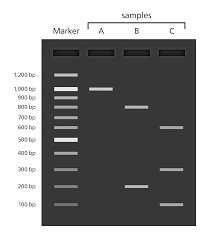
Q115a. Gel electrophoresis: what is the purpose of this technique? What enzymes are known as the scissors that cut DNA at specific locations?
Background
Topic: Molecular Biology – DNA Analysis
This question is about gel electrophoresis, a technique used to separate DNA fragments, and the enzymes that cut DNA at specific sequences.
Key Terms and Formulas:
Gel electrophoresis: Technique for separating DNA fragments by size using an electric field.
Restriction enzymes: Proteins that cut DNA at specific sequences.
Step-by-Step Guidance
Recall the purpose of gel electrophoresis in molecular biology.
Think about how DNA fragments are separated based on size.
Identify the enzymes responsible for cutting DNA at specific sites.
Review diagrams of gel electrophoresis results for clarity.
Try solving on your own before revealing the answer!
Final Answer: Gel electrophoresis separates DNA fragments by size; restriction enzymes cut DNA at specific locations.
Restriction enzymes act as molecular scissors, and gel electrophoresis allows visualization of DNA fragment sizes.
