 Back
Biology 189 Unit 1 Study Guide – Step-by-Step Guidance for General Biology
Study Guide - Smart Notes
 Tailored notes based on your materials, expanded with key definitions, examples, and context.
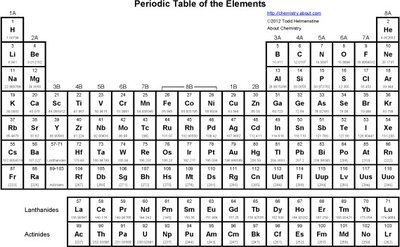
Q1. What do the columns and rows represent in the periodic table?
Background
Topic: Periodic Table Organization
This question tests your understanding of how the periodic table is structured and what information is conveyed by its columns (groups) and rows (periods).
Key Terms:
Group (Column): Vertical columns in the periodic table.
Period (Row): Horizontal rows in the periodic table.
Step-by-Step Guidance
Examine the periodic table and notice that elements are arranged in columns and rows.
Identify that columns (groups) contain elements with similar chemical properties and the same number of valence electrons.
Recognize that rows (periods) represent elements with the same number of electron shells.
Think about how these arrangements help predict element behavior and reactivity.
Try solving on your own before revealing the answer!
Final Answer:
Columns (groups) represent elements with similar properties and the same number of valence electrons. Rows (periods) represent elements with the same number of electron shells.
This organization helps predict chemical behavior and reactivity.
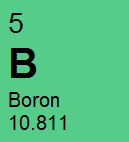
Q2. What does the B, the 5, and the 10.811 mean in the diagram of Boron?
Background
Topic: Periodic Table Element Information
This question tests your ability to interpret the information provided for each element in the periodic table.
Key Terms:
Element Symbol: The one- or two-letter abbreviation for the element (e.g., B for Boron).
Atomic Number: The number at the top (e.g., 5), representing the number of protons.
Atomic Mass: The decimal number (e.g., 10.811), representing the average mass of the element's isotopes.
Step-by-Step Guidance
Look at the element box for Boron in the periodic table.
Identify the symbol "B" as the abbreviation for Boron.
Recognize that the number "5" is the atomic number, indicating the number of protons in Boron.
Understand that "10.811" is the atomic mass, which is the weighted average of all Boron isotopes.
Try solving on your own before revealing the answer!
Final Answer:
B is the symbol for Boron, 5 is the atomic number (number of protons), and 10.811 is the atomic mass (average mass of Boron's isotopes).
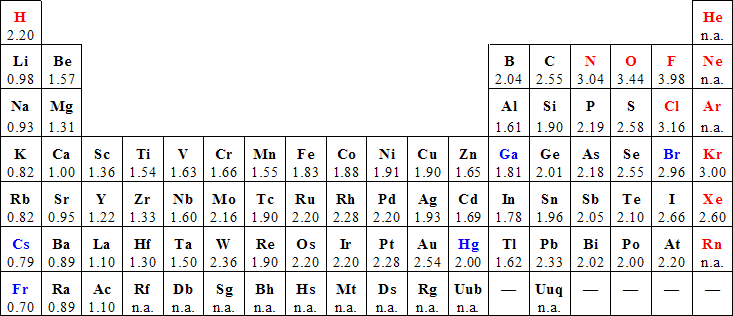
Q3. What is electronegativity and how is it determined for each atom?
Background
Topic: Electronegativity
This question tests your understanding of the concept of electronegativity and how it is measured for different elements.
Key Terms:
Electronegativity: The tendency of an atom to attract electrons in a chemical bond.
Pauling Scale: The most common scale used to measure electronegativity.
Step-by-Step Guidance
Recall that electronegativity is a property that describes how strongly an atom attracts electrons in a bond.
Understand that electronegativity values are assigned based on experimental data, often using the Pauling scale.
Compare electronegativity values across the periodic table; elements on the right and top (except noble gases) tend to have higher values.
Think about how electronegativity affects bond polarity and molecular interactions.
Try solving on your own before revealing the answer!
Final Answer:
Electronegativity is the tendency of an atom to attract electrons in a bond. It is determined experimentally and is highest for elements like fluorine. The Pauling scale is commonly used to assign values.
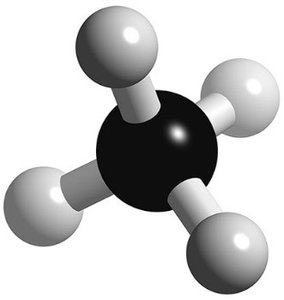
Q4. How do you determine if a molecule is symmetrical or asymmetrical?
Background
Topic: Molecular Geometry
This question tests your understanding of how to analyze the shape of molecules to determine symmetry, which affects properties like polarity.
Key Terms:
Symmetrical Molecule: A molecule whose shape and charge distribution are balanced.
Asymmetrical Molecule: A molecule with an uneven shape or charge distribution.
Step-by-Step Guidance
Draw or visualize the molecular structure.
Check if the atoms and bonds are arranged evenly around the central atom.
Look for lone pairs or different atoms attached to the central atom, which can cause asymmetry.
Consider the three-dimensional shape, not just the two-dimensional drawing.
Try solving on your own before revealing the answer!
Final Answer:
A molecule is symmetrical if its atoms and bonds are evenly distributed around the central atom, resulting in balanced charge. Asymmetrical molecules have uneven distribution, often due to lone pairs or different atoms attached.
Q5. Are the following molecules polar or non-polar? Explain the two things you must do to determine a molecule’s polarity.
Background
Topic: Molecular Polarity
This question tests your ability to analyze molecular structure and electronegativity to determine if a molecule is polar or non-polar.
Key Terms:
Polar Molecule: Has an uneven distribution of charge.
Non-polar Molecule: Has an even distribution of charge.
Electronegativity Difference: The difference in electronegativity between atoms in a bond.
Molecular Shape: The three-dimensional arrangement of atoms.
Step-by-Step Guidance
Identify the atoms in the molecule and their electronegativity values.
Determine if there is a significant difference in electronegativity between the atoms.
Analyze the molecular shape to see if the charge distribution is symmetrical or asymmetrical.
Combine these two factors to decide if the molecule is polar or non-polar.
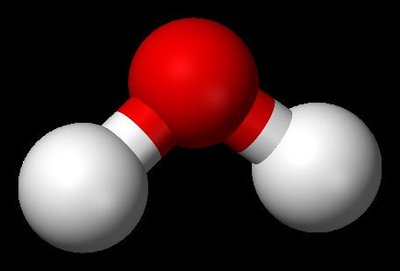
Try solving on your own before revealing the answer!
Final Answer:
To determine polarity, check the electronegativity difference and the molecular shape. Water (H2O) is polar because it has a significant electronegativity difference and an asymmetrical shape.
