 Back
Biology Basics and Chemistry of Life: Foundations for General Biology
Study Guide - Smart Notes
 Tailored notes based on your materials, expanded with key definitions, examples, and context.
Biology Basics and the Baseline Concept
Understanding Baselines in Science
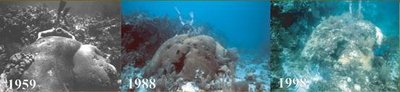
The concept of a baseline is fundamental in biology and environmental science. A baseline refers to the fixed conditions or reference points to which all new experiences or data are compared. This concept is crucial for understanding changes in biological systems over time, especially in ecology and conservation biology.
Baseline: The set of conditions considered "normal" based on personal experience or historical data.
Shifting Baseline: A gradual change in accepted norms due to generational changes in perception, often leading to underestimation of environmental degradation.
Bias: Everyone's baseline is different, leading to biases in interpretation and decision-making.
Critical Thinking: Scientists must question their own baselines and seek evidence to support conclusions.
Example: In marine biology, successive generations of scientists may perceive a degraded reef as "healthy" if they have not witnessed its original state.



Understanding Data in Biology
Variables in Experiments
Biological experiments rely on careful identification and control of variables to ensure valid results.
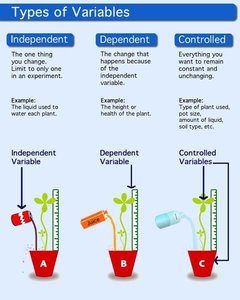
Independent Variable: The factor that is changed or manipulated in an experiment.
Dependent Variable: The factor that is measured; it changes in response to the independent variable.
Controlled Variable: Factors kept constant to ensure that observed effects are due to the independent variable.
Treatment Groups
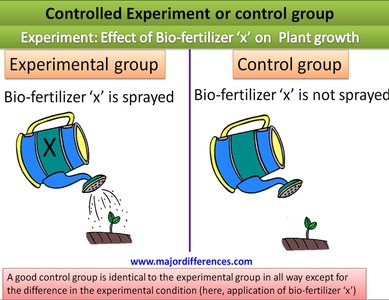
Experimental Group: Receives the treatment or condition being tested.
Control Group: Does not receive the experimental treatment; used for comparison.
Negative Control: Expected to show no effect.
Positive Control: Expected to show a known effect.
Types of Data
Discrete (Categorical) Data: Counted, whole numbers (e.g., number of students).
Continuous Data: Measured, can include fractions (e.g., height of students).
Types of Graphs
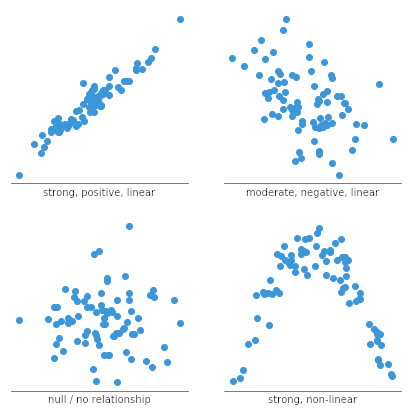
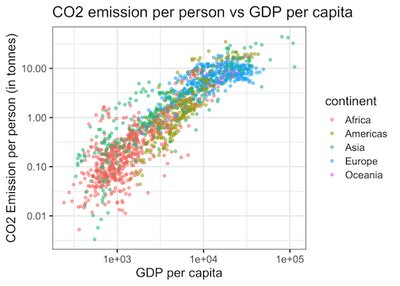
Scatter Plot: Shows correlation between two variables; useful for identifying trends and outliers.
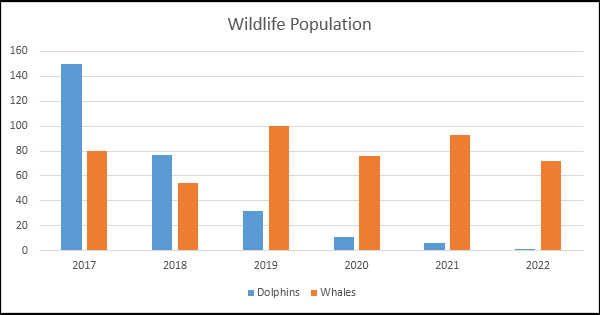
Column Graph (Bar Graph): Used for categorical data; compares counts or means across categories.
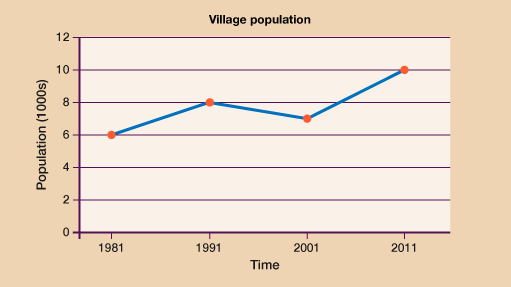
Line Graph: Used for continuous data, often to show changes over time.
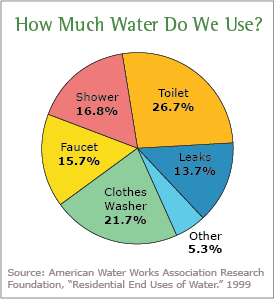
Pie Chart: Shows proportions of a whole, with each slice representing a category.
Correlation and Causation
Understanding the difference between correlation and causation is essential in biology.
Correlation: Two variables change together, but one does not necessarily cause the other.
Causation: One variable directly affects another; requires experimental evidence to demonstrate.
Outlier: A data point that does not fit the general trend; may indicate experimental error or a unique case.
Example: Height and weight are correlated, but correlation does not prove that one causes the other.
Precision vs Accuracy
Precision: Consistency of repeated measurements.
Accuracy: How close a measurement is to the true value.
Example: The Mars Climate Orbiter mission failed due to a mix-up between metric and imperial units, highlighting the importance of accuracy in scientific measurements.
The Life Sciences: Introduction to Biology
What is Biology?
Biology is the scientific study of life. It encompasses a wide range of topics, from the molecular basis of life to the interactions of organisms within ecosystems.
Properties of Life:
Order
Energy Processing
Evolutionary Adaptation
Growth and Development
Response to Environment
Regulation
Reproduction
Unifying Themes in Biology
Emergent properties at successive levels of organization
Expression and transmission of genetic information
Transfer and transformation of energy and matter
Importance of interactions from molecules to ecosystems
Evolution as the central theme explaining unity and diversity of life
Structure Determines Function
The structure of biological molecules and organs is closely related to their function. For example, the lungs and small intestines have structures that maximize absorption.
Homeostasis
Homeostasis is the regulation of internal conditions to maintain a stable, constant environment within an organism.
Theory, Law, Hypothesis, and Prediction
Hypothesis: A proposed explanation for a natural phenomenon.
Prediction: A specific expectation based on a hypothesis.
Theory: A broad explanation supported by extensive evidence.
Law: A description of the natural world, often with a mathematical model.
Tree of Life and Subdisciplines
Three Domains: Bacteria, Archaea, Eukaryotes
Major Subdisciplines: Genetics, Zoology, Botany, Ecology, Evolution, Physiology/Anatomy
Scientific Ethics
Scientific ethics addresses the moral principles guiding scientific research and its applications, such as genetic modification and environmental conservation.
The Chemical Context of Life
Introduction to Chemistry in Biology
Biology is deeply connected to chemistry and physics at the molecular level. Understanding the structure of atoms, properties of matter, and chemical bonds is essential for studying life processes.
Matter, Elements, and Compounds
Matter: Anything that occupies space and has mass.
Atom: The smallest unit of matter.
Molecule: Two or more atoms bonded together.
Element: A substance that cannot be broken down by chemical reactions.
Compound: A substance with two or more elements in a fixed ratio.
Essential and Trace Elements
Essential Elements: Required for life in large amounts (e.g., C, H, O, N).
Trace Elements: Required in small amounts for proper physiological function (e.g., Fe, Zn, I).
Pure Substances vs Mixtures
Pure Substance: Has a fixed composition (e.g., H2O, NaCl).
Mixture: Combination of substances not in fixed ratios.
Emergent Properties of Compounds
Compounds often have properties different from their constituent elements. For example, sodium (a reactive metal) and chlorine (a poisonous gas) combine to form table salt (NaCl), which is safe to eat.
Toxic Elements
Toxicity is Relative: An element may be toxic to some organisms but not others (e.g., oxygen is toxic to anaerobic bacteria).
Examples:
Plant adaptation to serpentine soils (high in heavy metals)
Lead poisoning in humans
Phytomining: Using plants to remove toxic elements from soil, improving environmental quality.
Real-World Application: Forensic Toxicology
The development of forensic toxicology has allowed scientists to detect and understand the effects of toxic elements in legal and medical contexts.
Additional info: This guide expands on the original notes with definitions, examples, and academic context to ensure clarity and completeness for General Biology students.
