 Back
Biology Basics and Chemistry of Life: Foundations for General Biology
Study Guide - Smart Notes
 Tailored notes based on your materials, expanded with key definitions, examples, and context.
Biology Basics and Chemistry of Life
Introduction to Baselines in Science
Understanding what is considered "normal" in biology is essential for interpreting scientific data and environmental changes. The concept of a baseline refers to the fixed conditions or reference points against which new observations are compared. Over time, these baselines can shift, leading to altered perceptions of what is typical or healthy in biological systems.
Baseline: The reference point for what is considered normal, often shaped by personal experience and societal norms.
Shifting Baseline: A gradual change in accepted norms due to generational differences in experience, especially relevant in ecology and conservation biology.
Bias: Everyone's baseline is different, leading to potential biases in scientific interpretation.



Additional info: The shifting baseline concept is crucial for understanding long-term changes in ecosystems, such as fisheries decline or coral reef degradation.
Understanding Data in Biology
Scientific inquiry in biology relies on careful experimental design and data analysis. Key variables and controls must be identified to draw valid conclusions.
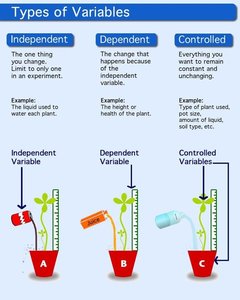
Independent Variable: The factor that is changed or manipulated in an experiment.
Dependent Variable: The factor that is measured or observed in response to changes in the independent variable.
Controlled Variable: Factors kept constant to ensure that observed effects are due to the independent variable.
Treatment Groups
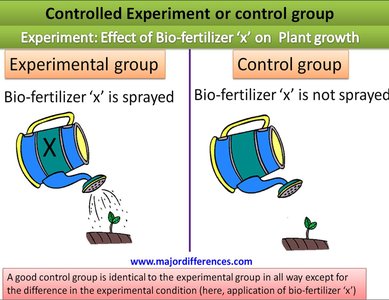
Experimental Group: Receives the treatment or condition being tested.
Control Group: Does not receive the experimental treatment; used for comparison.
Negative Control: Expected to show no effect.
Positive Control: Expected to show a known effect.
Types of Data
Discrete (Categorical) Data: Counted in whole numbers (e.g., number of students).
Continuous Data: Measured and can take fractional values (e.g., height, weight).
Types of Graphs
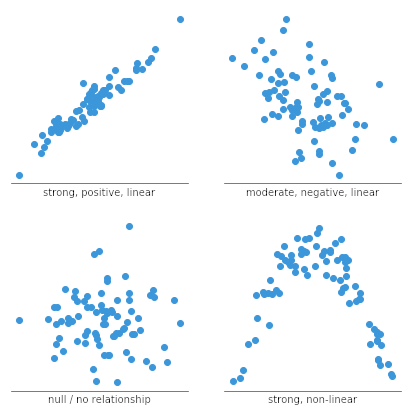
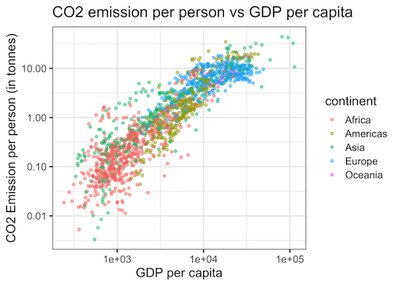
Scatter Plot: Shows correlation between two variables; useful for identifying trends and outliers.
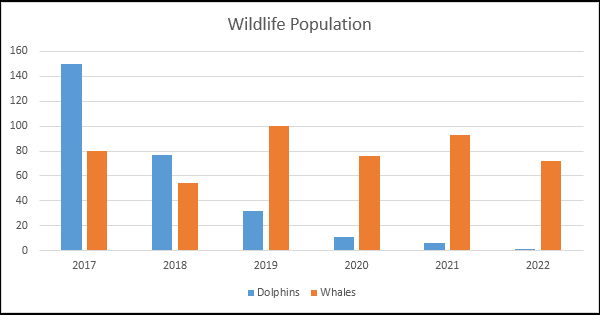
Column Graph (Bar Graph): Used for categorical data; compares counts or means across categories.
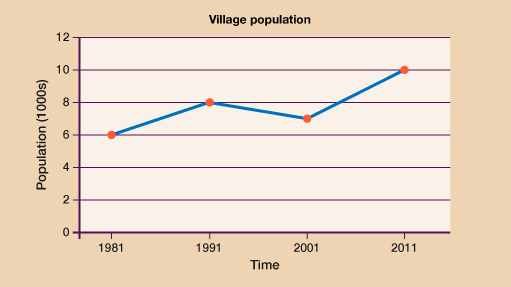
Line Graph: Used for continuous data, often to show changes over time.
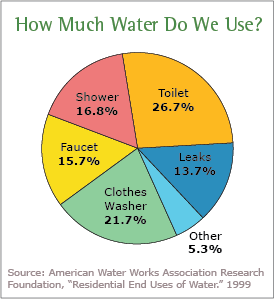
Pie Chart: Illustrates parts of a whole as percentages.
Correlation vs. Causation
Correlation: Two variables change together, but one does not necessarily cause the other.
Causation: One variable directly affects another; requires experimental evidence to establish.
Replication: Repeating experiments to confirm results and increase reliability.
Additional info: Large sample sizes and replication are essential for drawing valid scientific conclusions.
Precision vs. Accuracy
Precision: Consistency of repeated measurements.
Accuracy: How close a measurement is to the true value.
Example: The Mars Climate Orbiter mission failed due to a mix-up between metric and imperial units, highlighting the importance of accuracy in scientific measurements.
The Life Sciences
What is Biology?
Biology is the scientific study of life, encompassing a wide range of topics from molecules to ecosystems. Life is characterized by several key properties:
Order
Energy Processing
Evolutionary Adaptation
Growth and Development
Response to Environment
Regulation (Homeostasis)
Reproduction
Unifying Themes in Biology
Emergent Properties: New characteristics arise at each level of biological organization.
Genetic Information: Life processes involve the expression and transmission of genetic information.
Energy and Matter: Life requires the transfer and transformation of energy and matter.
Interactions: Biological systems interact at all levels, from molecules to ecosystems.
Evolution: Explains the unity and diversity of life.
Structure Determines Function
The shape and arrangement of biological structures are closely related to their function (e.g., lungs and small intestines for absorption).
Homeostasis
The regulation of internal conditions to maintain a stable environment.
Theory vs. Law vs. Hypothesis vs. Prediction
Hypothesis: Proposed explanation for a phenomenon.
Prediction: Specific expectation based on a hypothesis.
Theory: Broad explanation supported by extensive evidence.
Law: Description of natural phenomena, often mathematical.
Tree of Life
Three domains: Bacteria, Archaea (both prokaryotes), and Eukaryotes.
Recent evidence suggests eukaryotes may be a subdomain of archaea.
Biology Subdisciplines
Genetics
Zoology
Botany
Ecology
Evolution
Physiology/Anatomy
Scientific Ethics
Examines moral principles in scientific research and application.
Examples: Genetic modification, de-extinction, environmental rights.
The Chemical Context of Life
Introduction to Chemistry in Biology
Biology is deeply connected to chemistry and physics at the molecular level. Understanding the structure of atoms, properties of matter, and chemical bonds is essential for studying life processes.
Matter, Elements, and Compounds
Matter: Anything that occupies space and has mass.
Atom: The smallest unit of matter.
Molecule: Two or more atoms bonded together.
Element: A substance that cannot be broken down by chemical reactions.
Compound: A substance composed of two or more elements in a fixed ratio.
Essential and Trace Elements
Essential Elements: Required in large amounts for life (e.g., C, H, O, N).
Trace Elements: Needed in small quantities but vital for biological functions (e.g., enzyme cofactors).
Pure Substances vs. Mixtures
Compound: Fixed ratio of elements (e.g., NaCl, H2O).
Mixture: Variable composition, not chemically bonded.
Emergent Properties of Compounds
Compounds can have properties distinct from their constituent elements (e.g., water, salt).
Toxic Elements
Toxicity is relative: Some elements are toxic to certain organisms but not others (e.g., oxygen is toxic to anaerobes).
Examples: Plant adaptation to serpentine soils, lead poisoning in humans.
Phytomining: Using plants to remove toxic elements from soil, offering environmental benefits.
Applications in Forensic Toxicology
The development of forensic toxicology has improved our ability to detect and understand the effects of toxic elements in real-life scenarios.
