 Back
Biology: Exploring Life – Chapter 1 Study Notes
Study Guide - Smart Notes
 Tailored notes based on your materials, expanded with key definitions, examples, and context.
Biology: The Scientific Study of Life
Introduction to Biology
Biology is the scientific study of life, encompassing the structure, function, growth, origin, evolution, and distribution of living organisms. It seeks to understand the natural world through observation and experimentation.
Biology is a branch of science focused on living organisms and their interactions.
It uses evidence-based inquiry to answer questions about life.
Major themes include evolution, information flow, structure-function relationships, energy transformation, and system interactions.

Properties of Life
Seven Properties of Life
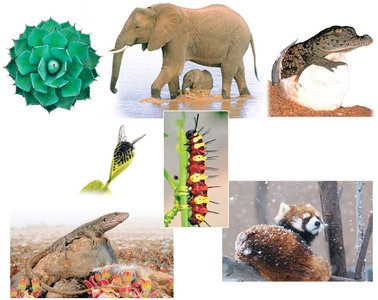
All living organisms share seven fundamental properties that distinguish them from non-living matter.
Order: Organisms exhibit complex but ordered organization.
Reproduction: Living things reproduce their own kind.
Growth and Development: Organisms grow and develop according to inherited instructions.
Response to the Environment: Organisms respond to environmental stimuli.
Energy Processing: Organisms obtain and use energy to power activities.
Regulation: Organisms regulate internal conditions (homeostasis).
Evolutionary Adaptation: Populations evolve over generations, adapting to their environments.
Three Domains of Life
Classification of Life
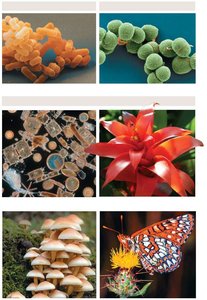
All life is classified into three domains based on cellular structure and genetic differences.
Domain Bacteria: Prokaryotic, unicellular organisms.
Domain Archaea: Prokaryotic, often found in extreme environments.
Domain Eukarya: Eukaryotic organisms, includes protists, plants, fungi, and animals.
Each domain contains multiple kingdoms, reflecting the diversity of life.
Life’s Hierarchy of Organization
Levels of Biological Organization
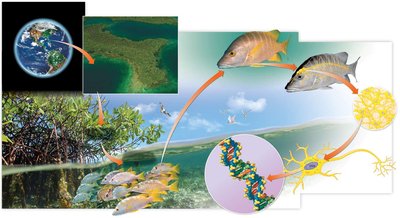
Biological systems are organized in a hierarchy from atoms to the biosphere.
Biosphere: All life on Earth and its environments.
Ecosystem: All living and nonliving components in a particular area.
Community: All organisms in an ecosystem.
Population: Individuals of one species in an area.
Organism: Individual living entity.
Organs and Organ Systems: Body parts with specific functions.
Tissue: Groups of cells performing a function.
Cell: Basic unit of life.
Organelle: Functional components within cells.
Molecule: Chemical structure consisting of atoms.
The Process of Science
Scientific Method
Science is a systematic approach to understanding the natural world, using observation, hypothesis formation, prediction, experimentation, and data analysis.
Observation: Noticing phenomena.
Question: Asking why or how something occurs.
Hypothesis: Proposed explanation for an observation.
Prediction: Expected outcome if hypothesis is correct.
Experiment: Testing predictions.
Data Analysis: Interpreting results to support or refute hypothesis.
Scientific Theory: Broad explanation supported by extensive evidence.
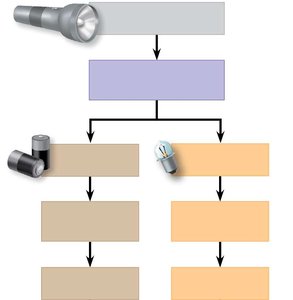
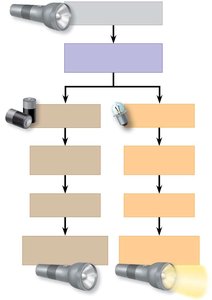
Variables in Experiments
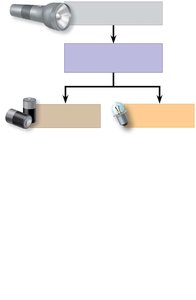
Experiments involve manipulating variables to test hypotheses.
Independent Variable: The factor manipulated by the experimenter.
Dependent Variable: The factor measured in response to changes in the independent variable.
Case Study: Mouse Model Predation Rates
Experiments can be used to test hypotheses about adaptation, such as camouflage in mice.
Beach and inland populations of mice show differences in predation rates based on camouflage.
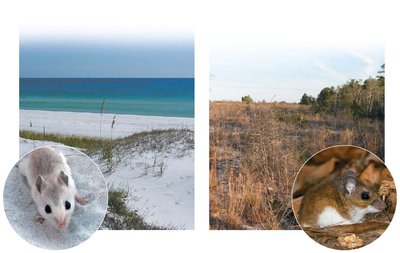
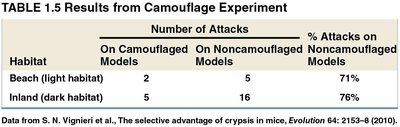
Table: Results from Camouflage Experiment
This table compares the number of attacks on camouflaged and noncamouflaged mouse models in different habitats.
Habitat | On Camouflaged Models | On Noncamouflaged Models | % Attacks on Noncamouflaged Models |
|---|---|---|---|
Beach (light habitat) | 2 | 5 | 71% |
Inland (dark habitat) | 5 | 16 | 76% |
Evolutionary Relationships
Red Panda Evolutionary Relationships
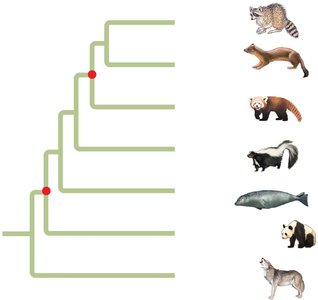
Biologists use evolutionary relationships to classify organisms. The red panda's classification has been debated: should it be grouped with raccoons or giant pandas?
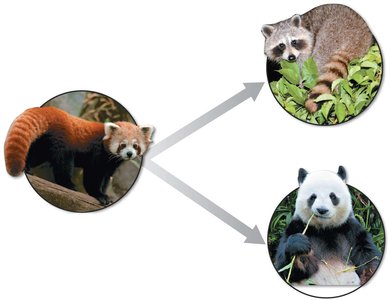
Evolutionary Tree
Evolutionary trees illustrate relationships among species, showing common ancestry and divergence.
Red pandas, raccoons, and weasels share a common ancestor.
Red pandas and giant pandas share a more distant ancestor.
Five Unifying Themes in Biology
Overview of Themes
Biology is unified by five major themes:
Evolution: The core theme explaining the diversity and unity of life.
Information Flow: Life depends on the transmission and expression of genetic information.
Structure and Function: Biological structures are closely related to their functions.
Energy and Matter: Life depends on the transfer and transformation of energy and matter.
Systems: Life depends on interactions within and between systems.
Evolution: The Core Theme of Biology
Darwin’s Theory of Evolution
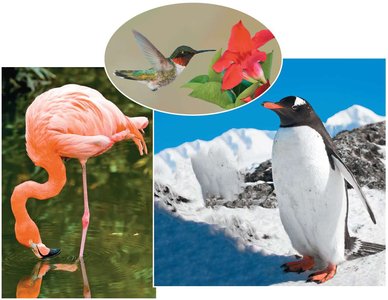
Evolution explains both the unity and diversity of life. All organisms share common metabolic processes and DNA as the universal molecule of inheritance. Species diverge from common ancestors, adapting to their environments.
Fossil and living organism similarities support common ancestry.
Descent with modification leads to diversity.
Natural Selection
Natural selection is the mechanism by which evolution occurs. It involves variation among individuals, overproduction of offspring, and differential survival and reproduction.
Observation #1: Individual variation exists within populations.
Observation #2: More offspring are produced than can survive.
Individuals with advantageous traits survive and reproduce, increasing the frequency of those traits.

Information Flow in Biology
Genetic Information
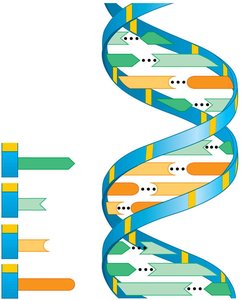
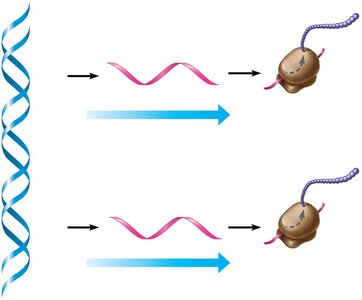
Life depends on the flow of information, primarily through DNA. Genes are segments of DNA that encode instructions for building proteins.
DNA: Deoxyribonucleic acid, the molecule of inheritance.
Gene: A unit of heredity; a segment of DNA coding for a protein.
RNA: Ribonucleic acid, transcribed from DNA and translated into proteins.
Regulation and Homeostasis
Blood Glucose Regulation
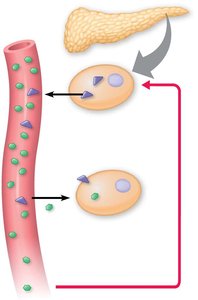
Organisms regulate internal conditions to maintain homeostasis. For example, blood glucose levels are regulated by the pancreas through the release of insulin.
High blood glucose triggers insulin release.
Insulin stimulates cells to take up glucose, restoring normal levels.
When glucose levels normalize, insulin release stops.
Structure and Function
Relationship Between Structure and Function
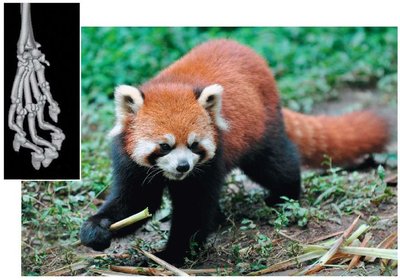
Biological structures are adapted to their functions. For example, the radial sesamoid bone in the red panda acts as a "false thumb," aiding in grasping bamboo.
Structure determines function at all levels of biological organization.
Adaptations often involve structural changes to enhance function.
Energy and Matter in Biological Systems
Transfer and Transformation of Energy and Matter
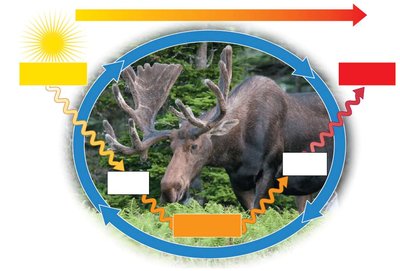
Life depends on the flow of energy and cycling of matter. Energy from the sun is captured by producers (plants), transferred to consumers (animals), and returned to the environment by decomposers.
Producers: Organisms that make their own food (e.g., plants).
Consumers: Organisms that eat other organisms.
Decomposers: Organisms that break down dead material, returning nutrients to the soil.
Energy flows through ecosystems, while matter cycles within them.
Conclusion
Biology is a dynamic and integrative science, unified by core themes and principles. Understanding the properties of life, the hierarchy of organization, the process of science, and the unifying themes provides a foundation for further study in biology.
