 Back
BackBiology: Exploring Life – Foundations and Core Themes
Study Guide - Smart Notes
 Tailored notes based on your materials, expanded with key definitions, examples, and context.
Biology: The Study of Scientific Life
Defining Biology and Life
Biology is the scientific study of life, encompassing the investigation of living organisms and their interactions with the environment. To understand what constitutes life, biologists identify several key properties shared by all living things:
Order: Living organisms exhibit complex but ordered organization of their structures.
Reproduction: The ability to produce offspring, ensuring the continuation of the species.
Growth and Development: Organisms increase in size and undergo regulated changes throughout their life cycle.
Energy Processing: Living things acquire and use energy to power their activities and chemical reactions.
Regulation: Organisms maintain stable internal conditions (homeostasis) despite external changes.
Response to the Environment: The ability to sense and react to environmental stimuli.
Evolutionary Adaptation: Populations evolve over generations through adaptations that enhance survival and reproduction.
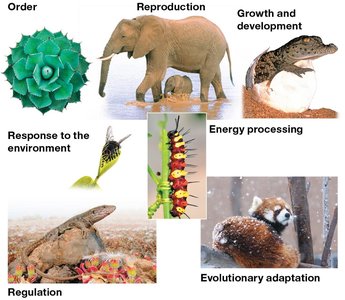
The cell is recognized as the structural and functional unit of life, forming the basis for all living organisms.
Biological Organization and Classification
The Three Domains of Life
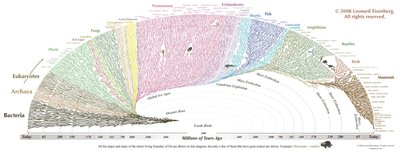
Taxonomists classify living organisms into hierarchical groups. The broadest classification divides life into three domains:
Bacteria: Prokaryotic organisms with simple cells, lacking a nucleus.
Archaea: Prokaryotic, but distinct from bacteria in molecular and genetic features; often found in extreme environments.
Eukarya: Organisms with complex, membrane-bound cells (eukaryotes), including protists, fungi, plants, and animals.
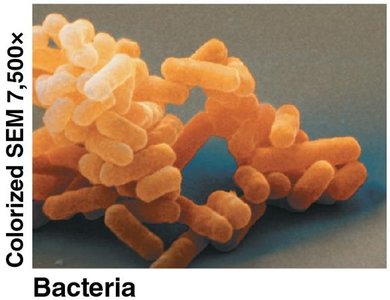
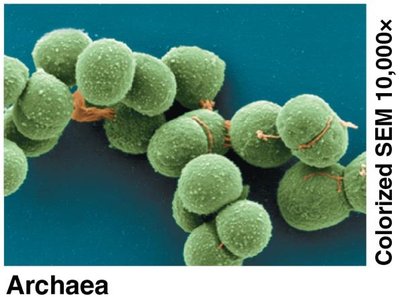
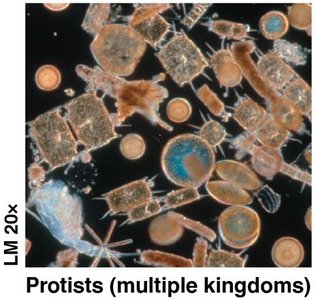
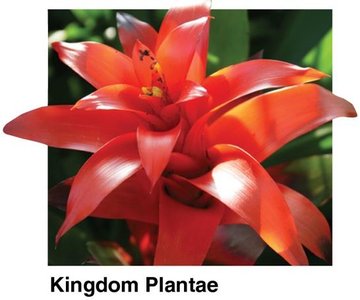
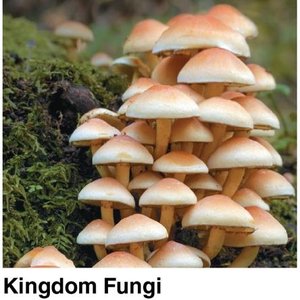
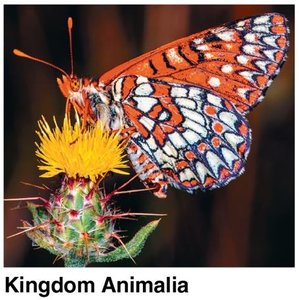
Domain Eukarya is further divided into multiple kingdoms, including Plantae, Fungi, Animalia, and several groups of protists.
Hierarchy of Biological Organization
Biologists study life across a hierarchy of structural levels, from the smallest molecules to the entire biosphere. Each level exhibits emergent properties—new characteristics that arise from the interactions of components at lower levels.
Biosphere
Ecosystem
Community
Population
Organism
Organs and Organ Systems
Tissues
Cells
Organelles
Atoms and Molecules
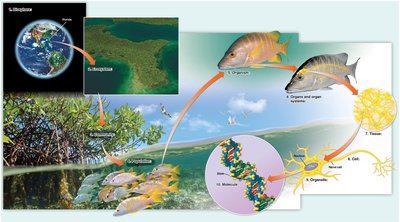
Emergent properties result from the arrangement and interactions among component parts at each level.
The Process of Science
What Is Science?
Science is an evidence-based approach to understanding the natural world. It relies on observation, experimentation, and logical reasoning to investigate phenomena and answer questions.
Observation: Gathering information about phenomena using senses or tools.
Hypothesis: A tentative, testable explanation for an observation, developed through inductive reasoning.
Prediction: A logical statement about what will happen if the hypothesis is correct.
Experiment: A controlled test designed to evaluate the hypothesis.
Data: Objective, measurable results collected from experiments or observations.
Conclusion: Interpretation of data to support or refute the hypothesis.
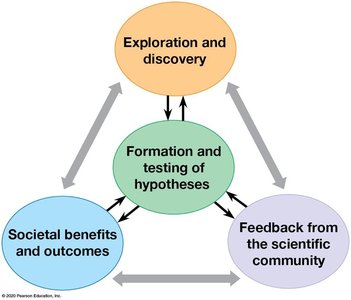
The Scientific Method in Practice
The scientific method is a cyclical process involving observation, hypothesis formation, prediction, experimentation, and analysis. Peer review and replication are essential for validating scientific findings.
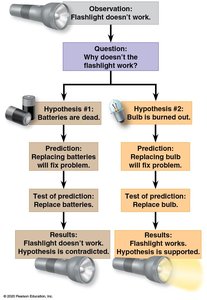
Experimental Design and Data Analysis
Variables and Controls
Experimental (Independent) Variable: The factor being tested or manipulated.
Responding (Dependent) Variable: The factor measured as the outcome of the experiment.
Control Group: The group not exposed to the experimental variable, used for comparison.
Test Group: The group exposed to the experimental variable.
Data must be objective and statistically analyzed to draw valid conclusions. Findings are shared with the scientific community for peer review and replication.
Case Study: Camouflage Experiment
Testing Hypotheses with Experiments
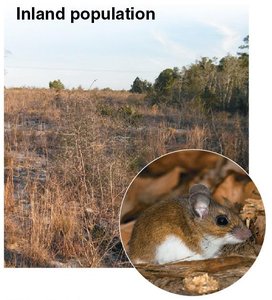
Researchers tested the hypothesis that animal fur color matching the environment provides camouflage against predation. They placed fake mice in different habitats, some matching and some mismatched to the environment, and recorded predator attacks.
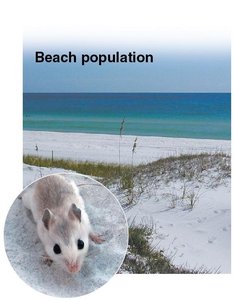
Habitat | Number of Attacks on Camouflaged Models | Number of Attacks on Non-camouflaged Models | % Attacks on Non-camouflaged Models |
|---|---|---|---|
Beach (light habitat) | 2 | 5 | 71% |
Inland (dark habitat) | 5 | 16 | 76% |
Conclusion: Fake mice matching their environment were attacked less frequently, supporting the hypothesis that camouflage provides a selective advantage.
Testing Hypotheses with Observational Data
Red Panda Evolutionary Relationships
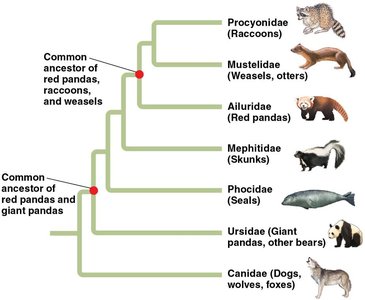
Scientists used both physical observations and DNA sequence comparisons to test hypotheses about the evolutionary relationships of red pandas. Initial hypotheses grouped red pandas with raccoons or giant pandas, but genetic evidence revealed that red pandas are the only living species in their own family (Ailuridae).
Evolution: The Core Theme of Biology
Unity and Diversity of Life
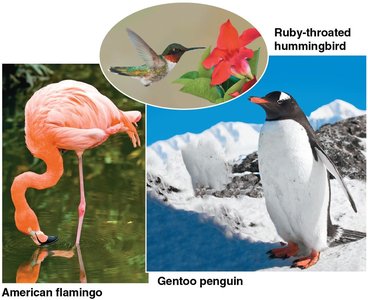
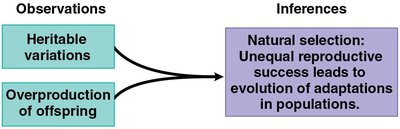
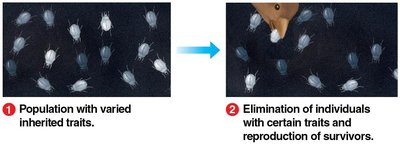
Evolution explains both the unity and diversity of life. All living organisms share a common ancestry, but have diversified through descent with modification. Mutations introduce genetic variation, and adaptations improve fitness in specific environments.
Natural Selection: Individuals with advantageous traits are more likely to survive and reproduce, passing those traits to the next generation.
Adaptation: Inherited traits that enhance survival and reproductive success in a particular environment.
Information Flow in Living Systems
Genetic Information and Regulation
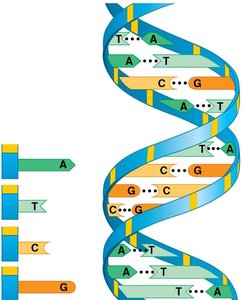
Life depends on the flow of information, primarily through DNA, which encodes the instructions for building and maintaining an organism. DNA directs the synthesis of proteins, which carry out cellular functions. Organisms also respond to internal and external signals to regulate gene expression and physiological processes.
Structure and Function in Biology
Relationship Between Structure and Function
At every level of biological organization, structure is closely related to function. For example, the shape of a protein determines its role in the cell, and the anatomy of an organism's body parts enables specific functions.
Molecular Level: The structure of proteins, such as beta barrels, allows them to form channels in cell membranes.
Cellular Level: The long extensions of nerve cells facilitate the transmission of electrical signals.
Organismal Level: The structure of hands enables manipulation of objects.
Energy and Matter in Ecosystems
Transfer and Transformation of Energy and Matter
Energy flows through ecosystems in one direction, entering as sunlight, converted to chemical energy by producers, transferred to consumers, and eventually lost as heat. Matter cycles within ecosystems, moving between the atmosphere, soil, organisms, and decomposers.
Systems Biology and Interactions
Interactions Within and Between Systems
Biological properties emerge from interactions among components of a system. Systems biology seeks to model and understand these complex interactions, from molecular networks within cells to ecological relationships in the biosphere.
Example: The regulation of blood glucose involves interactions between the pancreas, hormones, and body cells.
*Additional info: Systems biology is an interdisciplinary field that integrates data from genomics, proteomics, and other 'omics' sciences to understand the behavior of biological systems as a whole.*
