 Back
Biology for Science Majors I (BIOL 1406) - Course Structure, Topics, and Study Guide
Study Guide - Smart Notes
 Tailored notes based on your materials, expanded with key definitions, examples, and context.
Course Overview
Course Description
This course covers the fundamental principles of living organisms, including their physical and chemical properties, organization, function, evolutionary adaptation, and classification. Key concepts such as cytology, reproduction, genetics, and scientific reasoning are explored through both lecture and laboratory activities.
Physical and Chemical Properties of Life: Understanding the basic building blocks and processes that define living organisms.
Organization and Function: Study of cellular structure, function, and the hierarchy of biological organization.
Evolutionary Adaptation: Examination of how organisms adapt and evolve over time.
Classification: Exploration of the diversity of life and methods used to classify organisms.
State-Defined Learning Outcomes
Characteristics of Life: Describe what defines living organisms.
Scientific Inquiry: Explain the methods used by scientists to investigate biological questions.
Requirements of Life: Identify the basic requirements and major molecules needed for life.
Cell Types: Compare and contrast viruses, prokaryotic cells, and eukaryotic cells.
Cell Membranes: Describe membrane structure and molecular movement across membranes.
Metabolism: Identify substrates, products, and pathways in metabolism.
Inheritance: Solve classical genetic problems and understand principles of inheritance.
Nucleic Acids and Proteins: Identify chemical structures, synthesis, and regulation.
Evolution: Describe unity and diversity of life and evidence for evolution through natural selection.
Laboratory Learning Outcomes
Apply scientific reasoning and use laboratory tools (e.g., microscopes) to collect and analyze data.
Use critical thinking and scientific problem solving in laboratory settings.
Communicate scientific results effectively.
Reinforce lecture concepts through hands-on experiments.
Course Schedule and Major Topics
Lecture Topics (by Week)
Week 1: Syllabus, Chapter 1 - Evolution, the Themes of Biology, and Scientific Inquiry
Week 2: Chapter 2 - The Chemical Context of Life
Week 3: Chapter 3 - Water and Life, Chapter 4 - Carbon and the Molecular Diversity of Life
Week 4: Review and Exam 1 (Chapters 1-4)
Week 5: Chapter 5 - The Structure and Function of Large Biological Molecules
Week 6: Chapter 6 - A Tour of the Cell
Week 7: Chapter 7 - Membrane Structure and Function
Week 8: Chapter 8 - An Introduction to Metabolism
Week 9: Chapter 9 - Cellular Respiration and Fermentation
Week 10: Chapter 10 - Photosynthesis
Week 11: Review and Exam 3 (Chapters 8-10)
Week 12: Chapter 12 - The Cell Cycle
Week 13: Chapter 13 - Meiosis and Sexual Life Cycles, Chapter 14 - Mendel and the Gene Idea
Week 14: Chapter 16 - The Molecular Basis of Inheritance
Week 15: Chapter 17 - Gene Expression: From Gene to Protein, Final Exam Review
Week 16: Final Exam (Chapters 14, 16, 17)
Laboratory Topics
Safety and Orientation
Metric & Microscopy
Measurement Techniques & Spectrophotometry
Chemistry and Life
Cells
Properties of Enzymes
Membranes and Diffusion
Scientific Methodology
Respiration & Photosynthesis
Cell Cycle
Sexual Reproduction & Genetics
Gene Expression
Grading Criteria
Type of Graded Work | Points | Notes |
|---|---|---|
Lecture Exams (5) | 400 | 80 points each; multiple-choice, matching, short answer, labeling |
Class Quizzes (10) | 100 | 10 points each; in-person, multiple-choice |
Online Lecture Chapter Quizzes (10) | 100 | 10 points each; online, open note |
Group Assignments (5) | 100 | 20 points each; completed in lecture period |
Prelabs (11) | 77 | 7 points each; must be completed before lab |
Lab Quizzes (10) | 100 | 10 points each; in-person |
Lab Report (1) | 50 | Formal written report; submitted online |
Mini Lab Practical Exam (1) | 23 | In-person practical exam |
Lab Manual Completion (4) | 50 | 12.5 points each; completion grade |
Final Grade Breakdown
Points Range | Percentage | Grade |
|---|---|---|
>895 | 90%-100% | A |
795-894.9 | 80%-89% | B |
695-794.9 | 70%-79% | C |
595-694.9 | 60%-69% | D |
<595 | 0-59% | F |
Course Materials
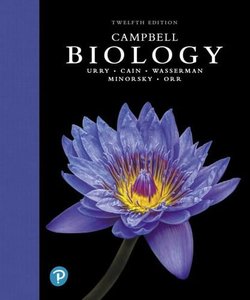
Textbook: Campbell Biology, 12th Edition by Urry, Cain, Wasserman, Minorsky, Orr
Lab Manual: Provided as PDF on eCampus
Modified Mastering Biology with Pearson eText Access Code
Supplies: Notebook, pens, #2 pencils, scantrons (882E), computer with internet access
Academic Policies and Expectations
Attendance: Regular attendance and participation are required for success.
Make-Up Policy: Limited make-up opportunities for missed work; documentation required for excused absences.
Late Work: Prelabs not accepted after lab start; lab manuals and reports may be submitted late for half credit.
Academic Integrity: Plagiarism, cheating, fabrication, falsification, sabotage, and collusion are strictly prohibited.
Student Conduct: Disruptive behavior is not tolerated; respectful classroom environment is expected.
Support and Resources
Success Coach for personalized support
Free tutoring (in-person and online)
Access to counseling, child care, housing, emergency aid, food pantries, and more
Technical support for eCampus and college technology
Summary of Major General Biology Topics Covered
Evolution and Scientific Inquiry
Chemical Context of Life
Water and Life
Carbon and Molecular Diversity
Biological Macromolecules
Cell Structure and Function
Membrane Structure and Function
Metabolism
Cellular Respiration and Fermentation
Photosynthesis
Cell Cycle, Meiosis, and Genetics
Molecular Basis of Inheritance and Gene Expression

Additional info: The course schedule and grading structure are designed to reinforce key concepts in General Biology, as outlined in the Campbell Biology textbook. Laboratory activities provide hands-on experience to complement lecture material, ensuring a comprehensive understanding of biological principles.
