 Back
BackBiology II: Biodiversity, Evolution, and the Hierarchical Organization of Life
Study Guide - Smart Notes
 Tailored notes based on your materials, expanded with key definitions, examples, and context.
Terminology and Taxonomy
Phylogeny
Phylogeny refers to the evolutionary history and relationships among organisms. It is often depicted as a tree, showing how species diverge from common ancestors. Understanding phylogeny helps biologists classify organisms and trace the origins of traits.
Phylogenetic tree: Diagram representing evolutionary relationships.
Taxonomy: The science of naming, describing, and classifying organisms.
Systematics: Study of the diversity of organisms and their evolutionary relationships.
Example: The three domains of life—Bacteria, Archaea, and Eukarya—are distinguished by phylogenetic analysis.
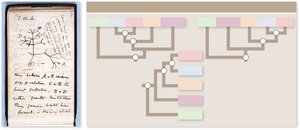
Domains of Life
Archaea
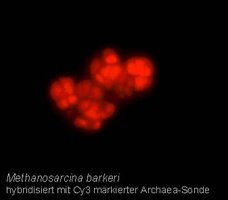
Archaea are single-celled prokaryotes distinct from bacteria. They often inhabit extreme environments and possess unique biochemical pathways.
Characteristics: Lack a nucleus, unique membrane lipids, and distinct genetic machinery.
Example: Methanosarcina is an archaeal genus known for methane production.
Speciation and Evolution
Allopatric Speciation
Allopatric speciation occurs when populations are geographically isolated, leading to the formation of new species. Physical barriers prevent gene flow, allowing evolutionary divergence.
Key Point: Speciation is more likely in geographically isolated populations.
Example: Darwin's finches on the Galápagos Islands evolved distinct traits due to isolation.

Animal Diversity and Development
Protostomes and Deuterostomes
Animals are classified based on embryonic development. Protostomes and Deuterostomes differ in cleavage patterns, fate of the blastopore, and coelom formation.
Protostomes: Spiral cleavage, determinate development, blastopore becomes mouth.
Deuterostomes: Radial cleavage, indeterminate development, blastopore becomes anus.
Coelom formation: Mesoderm forms differently in each group.
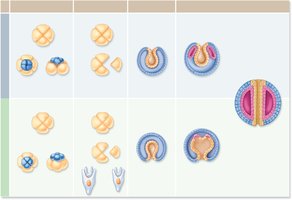
Major Groups in Biodiversity
Cestode
Cestodes are parasitic flatworms, commonly known as tapeworms. They inhabit the digestive tracts of vertebrates and have specialized structures for attachment and nutrient absorption.
Key Point: Cestodes lack a digestive system and absorb nutrients directly.
Example: The scolex is the attachment organ of tapeworms.
Basidiomycota
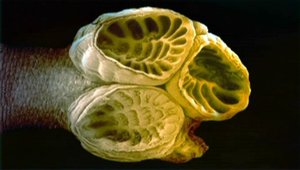
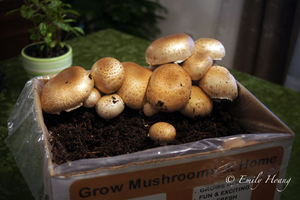
Basidiomycota is a phylum of fungi characterized by the production of basidiospores on basidia. This group includes mushrooms, puffballs, and shelf fungi.
Key Point: Basidiomycota play essential roles in decomposition and nutrient cycling.
Example: Edible mushrooms belong to Basidiomycota.
Prothallus
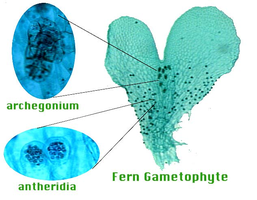
The prothallus is the gametophyte stage in the life cycle of ferns. It is a small, heart-shaped structure that produces gametes for sexual reproduction.
Key Point: The prothallus contains both archegonia (female) and antheridia (male) reproductive organs.
Example: Fern gametophytes are visible under a microscope.
Hierarchical Organization of Living Systems
Levels of Biological Organization
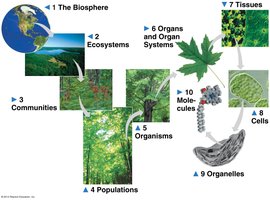
Living systems are organized hierarchically, from atoms to the biosphere. Each level exhibits emergent properties not found in the preceding level.
Cellular level: Atoms, molecules, organelles, cells
Organismal level: Tissues, organs, organ systems, organism
Populational level: Population, community, ecosystem, biosphere
Emergent properties: New characteristics arise from the interaction of components.
Unifying Themes in Biology
Cell Theory
Cell theory states that all organisms are composed of cells and all cells arise from preexisting cells. This concept is foundational for understanding growth, reproduction, and the continuity of life.
Key Point: The cell is the basic unit of life.
Application: Cell division is essential for development and maintenance.
Molecular Basis of Inheritance
DNA is the molecule responsible for inheritance. The sequence of four nucleotides encodes genetic information, which is faithfully copied during cell division.
Gene: Discrete unit of information within DNA.
Genome: Entire set of DNA instructions in an organism.
Equation: (Central Dogma of Molecular Biology)
Diversity and Unity of Life
The diversity of life arises from evolutionary change, while underlying unity is evident in biochemistry and genetics. All life shares a common origin, reflected in the three domains: Bacteria, Archaea, and Eukarya.
Bacteria: Single-celled prokaryotes
Archaea: Single-celled prokaryotes with unique features
Eukarya: Single-celled or multicellular eukaryotes
Additional info:
Some content was inferred and expanded for completeness, including definitions and examples for terms such as Basidiomycota, prothallus, and emergent properties. The notes are structured to cover introductory concepts in biodiversity, evolution, and the hierarchical organization of life, as outlined in the course overview and learning objectives.
