 Back
BackBiology: Introduction, Unifying Themes, and the Study of Life
Study Guide - Smart Notes
 Tailored notes based on your materials, expanded with key definitions, examples, and context.
Introduction to Biology
What is Biology?
Biology is the scientific study of life, encompassing a vast scope from molecules to ecosystems. It seeks to understand the characteristics, processes, and diversity of living organisms.
Definition: Biology is the study of living organisms and their interactions with each other and their environments.
Scope: Includes molecular biology, genetics, ecology, physiology, and evolution.
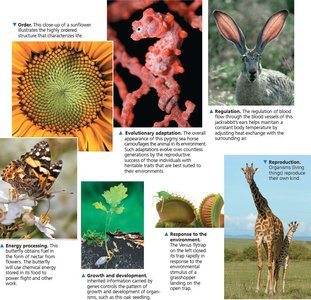
Recognition of Life: Life is recognized by what living things do, such as growth, reproduction, response to stimuli, and energy processing.
Themes in Biology
Unifying Themes
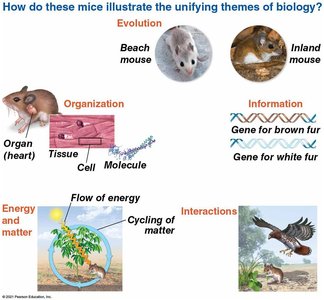
Biology is organized around several unifying themes that help explain the complexity and diversity of life.
Emergent Properties: New properties arise at each level of biological organization due to the arrangement and interaction of parts.
Interactions: Organisms interact with each other and their physical environment, affecting survival and reproduction.
Energy Transfer: Life requires the transfer and transformation of energy and matter.
Structure and Function: Structure and function are correlated at all levels of biological organization.
Cell Theory: The cell is the basic unit of structure and function in living organisms.
Heritable Information: Continuity of life is based on heritable information in the form of DNA.
Feedback Mechanisms: Biological systems are regulated by feedback mechanisms.
Levels of Biological Organization
Hierarchy and Emergent Properties
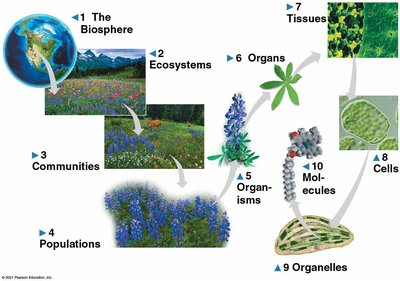
Life can be studied at different levels, from molecules to the entire biosphere. Each level exhibits emergent properties not present in the preceding level.
Biological Hierarchy: Biosphere → Ecosystems → Communities → Populations → Organisms → Organs → Tissues → Cells → Organelles → Molecules
Reductionism: Reduces complex systems to simpler components for study.
Systems Biology: Analyzes interactions among parts of a biological system.


Structure and Function
Correlation at All Levels
Analyzing biological structure provides clues about function, and vice versa. This principle applies from molecules to entire organisms.
Example: The shape of a bird's wing is adapted for flight.
Application: Understanding structure helps predict function and organization.
The Cell: Basic Unit of Life
Cell Theory and Types
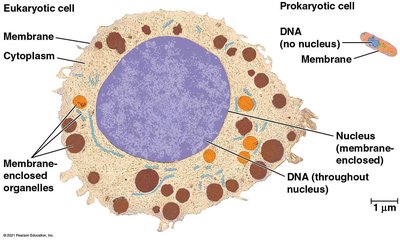
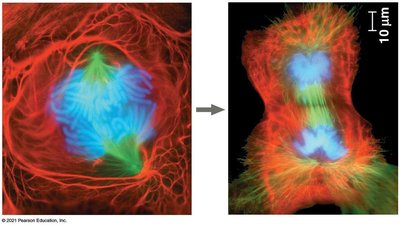
All living organisms are composed of cells, which are the smallest units capable of performing all activities required for life.
Cell Theory: All organisms are made of cells; cells arise from pre-existing cells.
Prokaryotic Cells: Simpler, smaller, lack nucleus and membrane-bound organelles.
Eukaryotic Cells: Larger, contain nucleus and membrane-bound organelles.
DNA and Genetic Information
Expression and Transmission
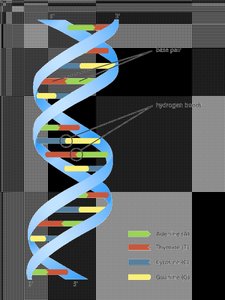
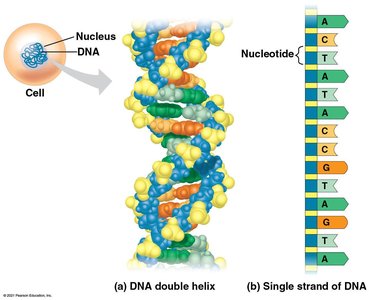
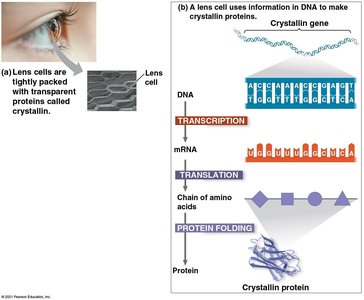
DNA is the molecule of inheritance, encoding information for building molecules within the cell. Gene expression is the process by which information from a gene is used to synthesize a functional product, usually a protein.
DNA Structure: Double helix composed of nucleotides (A, T, C, G).
Gene Expression: DNA → RNA → Protein.
Genome: The entire set of genetic instructions in an organism.
Genomics: Study of whole sets of genes.
Proteomics: Study of whole sets of proteins.
Energy and Matter in Biological Systems
Energy Flow and Chemical Cycling
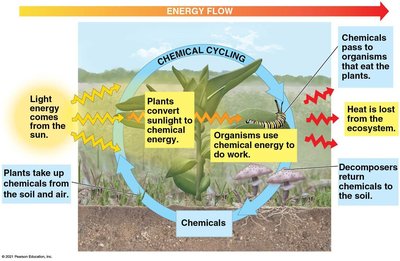
Life depends on the input of energy, primarily from the sun, and the transformation of energy from one form to another. Matter cycles within ecosystems, while energy flows through them.
Producers: Organisms (e.g., plants) that convert sunlight to chemical energy.
Consumers: Organisms that feed on other organisms or their remains.
Decomposers: Organisms that return chemicals to the environment.
Interactions and Regulation
Feedback Mechanisms
Biological systems are regulated by feedback mechanisms, which help maintain homeostasis and coordinate activities within and between organisms.
Negative Feedback: Reduces the initial stimulus (e.g., regulation of blood glucose).
Positive Feedback: End product speeds up its own production.

Diversity and Classification of Life
Domains and Kingdoms
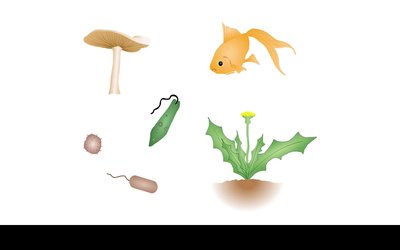
Life is classified into three domains: Bacteria, Archaea, and Eukarya. Eukarya includes four subgroups: plants, fungi, animals, and protists.
Bacteria: Prokaryotic, unicellular organisms.
Archaea: Prokaryotic, often found in extreme environments.
Eukarya: Eukaryotic, includes plants, fungi, animals, and protists.
Classification: Each species is given a two-part name (genus and species).
The Scientific Method
Process of Scientific Inquiry
Science is an orderly process of posing and answering questions about the natural world through repeated and unbiased experiments.
Steps:
Observation
Hypothesis (testable, falsifiable)
Experimentation (controls, variables, sample size)
Data Analysis and Conclusion
Reporting Results
Variables: Independent (manipulated), Dependent (measured).
Theory: Broader than a hypothesis, supported by a large body of evidence.
Summary Table: Unifying Themes in Biology
Theme | Description | Example |
|---|---|---|
Emergent Properties | New properties arise at each level of organization | Functioning bicycle vs. individual parts |
Energy Transfer | Life requires energy transfer and transformation | Photosynthesis, cellular respiration |
Structure and Function | Structure and function are correlated | Bird wing shape for flight |
Cell Theory | Cell is basic unit of life | Prokaryotic vs. eukaryotic cells |
Heritable Information | DNA encodes genetic information | Gene expression: DNA → RNA → Protein |
Feedback Mechanisms | Regulate biological systems | Negative feedback in glucose regulation |
