 Back
BackLecture 20: Inheritance, Evolution, and Cellular Mechanisms
Study Guide - Smart Notes
 Tailored notes based on your materials, expanded with key definitions, examples, and context.
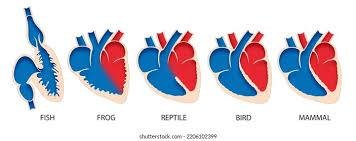
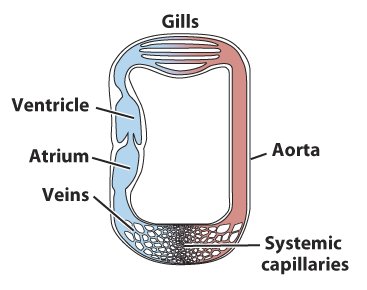
Q1. Compare the structure and function of the heart in fish, amphibians, reptiles, birds, and mammals.
Background
Topic: Comparative Anatomy & Physiology
This question explores how the heart's structure varies among vertebrate groups and how these differences affect blood circulation and oxygenation.
Key Terms:
Chambers: Atrium and ventricle(s) in the heart
Oxygenated vs. deoxygenated blood
Single vs. double circulation
Step-by-Step Guidance
Identify the number of heart chambers in each group (fish, amphibians, reptiles, birds, mammals).
Describe how blood flows through the heart and body in each group, noting where oxygenation occurs.
Explain the difference between single and double circulation, and which groups have each type.
Consider how these structural differences impact the efficiency of oxygen delivery to tissues.
Try solving on your own before revealing the answer!
Final Answer:
Fish have a two-chambered heart (one atrium, one ventricle) and single circulation. Amphibians and reptiles have three chambers (two atria, one ventricle), with partial double circulation. Birds and mammals have four chambers (two atria, two ventricles) and complete double circulation, allowing efficient separation of oxygenated and deoxygenated blood.
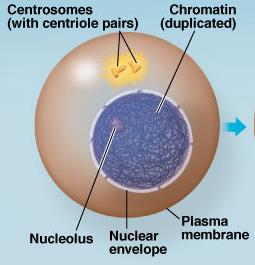
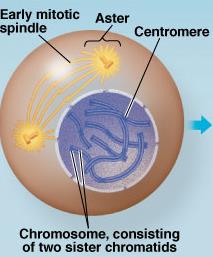
Q2. Describe the process of mitosis and its significance in human development.
Background
Topic: Cell Division
This question tests your understanding of mitosis, the process by which cells divide to produce identical daughter cells, crucial for growth and development.
Key Terms:
Mitosis: Division of a cell's nucleus
Interphase, Prophase, Metaphase, Anaphase, Telophase
Chromosomes, chromatids, centromere
Step-by-Step Guidance
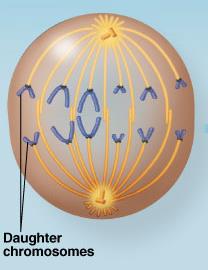
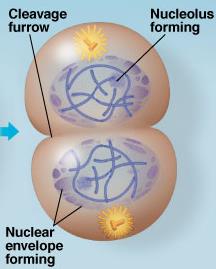
Outline the stages of mitosis: Interphase, Prophase, Metaphase, Anaphase, Telophase.
Describe what happens to the chromosomes during each stage.
Explain how mitosis ensures each daughter cell receives a complete set of DNA.
Discuss the importance of mitosis in multicellular organisms.
Try solving on your own before revealing the answer!
Final Answer:
Mitosis consists of five stages: Interphase (DNA replication), Prophase (chromosomes condense), Metaphase (chromosomes align), Anaphase (sister chromatids separate), and Telophase (nuclear envelope reforms). This process produces two genetically identical daughter cells, essential for growth and tissue repair.
Q3. Explain the process and significance of meiosis in sexually reproducing organisms.
Background
Topic: Meiosis & Sexual Reproduction
This question tests your understanding of meiosis, which produces gametes with half the chromosome number, enabling genetic diversity.
Key Terms:
Meiosis: Cell division producing gametes
Diploid (2n) vs. haploid (n)
Crossing over, genetic variation
Step-by-Step Guidance
Describe the two rounds of cell division in meiosis: Meiosis I and Meiosis II.
Explain how homologous chromosomes are separated in Meiosis I and sister chromatids in Meiosis II.
Discuss the role of crossing over in Prophase I and its impact on genetic diversity.
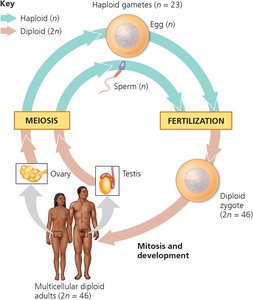
Relate meiosis to the formation of gametes and the restoration of diploid number at fertilization.
Try solving on your own before revealing the answer!
Final Answer:
Meiosis involves two divisions: Meiosis I (homologous chromosomes separate) and Meiosis II (sister chromatids separate), resulting in four haploid gametes. Crossing over during Prophase I increases genetic diversity. Fertilization restores the diploid chromosome number.
