 Back
BackBiology Study Guide: Carbohydrates, Lipids, Proteins, and Nucleic Acids
Study Guide - Smart Notes
 Tailored notes based on your materials, expanded with key definitions, examples, and context.
Q1. Who is most likely to be lactose intolerant among Emma (French), Ying (Chinese), and Kingasunye (Kenyan)? At what age did they stop producing lactase? Who is most likely lactose tolerant?
Background
Topic: Lactose Intolerance and Ethnicity
This question explores the relationship between ethnicity and the likelihood of lactose intolerance, as well as the age at which lactase production typically decreases.
Key Terms:
Lactase: Enzyme that digests lactose (milk sugar).
Lactose intolerance: Inability to digest lactose due to reduced lactase production.
Ethnicity: Genetic background can influence lactase persistence.
Step-by-Step Guidance
Recall that lactase persistence varies by ethnicity. Many people of East Asian descent (like Ying) are more likely to be lactose intolerant, while people of European descent (like Emma) are more likely to be lactose tolerant.
Consider the typical age when lactase production decreases. In populations with high lactose intolerance, lactase production often drops after early childhood.
Think about the Kenyan population (Kingasunye). Some African populations have higher rates of lactase persistence due to traditional dairy consumption.
Use the chart from lecture notes to compare the likelihood of lactose intolerance for each individual based on their ethnicity.
Try solving on your own before revealing the answer!
Final Answer:
Ying (Chinese) is most likely to be lactose intolerant, typically stopping lactase production after early childhood. Emma (French) is most likely lactose tolerant. Kingasunye (Kenyan) may also be lactose tolerant, depending on specific ethnic background and dietary traditions.
Q2. Describe the path of digestion if Ying drinks milk (lactose intolerant) and if Kingasunye drinks milk (lactose tolerant). What are ways to deal with lactose intolerance? Why does this matter for osteoporosis?
Background
Topic: Digestion of Lactose and Health Implications
This question tests your understanding of how lactose is digested in tolerant vs. intolerant individuals and the health consequences of lactose intolerance.
Key Terms:
Lactose: Sugar found in milk.
Lactase: Enzyme needed to digest lactose.
Osteoporosis: Condition related to bone health, often linked to calcium intake.
Step-by-Step Guidance
For Ying (lactose intolerant), consider what happens when lactose reaches the intestine without being digested. It is fermented by bacteria, causing symptoms like gas and discomfort.
For Kingasunye (lactose tolerant), lactase enzyme breaks down lactose in the small intestine, allowing normal digestion and absorption.
List ways to manage lactose intolerance, such as using lactase supplements, consuming lactose-free products, or choosing non-dairy sources of calcium.
Connect lactose intolerance to osteoporosis by considering how reduced dairy intake might affect calcium consumption and bone health.
Try solving on your own before revealing the answer!
Final Answer:
Ying's digestion leads to fermentation of lactose in the colon, causing symptoms. Kingasunye digests lactose normally. Managing lactose intolerance involves dietary adjustments, and this matters for osteoporosis because dairy is a major calcium source.
Q3. If hundreds or thousands of glucose monomers are linked together, what 3 products could be created?
Background
Topic: Polysaccharides
This question tests your knowledge of the major polysaccharides formed from glucose monomers.
Key Terms:
Monomer: Single molecule unit (glucose).
Polysaccharide: Large carbohydrate made of many glucose units.
Step-by-Step Guidance
Recall the three main polysaccharides discussed in class: starch, glycogen, and cellulose.
Think about the function and structure of each polysaccharide.
Consider how the linkage of glucose monomers determines the type of polysaccharide formed.
Try solving on your own before revealing the answer!
Final Answer:
Starch, glycogen, and cellulose are the three products formed from glucose monomers, depending on the linkage.
Q4. List 2 functions of small sugars using the carbs summary slide.
Background
Topic: Functions of Monosaccharides and Disaccharides
This question asks you to recall the roles of small sugars in biological systems.
Key Terms:
Monosaccharide: Simple sugar (e.g., glucose).
Disaccharide: Two sugars linked together (e.g., sucrose).
Step-by-Step Guidance
Review the summary slide for carbohydrates and identify the main functions of small sugars.
Consider their roles in energy production and cellular communication.
Try solving on your own before revealing the answer!
Final Answer:
Small sugars provide quick energy and are involved in cell signaling.
Q5. Complete the following equations. Afterwards, circle monosaccharides and square in disaccharides.
Background
Topic: Formation of Disaccharides
This question tests your understanding of how monosaccharides combine to form disaccharides.
Key Terms:
Monosaccharide: Single sugar unit.
Disaccharide: Two sugar units joined together.
Step-by-Step Guidance
Recall the common disaccharides: lactose, sucrose, and maltose.
Identify the monosaccharides that combine to form each disaccharide.
Write the equations and mark monosaccharides and disaccharides as instructed.
Try solving on your own before revealing the answer!
Final Answer:
a. Galactose + Glucose = Lactose b. Glucose + Fructose = Sucrose c. Glucose + Glucose = Maltose
Q6. Fill in the structure and function chart for polysaccharides in plants and animals.
Background
Topic: Polysaccharide Structure and Function
This question asks you to compare storage and structural polysaccharides in plants and animals.
Key Terms:
Polysaccharide: Large carbohydrate molecule.
Storage: Energy storage function.
Structure: Provides support or rigidity.
Step-by-Step Guidance
Identify the main storage polysaccharide in plants (starch) and animals (glycogen).
Identify the main structural polysaccharide in plants (cellulose) and in animals (chitin).
Fill in the chart with the correct polysaccharide for each box.
Try solving on your own before revealing the answer!
Final Answer:
Plants: Storage = Starch, Structure = Cellulose Animals: Storage = Glycogen, Structure = Chitin
Q7. Why do we find HFCS in so many foods and drinks?
Background
Topic: High Fructose Corn Syrup (HFCS)
This question explores the reasons for the widespread use of HFCS in processed foods.
Key Terms:
HFCS: Sweetener made from corn.
Cost, sweetness, shelf life: Factors influencing use.
Step-by-Step Guidance
Consider economic reasons for using HFCS, such as cost and availability.
Think about the properties of HFCS that make it attractive to food manufacturers.
Reflect on the impact of HFCS on health and food consumption.
Try solving on your own before revealing the answer!
Final Answer:
HFCS is used because it is cheap, sweet, and extends shelf life, making it attractive for processed foods.
Q8. How is fructose different from glucose? Include the 3 ways your cells use sugar.
Background
Topic: Sugar Metabolism
This question tests your understanding of the differences between fructose and glucose and their roles in cellular metabolism.
Key Terms:
Fructose: Sugar processed mainly in the liver.
Glucose: Sugar used by all cells for energy.
Cellular uses: Energy, storage, structure.
Step-by-Step Guidance
Compare the metabolic pathways of fructose and glucose.
List the three ways cells use sugar: immediate energy, storage as glycogen, and structural roles.
Explain how fructose is processed differently from glucose.
Try solving on your own before revealing the answer!
Final Answer:
Fructose is processed mainly in the liver, while glucose is used by all cells. Sugars are used for energy, storage, and structure.
Q9. Contrast the three video perspectives of sugar. What was the major conclusion of each? Include leptin resistance in your answer for the last video.
Background
Topic: Sugar and Health
This question asks you to compare different viewpoints on sugar and its health effects, including hormonal regulation.
Key Terms:
Leptin resistance: Hormonal issue related to obesity.
Sugar perspectives: Health, metabolism, addiction.
Step-by-Step Guidance
Summarize the main points from each video.
Identify the major conclusion of each perspective.
Explain how leptin resistance relates to sugar consumption and obesity.
Try solving on your own before revealing the answer!
Final Answer:
Each video concluded that sugar impacts health differently, with the last emphasizing leptin resistance as a factor in obesity.
Q10. What were the final conclusions from our discussion of HFCS?
Background
Topic: HFCS and Health
This question asks you to recall the main takeaways about HFCS from class discussion.
Key Terms:
HFCS: High Fructose Corn Syrup.
Health effects: Obesity, metabolism.
Step-by-Step Guidance
Review the health impacts of HFCS discussed in class.
Summarize the main points about its role in diet and obesity.
Try solving on your own before revealing the answer!
Final Answer:
HFCS contributes to obesity and metabolic issues, and its widespread use is a concern for public health.
Q11. What 2 factors related to food manufacturers have contributed to childhood/adult obesity? List terms from your food labels.
Background
Topic: Food Manufacturing and Obesity
This question explores how food industry practices contribute to obesity and asks you to identify relevant terms from food labels.
Key Terms:
Added sugars, processed foods, portion sizes.
Food label terms: HFCS, sugar, fat, calories.
Step-by-Step Guidance
Identify two major factors: increased added sugars and larger portion sizes.
Review food labels for terms related to these factors.
Try solving on your own before revealing the answer!
Final Answer:
Added sugars and portion sizes are key factors. Food label terms include HFCS, sugar, fat, and calories.
Q1. What is the unifying feature of lipids? What are the 3 major groups of lipids?
Background
Topic: Lipid Structure and Classification
This question tests your understanding of what makes lipids unique and their main categories.
Key Terms:
Lipids: Hydrophobic molecules.
Major groups: Fats, phospholipids, steroids.
Step-by-Step Guidance
Recall that lipids are defined by their hydrophobic nature.
List the three major groups: fats (triglycerides), phospholipids, and steroids.
Try solving on your own before revealing the answer!
Final Answer:
Lipids are hydrophobic. The three major groups are fats, phospholipids, and steroids.
Q2. Compare lipids to carbohydrates. Draw a skeleton of a polysaccharide and a lipid. Label atoms and components. Which molecule is bigger?
Background
Topic: Molecular Structure Comparison
This question asks you to compare the structure and size of lipids and carbohydrates.
Key Terms:
Polysaccharide: Long chain of glucose units.
Lipid: Glycerol backbone with fatty acid chains.
Step-by-Step Guidance
Draw a polysaccharide as a chain of glucose rings, labeling carbon, hydrogen, and oxygen atoms.
Draw a lipid as a glycerol molecule attached to three fatty acid chains, labeling the atoms.
Compare the size and complexity of each molecule.
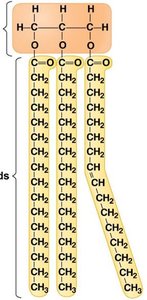
Try solving on your own before revealing the answer!
Final Answer:
Polysaccharides are typically larger and more complex than lipids.
Q3. What are several ways that fatty acids differ from each other?
Background
Topic: Fatty Acid Diversity
This question tests your understanding of the structural differences among fatty acids.
Key Terms:
Fatty acid: Hydrocarbon chain with a carboxyl group.
Saturation, length, branching.
Step-by-Step Guidance
List the factors that differentiate fatty acids: chain length, degree of saturation, and presence of branches or double bonds.
Explain how these differences affect physical properties and biological functions.
Try solving on your own before revealing the answer!
Final Answer:
Fatty acids differ in chain length, saturation, and branching.
Q4. What does saturated vs. unsaturated mean, relative to fatty acids? Why is vegetable oil liquid at room temperature? Use the straight vs. bendy straw analogy.
Background
Topic: Saturation and Physical Properties
This question tests your understanding of how saturation affects fatty acid structure and function.
Key Terms:
Saturated fatty acid: No double bonds, straight chains.
Unsaturated fatty acid: One or more double bonds, bent chains.
Step-by-Step Guidance
Define saturated and unsaturated fatty acids.
Explain how double bonds create bends in the chain (bendy straw analogy).
Describe why unsaturated fats (like vegetable oil) are liquid at room temperature.
Try solving on your own before revealing the answer!
Final Answer:
Saturated fats are straight and solid; unsaturated fats are bent and liquid at room temperature.
Q5. What environmental issue is connected with palm oil?
Background
Topic: Environmental Impact of Lipids
This question asks you to consider the ecological consequences of palm oil production.
Key Terms:
Palm oil: Widely used vegetable oil.
Deforestation, habitat loss.
Step-by-Step Guidance
Identify the main environmental issues: deforestation and loss of biodiversity.
Explain how palm oil production affects ecosystems.
Try solving on your own before revealing the answer!
Final Answer:
Palm oil production causes deforestation and threatens wildlife habitats.
Q6. What are the 3 main functions of fats?
Background
Topic: Biological Functions of Fats
This question tests your knowledge of the roles fats play in living organisms.
Key Terms:
Energy storage, insulation, protection.
Step-by-Step Guidance
List the three main functions: energy storage, insulation, and cushioning/protection.
Explain how each function benefits the organism.
Try solving on your own before revealing the answer!
Final Answer:
Fats store energy, insulate the body, and protect organs.
Q8. What are the 3 components of phospholipids? Explain hydrophilic vs. hydrophobic parts. What structure is made of phospholipids?
Background
Topic: Phospholipid Structure and Function
This question tests your understanding of phospholipid composition and their role in cell membranes.
Key Terms:
Phospholipid: Glycerol, fatty acids, phosphate group.
Hydrophilic: Water-loving.
Hydrophobic: Water-fearing.
Step-by-Step Guidance
Identify the three components: glycerol, two fatty acids, and a phosphate group.
Explain which parts are hydrophilic (phosphate head) and hydrophobic (fatty acid tails).
Describe the structure formed by phospholipids: the lipid bilayer of cell membranes.
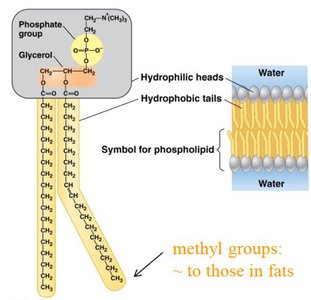
Try solving on your own before revealing the answer!
Final Answer:
Phospholipids have a glycerol backbone, two fatty acids, and a phosphate group. The hydrophilic head faces water, hydrophobic tails face inward, forming cell membranes.
Q9. How does the structure of a steroid differ from the other two types of lipids?
Background
Topic: Lipid Structure Diversity
This question asks you to compare the structure of steroids to fats and phospholipids.
Key Terms:
Steroid: Four fused carbon rings.
Fats and phospholipids: Chains and glycerol backbone.
Step-by-Step Guidance
Describe the ring structure of steroids.
Contrast this with the chain structure of fats and phospholipids.
Try solving on your own before revealing the answer!
Final Answer:
Steroids have four fused rings, unlike the chain structure of fats and phospholipids.
Q10. What category of lipids does cholesterol fall into? Give two functions of cholesterol.
Background
Topic: Cholesterol and Lipid Categories
This question tests your knowledge of cholesterol's classification and its biological roles.
Key Terms:
Cholesterol: Steroid lipid.
Functions: Membrane stability, hormone precursor.
Step-by-Step Guidance
Classify cholesterol as a steroid.
List two functions: stabilizing cell membranes and serving as a precursor for steroid hormones.
Try solving on your own before revealing the answer!
Final Answer:
Cholesterol is a steroid. It stabilizes cell membranes and is a precursor for hormones.
Q11. Is the fat in the image saturated or unsaturated? How do you know?
Background
Topic: Identifying Fat Types
This question asks you to analyze a molecular structure to determine saturation.
Key Terms:
Saturated: No double bonds.
Unsaturated: One or more double bonds.
Step-by-Step Guidance
Examine the structure for double bonds or bends in the fatty acid chains.
Identify if the chains are straight (saturated) or bent (unsaturated).
Try solving on your own before revealing the answer!
Final Answer:
The fat is unsaturated, as indicated by the bent chain.
Q8. What lipid is important in stabilizing cell membranes and serves as a precursor for sex hormones?
Background
Topic: Cholesterol's Role
This question tests your knowledge of cholesterol's functions in cells.
Key Terms:
Cholesterol: Membrane stabilizer, hormone precursor.
Step-by-Step Guidance
Recall the lipid that stabilizes membranes and is used to make hormones.
Connect this function to cholesterol.
Try solving on your own before revealing the answer!
Final Answer:
Cholesterol stabilizes cell membranes and is a precursor for sex hormones.
Q1. What are the monomers of proteins? Give one specific example.
Background
Topic: Protein Structure
This question tests your knowledge of protein building blocks.
Key Terms:
Amino acid: Monomer of proteins.
Example: Hemoglobin contains specific amino acids.
Step-by-Step Guidance
Recall that proteins are made of amino acids.
Give an example, such as glycine or valine.
Try solving on your own before revealing the answer!
Final Answer:
Amino acids are the monomers; glycine is one example.
Q2. Explain how protein structure affects function using sickle cell anemia, cooking eggs, high fevers, and prions.
Background
Topic: Protein Structure and Function
This question tests your understanding of how changes in protein structure impact function.
Key Terms:
Denaturation: Loss of structure.
Mutation: Change in amino acid sequence.
Step-by-Step Guidance
Describe how sickle cell anemia results from a single amino acid change.
Explain how heat (cooking eggs, fevers) denatures proteins.
Discuss prions as misfolded proteins causing disease.
Try solving on your own before revealing the answer!
Final Answer:
Protein function depends on structure; changes can cause disease or loss of function.
Q3. Briefly explain how prions work, including amyloid deposits and tau.
Background
Topic: Prion Diseases
This question tests your understanding of prion mechanisms and their impact on the brain.
Key Terms:
Prion: Misfolded protein.
Amyloid deposits: Protein aggregates.
Tau: Protein involved in neurodegeneration.
Step-by-Step Guidance
Explain how prions cause other proteins to misfold.
Describe the formation of amyloid deposits and tau tangles.
Try solving on your own before revealing the answer!
Final Answer:
Prions induce misfolding, leading to amyloid deposits and tau tangles in the brain.
Q4. Complete the Venn diagram and give it a title describing the category of organic molecule.
Background
Topic: DNA vs. RNA Comparison
This question tests your ability to compare and contrast DNA and RNA.
Key Terms:
Nucleic acids: DNA and RNA.
Monomers: Nucleotides.
Step-by-Step Guidance
List similarities and differences between DNA and RNA.
Title the Venn diagram as "Nucleic Acids."
Try solving on your own before revealing the answer!
Final Answer:
Title: Nucleic Acids. DNA and RNA differ in sugar, bases, and function.
Q5. What are the monomers of DNA and RNA? What are the three components of these monomers? Draw a monomer of DNA and RNA.
Background
Topic: Nucleotide Structure
This question tests your knowledge of nucleic acid monomers and their structure.
Key Terms:
Nucleotide: Monomer of DNA/RNA.
Components: Sugar, phosphate, base.
Step-by-Step Guidance
Identify the three components: pentose sugar, phosphate group, nitrogenous base.
Draw a nucleotide for DNA (deoxyribose, phosphate, base) and RNA (ribose, phosphate, base).
Try solving on your own before revealing the answer!
Final Answer:
Monomers are nucleotides; each has a sugar, phosphate, and base.
Q6. What does it mean for bases to be complementary?
Background
Topic: DNA Base Pairing
This question tests your understanding of complementary base pairing in DNA.
Key Terms:
Complementary: Bases pair specifically (A-T, C-G).
Step-by-Step Guidance
Explain how adenine pairs with thymine, and cytosine with guanine.
Describe the importance of complementary pairing for DNA structure.
Try solving on your own before revealing the answer!
Final Answer:
Bases are complementary when they pair specifically (A-T, C-G).
Q7. ___ DNA nucleotides code for ___ amino acid in a polypeptide. Give an example of a DNA sequence and the corresponding amino acid.
Background
Topic: Genetic Code
This question tests your understanding of how DNA codes for proteins.
Key Terms:
Codon: Three nucleotides code for one amino acid.
Step-by-Step Guidance
Recall that a codon consists of three DNA nucleotides.
Give an example sequence and the amino acid it codes for.
Try solving on your own before revealing the answer!
Final Answer:
Three DNA nucleotides code for one amino acid.
Q2. Answer questions with respect to the image below (polypeptide chains).
Background
Topic: Protein Structure Levels
This question tests your understanding of protein structure and types.
Key Terms:
Polypeptide: Chain of amino acids.
Quaternary structure: Multiple chains.
Step-by-Step Guidance
Identify the molecule as a protein.
Count the number of polypeptide chains.
Determine the level of structure (quaternary).
List the types of bonds involved at each level.
Classify as fibrous or globular.
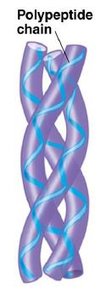
Try solving on your own before revealing the answer!
Final Answer:
The molecule is a protein with multiple polypeptide chains, showing quaternary structure.
Q3. Answer questions with respect to the image below (hemoglobin structure).
Background
Topic: Protein Structure and Function
This question tests your understanding of hemoglobin and protein structure levels.
Key Terms:
Hemoglobin: Globular protein.
Quaternary structure: Multiple chains.
Step-by-Step Guidance
Identify the molecule as hemoglobin.
Classify as globular protein.
Describe the quaternary structure and how it differs from other levels.
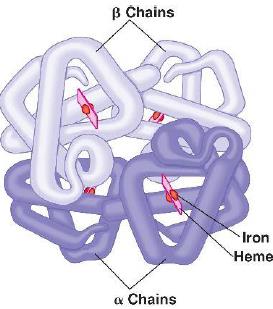
Try solving on your own before revealing the answer!
Final Answer:
Hemoglobin is a globular protein with quaternary structure.
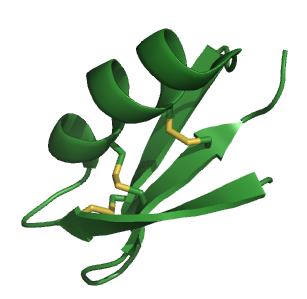
Q4. The image below is a 3D rendering of agitoxin, a protein found in scorpion venom. What secondary structures are shown? What bonds are involved in secondary structure? Define tertiary structure.
Background
Topic: Protein Structure Levels
This question tests your knowledge of secondary and tertiary protein structures.
Key Terms:
Secondary structure: Alpha helix, beta sheet.
Hydrogen bonds: Stabilize secondary structure.
Tertiary structure: Overall 3D shape.
Step-by-Step Guidance
Identify the secondary structures (alpha helix, beta sheet) in the image.
Explain the role of hydrogen bonds in secondary structure.
Define tertiary structure and factors influencing it.
Try solving on your own before revealing the answer!
Final Answer:
The image shows alpha helices and beta sheets; hydrogen bonds stabilize secondary structure; tertiary structure is the overall 3D shape.
