 Back
Biology: The Study of Life – Chapter 1 Study Notes
Study Guide - Smart Notes
 Tailored notes based on your materials, expanded with key definitions, examples, and context.
Biology: The Study of Life
1.1 What Does It Mean to Say That Something is Alive?
Biology is the scientific study of life, and all living organisms share five fundamental characteristics that distinguish them from non-living matter.
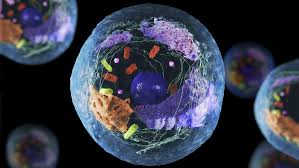
Cells: All organisms are composed of membrane-bound cells, which are highly organized compartments separated from their environment by a membrane barrier.
Replication: All organisms are capable of reproduction, ensuring the continuity of life.
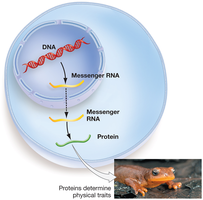
Information: Organisms process hereditary information encoded in genes and respond to environmental information. The Central Dogma of Molecular Biology describes the flow of genetic information: DNA → RNA → Protein.
Energy: All organisms acquire and use energy to stay alive, often through processes such as cellular respiration.
Evolution: Populations of organisms are continually evolving, leading to diversity and adaptation.
Theories in Biology
A theory in science is an explanation for a very general class of phenomena or observations, supported by a wide body of evidence. This differs from the everyday usage of the word, which often means speculation or guess.
Cell Theory: All organisms are made up of cells, and all cells come from preexisting cells.
Theory of Evolution by Natural Selection: Explains the origin and diversity of organisms.
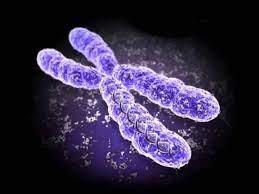
Chromosome Theory of Inheritance: Describes how hereditary information is transmitted from one generation to the next.
Life Replicates through Cell Division
Cell division is essential for life, as it allows organisms to grow, reproduce, and repair tissues. According to cell theory, all cells in multicellular organisms descend from preexisting cells, sharing a common lineage.
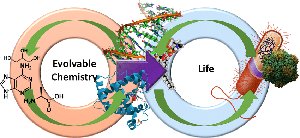
Evidence of Chemical Evolution: Life arose from non-life early in Earth's history through chemical evolution.
1.3 Life Processes Information and Requires Energy
The chromosome theory of inheritance, proposed by Sutton and Boveri, states that genetic information is encoded in genes located on chromosomes. In the 1950s, it was established that chromosomes are molecules of deoxyribonucleic acid (DNA), and genes are segments of DNA that code for cell products.
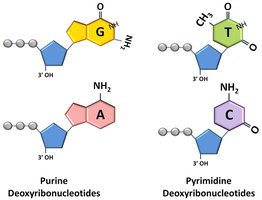
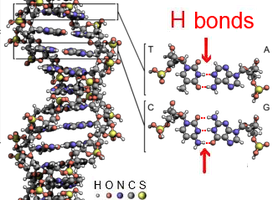
DNA Structure: DNA is a double helix composed of four building blocks: Adenine (A), Thymine (T), Cytosine (C), and Guanine (G). The sequence of these bases encodes genetic information.
Base Pairing: The two strands of DNA are joined by hydrogen bonds: A pairs with T (2 H bonds), and C pairs with G (3 H bonds). This pairing allows DNA to be copied accurately.
Central Dogma: DNA codes for RNA, which codes for proteins. This flow of information is fundamental to cellular function.
DNA Replication and Mutation
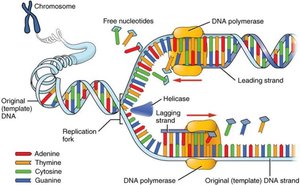
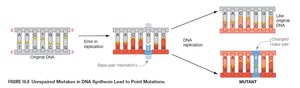
DNA is copied to pass genetic information from cell to cell or from one organism to its offspring. DNA replication is highly accurate, but mistakes can occur, leading to mutations.
Mutation: A permanent change in the DNA sequence. Mutations can alter proteins and lead to heritable variations, which are the basis for the diversity of life.
Energy and Cellular Processes
Chemical reactions inside cells require energy. Organisms must acquire chemical energy, often in the form of adenosine triphosphate (ATP), and molecules that serve as building blocks for DNA, proteins, lipids, and other cellular components.
ATP: The primary energy currency of the cell, produced mainly through cellular respiration.
1.4 Life Evolves
Evolution is a central concept in biology. Darwin and Wallace proposed that species are related by common ancestry and that characteristics of species can be modified from generation to generation, a process called "descent with modification."
Evolution: Change in the characteristics of a population over time.
Population: A group of individuals of the same species living in the same area at the same time.
Natural Selection and Populations
Natural selection explains how evolution occurs. Two conditions must be met for natural selection:
Individuals must vary in characteristics that are heritable.
Certain versions of these traits help individuals reproduce more than others in a particular environment.
Natural Selection and Evolutionary Change
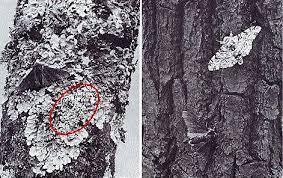
Heritable traits that increase reproductive success become more common in a population over time. Natural selection acts on individuals, but evolutionary change occurs in populations. Speciation occurs when populations diverge to form new species.
Fitness and Adaptation Drive Natural Selection
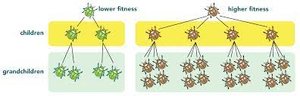
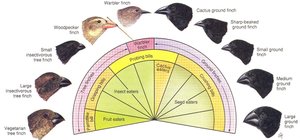
Fitness is the ability of an individual to produce offspring. Adaptation is a trait that increases fitness in a particular environment. Individuals with high fitness produce more surviving offspring.
1.5 The Tree of Life Depicts Evolutionary History
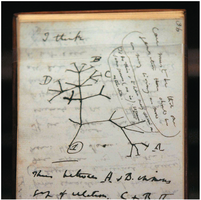
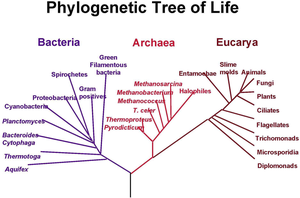
The tree of life is a family tree of organisms, describing relationships among species with a single ancestral species at its base. A phylogeny is a tree diagram showing actual genealogical relationships among all organisms.
Analyzing Genetic Variation
Biologists analyze genetic variation by comparing DNA and RNA sequences among organisms. Fewer sequence variations indicate a closer relationship.
The Phylogenetic Tree of Life
The phylogenetic tree shows relationships between species. Branches sharing a recent common ancestor represent closely related species, while distant branches represent more distantly related species.
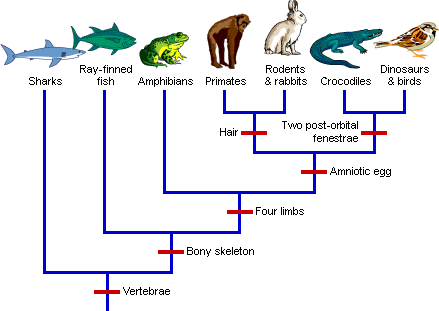
Interpreting the Tree of Life
The tree of life indicates three major groups (domains) of organisms:
Eukaryotes: Organisms with a nucleus (Domain: Eukarya).
Bacteria: Prokaryotes lacking a nucleus.
Archaea: Prokaryotes lacking a nucleus, distinct from bacteria.
Taxonomy
Taxonomy is the effort to name and classify organisms. A taxon is a named group. The hierarchical classification system includes Domain, Kingdom, Phylum, Class, Order, Family, Genus, and Species.
Level | Example |
|---|---|
Domain | Eukarya |
Kingdom | Plantae |
Phylum | Magnoliophyta |
Class | Magnoliopsida |
Order | Fagales |
Family | Fagaceae |
Genus | Quercus L. |
Species | Quercus alba L. |
Linnaeus’ Taxonomic System of Classification
Carolus Linnaeus established the classification system still in use today. Each organism is given a unique two-part species name (binomial nomenclature): Genus and specific epithet. Scientific names are always italicized, with genus names capitalized and specific epithet names not capitalized.
1.6 Doing Biology
The nature of science involves asking questions that can be answered by collecting data. Scientists formulate hypotheses and seek evidence that supports or conflicts with those hypotheses.
Hypothesis Testing
Hypothesis testing is a two-step process:
State the hypothesis as precisely as possible and list predictions it makes.
Design observational or experimental studies capable of testing those predictions.
Example: Why Do Giraffes Have Long Necks?
The food competition hypothesis suggests that long necks evolved to allow giraffes to reach food unavailable to other mammals. Predictions include variable neck length, heritability, and feeding high in trees. However, data do not support all predictions, leading to alternative hypotheses such as the sexual competition hypothesis, which proposes that longer-necked males win more fights and father more offspring.
Characteristics of Good Experimental Design
Include a control group to check for other factors.
Keep experimental conditions constant.
Repeat tests for reliability.
Use a large sample size for statistical significance.
