 Back
Biology: The Study of Life – Chapter 1 Study Notes
Study Guide - Smart Notes
 Tailored notes based on your materials, expanded with key definitions, examples, and context.
Biology: The Study of Life
What Does It Mean to Say That Something is Alive?
Biology is the scientific study of life and living organisms. To determine if something is alive, biologists use several key criteria:
Energy: All organisms acquire and use energy to sustain life processes.
Evolution: Populations of organisms change over time, adapting to their environments.
Cells: All living things are composed of membrane-bound cells.
Replication: Organisms are capable of reproduction, producing offspring.
Information: Organisms process hereditary information encoded in genes and respond to environmental signals.
Unifying Ideas in Biology
Three foundational theories provide the framework for modern biology:
Cell Theory
Chromosome Theory of Inheritance
Theory of Evolution by Natural Selection
The Cell Theory
Principles of Cell Theory
The cell theory is a cornerstone of biology, stating:
All organisms are made up of cells.
All cells come from pre-existing cells.
Historical Observations
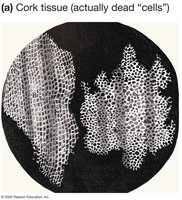
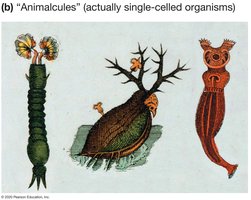
Early scientists used microscopes to observe cells in various organisms, leading to the development of cell theory.
Robert Hooke: Observed cork tissue and identified cell structures.
Antonie van Leeuwenhoek: Observed single-celled organisms in pond water.
Testing the Origin of Cells
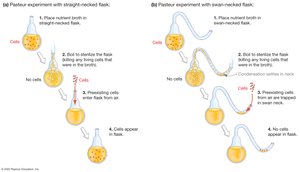
By the 1800s, two hypotheses were debated:
Spontaneous Generation: Organisms arise spontaneously under certain conditions.
All Cells-from-Cells: Cells arise only from pre-existing cells.
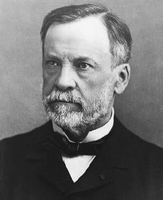
Louis Pasteur's experiments provided evidence against spontaneous generation, confirming that cells come from pre-existing cells.
Chromosome Theory of Inheritance
Genetic Information and Chromosomes
Hereditary information is encoded in genes, which are segments of DNA located on chromosomes. The chromosome theory of inheritance was developed in the early 1900s by Sutton and Boveri, who observed chromosomes during cell division.
Genes: Specific segments of DNA that carry instructions for traits.
Chromosomes: Structures composed largely of DNA, containing genes.
Discovery of DNA Structure
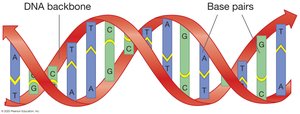
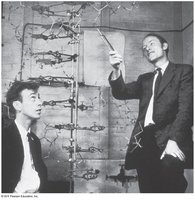
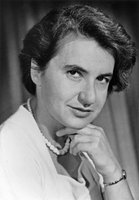
In 1953, James Watson and Francis Crick, with data from Rosalind Franklin, proposed that DNA is a double-stranded helix.
The Central Dogma of Molecular Biology
The central dogma describes the flow of genetic information:
DNA is transcribed into messenger RNA (mRNA).
mRNA is translated into protein.
Proteins determine physical traits.
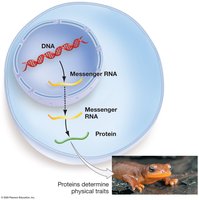
Changes in DNA can lead to different proteins, resulting in genetic variation.
The Theory of Evolution by Natural Selection
Principles of Evolution
Evolution explains how populations change over time. Darwin and Wallace proposed:
Common Ancestry: Species are related by common ancestry.
Descent with Modification: Characteristics of species change over generations.
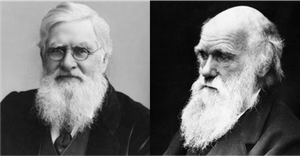
Natural Selection
Natural selection is the mechanism by which evolution occurs:
Individuals in a population vary in their heritable traits.
Certain traits increase fitness, helping individuals survive and reproduce.
Traits that enhance fitness become more common in the population over time.
Fitness: The ability of an organism to survive and reproduce in its environment.
The Tree of Life and Evolutionary History
Phylogeny and DNA Comparison
The tree of life depicts evolutionary relationships among organisms. DNA comparisons are used to determine phylogeny, showing how species are related.
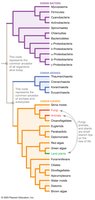
Summary Table: Unifying Theories in Biology
Theory | Main Principle | Key Contributors |
|---|---|---|
Cell Theory | All organisms are made of cells; all cells come from pre-existing cells | Hooke, Van Leeuwenhoek, Pasteur |
Chromosome Theory of Inheritance | Genes are located on chromosomes; chromosomes are made of DNA | Sutton, Boveri, Watson, Crick, Franklin |
Theory of Evolution by Natural Selection | Species change over time; traits that increase fitness become more common | Darwin, Wallace |
Key Equations
Central Dogma
The flow of genetic information can be summarized as:
Additional info:
These notes provide foundational concepts for understanding all subsequent chapters in General Biology.
Images included are directly relevant to the explanation of each topic, reinforcing key points.
