 Back
BackBiology: The Study of Life – Foundations and Principles
Study Guide - Smart Notes
 Tailored notes based on your materials, expanded with key definitions, examples, and context.
Chapter 1: Biology – The Study of Life
Defining Life: Fundamental Characteristics
Biology is the scientific study of life, and all living organisms share five fundamental characteristics that distinguish them from non-living matter.
Cells: All organisms are composed of membrane-bound cells, which serve as the basic unit of life.
Replication: All organisms are capable of reproduction, ensuring the continuity of life.
Information: Organisms process hereditary information encoded in genes and respond to environmental signals.
Energy: Organisms acquire and utilize energy to maintain life processes.
Evolution: Populations of organisms are continually evolving, adapting to their environments over generations.
Theories in Biological Science
Modern biology is built upon three foundational theories, each supported by extensive evidence:
Cell Theory: All organisms are made of cells, and all cells arise from preexisting cells.
Theory of Evolution by Natural Selection: Explains the relationships among organisms and how species change over time.
Chromosome Theory of Inheritance: Describes how hereditary information is transmitted from one generation to the next via genes located on chromosomes.
Life is Cellular and Replicates through Cell Division
Discovery and Structure of Cells
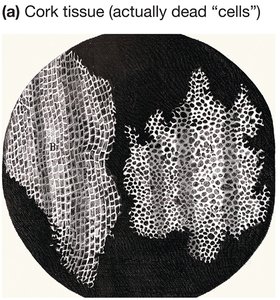
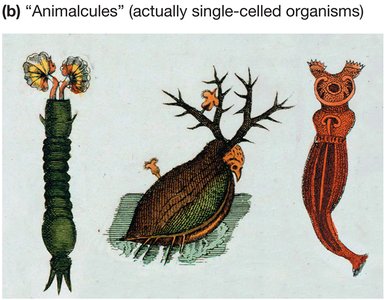
The cell theory was established through the pioneering work of scientists using microscopes to observe the microscopic compartments that make up living organisms.
Robert Hooke (1665): Observed cork tissue and coined the term "cells."
Anton van Leeuwenhoek: Improved magnification and observed single-celled organisms, termed "animalcules."
Cell Structure: Cells are highly organized compartments separated from their environment by a membrane barrier.
Cell Theory vs. Spontaneous Generation
Cell theory challenged the idea of spontaneous generation, which posited that organisms could arise from non-living matter under certain conditions.
All-cells-from-cells Hypothesis: Cells are produced only when pre-existing cells grow and divide.
Spontaneous Generation Hypothesis: Organisms can arise spontaneously from non-living material.
Louis Pasteur's Experiment: Demonstrated that cells arise from pre-existing cells, not spontaneously.
Cell Division and Lineage
For life to persist, cells must replicate. All cells in a multicellular organism descend from a common lineage, supporting the continuity of life.
Cell Division: Essential for growth, development, and reproduction.
Chemical Evolution: Evidence suggests life originated from non-life through chemical processes early in Earth's history.
Life Processes Information and Requires Energy
Genetic Information and Chromosomes
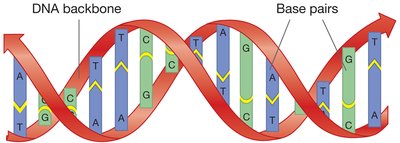
The chromosome theory of inheritance established that genetic information is encoded in genes located on chromosomes, which are composed of DNA.
DNA: The hereditary material; genes are segments of DNA that code for cellular products.
Watson and Crick: Proposed the double-helix structure of DNA.
The Central Dogma of Molecular Biology
The central dogma describes the flow of genetic information within cells: DNA is transcribed into RNA, which is then translated into proteins.
DNA → RNA → Protein: This sequence determines the physical traits of organisms.

Genetic Variation and Heredity
DNA is copied with high accuracy during cell division, but mutations can occur. These changes may alter proteins and result in heritable variations, contributing to the diversity of life.
Mutations: Changes in DNA sequence that can lead to new traits.
Heritable Variation: Basis for evolution and adaptation.
Energy and Nutritional Needs
All cellular chemical reactions require energy. Organisms must acquire energy (often in the form of ATP) and molecular building blocks for growth and maintenance.
ATP: The primary energy currency of the cell.
Building Blocks: Molecules needed to synthesize DNA, RNA, proteins, and other cellular components.
Diversification: How organisms acquire energy is central to the diversity of life forms.

Life Evolves: Evolution and Natural Selection
Principles of Evolution
Evolution is the change in the characteristics of populations over time. Darwin and Wallace proposed that species are related by common ancestry and can be modified across generations.
Descent with Modification: Species change and diversify over generations.

Natural Selection and Population Change
Natural selection is the mechanism by which evolution occurs. It requires heritable variation and differential reproductive success among individuals in a population.
Heritable Traits: Traits that can be passed to offspring.
Fitness: The ability of an individual to produce surviving offspring.
Adaptation: Traits that increase fitness in a particular environment.
Speciation: The formation of new species when populations diverge.
Example: Natural Selection in Finches
Finches on the Galápagos Islands demonstrate natural selection. Increased rainfall led to an abundance of small, soft seeds, favoring finches with small, pointed beaks—an adaptation that increased their fitness and prevalence in the population.
The Tree of Life and Phylogeny
Depicting Evolutionary History
The tree of life is a family tree that describes the genealogical relationships among species, with a single ancestral species at its base. Phylogeny refers to the actual evolutionary relationships among organisms.
Phylogenetic Tree: Visual representation of evolutionary relationships.
Genetic Analysis: Comparing DNA and RNA sequences reveals evolutionary relationships; fewer sequence differences indicate closer relationships.

Major Groups of Life
The tree of life indicates three major domains:
Eukarya: Organisms with a nucleus (eukaryotes).
Bacteria: Prokaryotes lacking a nucleus.
Archaea: Prokaryotes lacking a nucleus, distinct from bacteria.

Summary Table: Domains of Life
Domain | Cell Type | Nucleus | Examples |
|---|---|---|---|
Bacteria | Prokaryotic | No | Escherichia coli, Cyanobacteria |
Archaea | Prokaryotic | No | Halobacterium, Methanogens |
Eukarya | Eukaryotic | Yes | Plants, Animals, Fungi |
