 Back
BackBiology: The Study of Scientific Life – Structured Study Notes
Study Guide - Smart Notes
 Tailored notes based on your materials, expanded with key definitions, examples, and context.
Biology: The Study of Scientific Life
Introduction to Biology
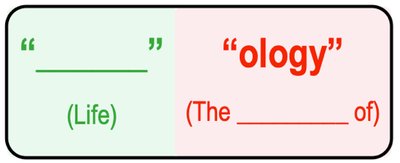
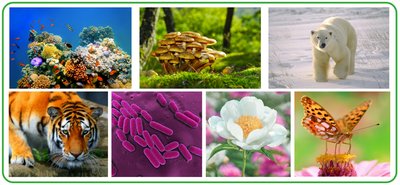
Biology is the scientific study of life, encompassing the diversity and complexity of living organisms. The term 'biology' is derived from the prefix 'bio-' meaning 'life' and the suffix '-ology' meaning 'the study of.' Most life forms on Earth are microscopic and require specialized tools for observation.
Biology: The science that studies life and its processes.
Cell: The smallest, most basic unit of life.
Organism: Any individual form of life, from microscopic bacteria to large animals and plants.
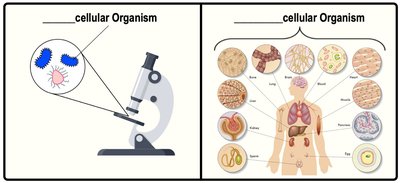
Unicellular organisms: Life forms consisting of a single cell, usually only visible with a microscope.
Multicellular organisms: Life forms composed of multiple cells, often specialized for different functions.
Example: Practice question: The area of science that studies life and its processes is called biology.
Characteristics of Life
All living organisms share a set of characteristics that distinguish them from nonliving things. These features are fundamental to the definition of life.
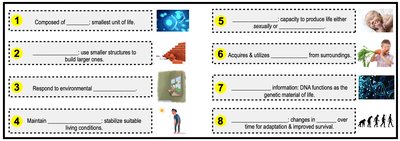
Composed of cells: Cells are the smallest unit of life.
Organization: Living things use smaller structures to build larger ones.
Response to stimuli: Organisms respond to environmental signals.
Homeostasis: The ability to maintain stable internal conditions.
Reproduction: Capacity to produce life, either sexually or asexually.
Metabolism: Sum of chemical reactions that acquire and utilize energy from the environment.
Genetic information: DNA functions as the genetic material in all life.
Evolution: Changes in DNA over time lead to adaptation and improved survival.
Viruses: Not considered alive as they lack many characteristics of life.
Life’s Organizational Hierarchy
Levels of Biological Organization
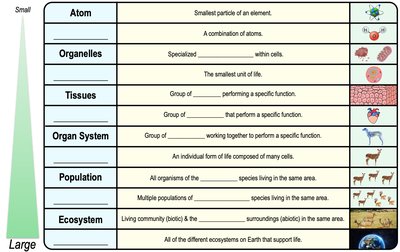
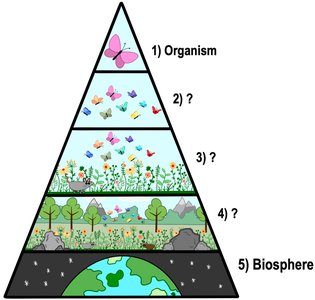
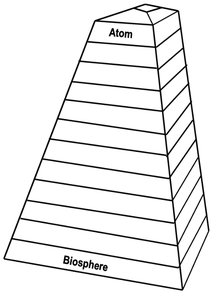
Life is organized into a hierarchical structure, from the smallest components to the largest systems. Each level builds upon the previous, creating complex systems with emergent properties.
Atom: Smallest particle of an element.
Molecule: Combination of atoms.
Organelle: Specialized structures within cells.
Cell: The smallest unit of life.
Tissue: Group of cells performing a specific function.
Organ: Group of tissues that perform a specific function.
Organ System: Group of organs working together to perform a specific function.
Organism: An individual form of life composed of many cells.
Population: All organisms of the same species living in the same area.
Community: Multiple populations of different species living in the same area.
Ecosystem: Living community (biotic) and the surroundings (abiotic) in the same area.
Biosphere: All of the different ecosystems on Earth that support life.
Emergent Properties
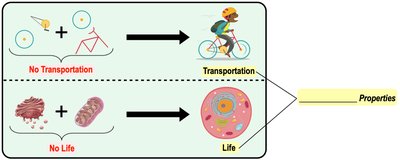
Emergent properties are characteristics that arise when smaller parts combine to form a larger system. The whole is greater than the sum of its parts, and new properties emerge at each level of organization.
Example: Cells are made of simple molecules, but when organized together, these molecules can perform living functions.
Natural Selection & Evolution
Adaptation and Fitness
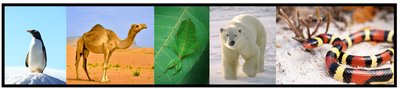
Organisms are well suited to their environments due to adaptation, which improves their fitness. Fitness is an organism’s ability to survive and reproduce in its environment.
Adaptation: Process that enables organisms to increase survival and reproduction.
Fitness: An organism’s ability to survive and reproduce.
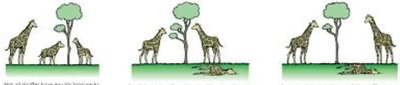
Natural Selection
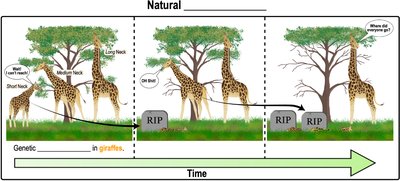
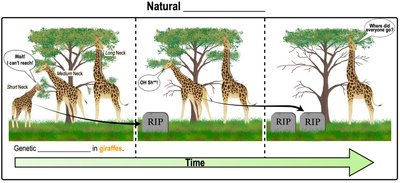
Natural selection is the process described by Charles Darwin, where the environment selects for organisms in a population that are more 'fit.' It is often summarized as 'survival of the fittest.' Natural selection requires genetic variation and selective pressure for heritable traits affecting fitness.
Genetic variation: Differences in DNA among individuals in a population.
Selective pressure: Environmental factors that favor certain traits.
Differential reproductive success: Some individuals produce more offspring than others.
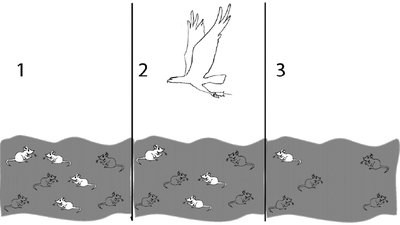
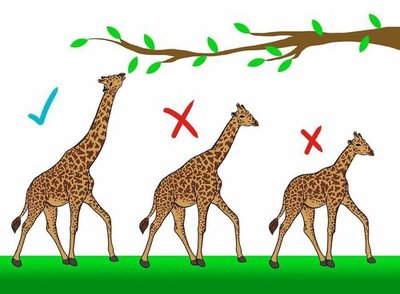
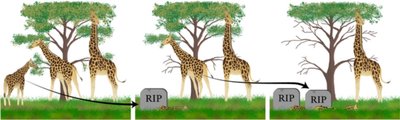
Evolution
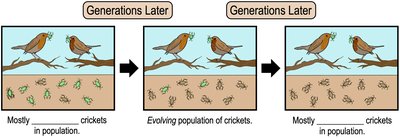
Evolution refers to changes in the DNA of a population over multiple generations. It can occur in various ways, but natural selection is a primary mechanism. Evolution is responsible for the diversity of life on Earth.
Example: Evolution by natural selection in populations of plants that reproduce sexually and live in unstable environments.
Introduction to Taxonomy
Taxonomy and Classification
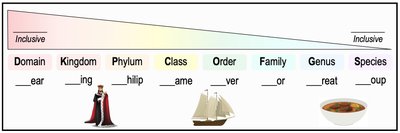
Taxonomy is the branch of science that classifies, identifies, and names organisms. It uses hierarchical categories to organize all life.
Taxonomy: The science of classification of organisms.
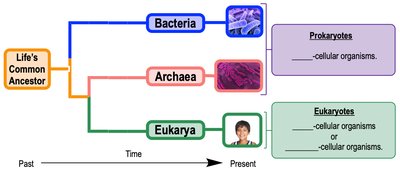
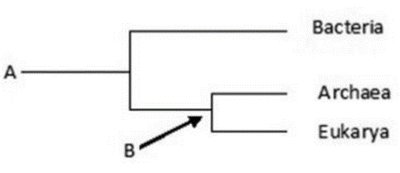
Three domains of life: Bacteria, Archaea, and Eukarya.
Prokaryotes: Organisms without a nucleus (Bacteria and Archaea).
Eukaryotes: Organisms with a nucleus (Eukarya).

Kingdoms of the Eukarya Domain
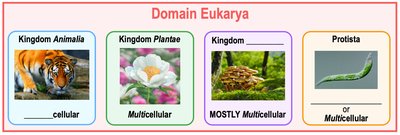
Domain Eukarya is subdivided into several kingdoms, each with distinct characteristics.
Kingdom Animalia: Multicellular, heterotrophic organisms.
Kingdom Plantae: Multicellular, autotrophic organisms.
Kingdom Fungi: Mostly multicellular, decomposers.
Kingdom Protista: Unicellular or multicellular, diverse group.
Categorizing Life Based on Energy Acquisition
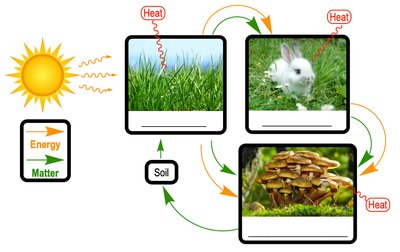
Organisms are categorized based on how they acquire energy: autotrophs, heterotrophs, and decomposers. Most energy utilized by life originates from the sun, and energy transfer is accompanied by loss as heat.
Autotrophs (producers): Make their own food via photosynthesis.
Heterotrophs (consumers): Obtain energy by eating other organisms.
Decomposers: Acquire energy from wastes and dead organisms.
The Scientific Method
Overview of the Scientific Method
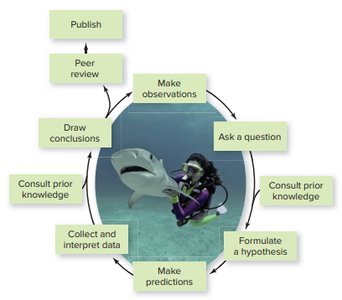
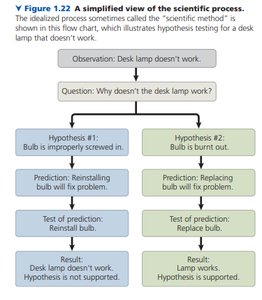
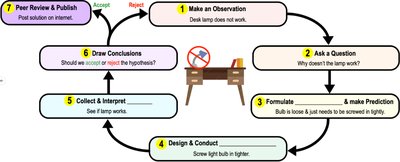
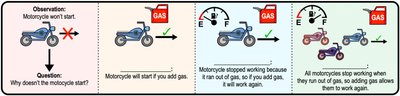
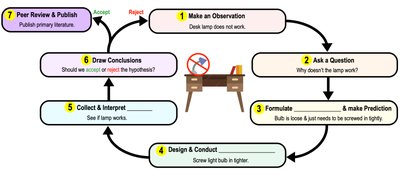
The scientific method is a systematic procedure used to answer questions, test ideas, and build scientific knowledge. It begins with an observation and a question, followed by hypothesis formation, experimentation, data analysis, and conclusion.
Observation: Noticing and describing phenomena.
Hypothesis: Proposed, testable explanation for an observation.
Prediction: Expected outcome based on the hypothesis.
Theory: A testable and broad hypothesis supported by a large body of evidence.
Falsifiability: Hypotheses and theories can be proven incorrect, but not absolutely proven correct.
Basic Theories of Biology
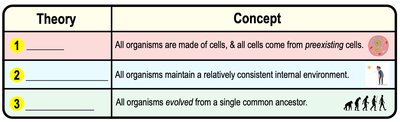
There are three basic theories of biology: cell theory, homeostasis, and evolution from a common ancestor.
Cell Theory: All organisms are made of cells, and all cells come from preexisting cells.
Homeostasis: All organisms maintain a relatively consistent internal environment.
Evolution: All organisms evolved from a single common ancestor.
Experimental Design
Variables in Experiments
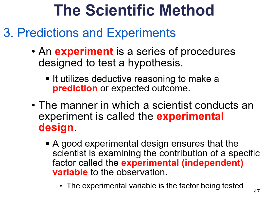
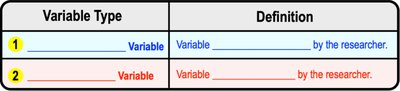
Experimental design involves manipulating and measuring variables to test hypotheses. The main types of variables are independent, dependent, and standardized variables.
Independent variable: Variable manipulated by the researcher.
Dependent variable: Variable measured by the researcher.
Standardized variable: Variables intentionally held constant for all subjects.
Type of Variable | Definition | Example |
|---|---|---|
Independent variable | Manipulated by the researcher | Dose of vaccine |
Dependent variable | Measured by the researcher | Number of children with illness |
Standardized variable | Held constant for all subjects | Age and health of children |

Controls and Experimental Groups
Controls are essential in experiments to prevent false positives and negatives. Negative controls should have no effect, while positive controls should produce a known effect. The control group ideally differs from the experimental group only in the factor being tested.
False positive: Outcome falsely indicates the presence of a result.
False negative: Outcome falsely indicates the absence of a result.
Negative control: Group expected to show no effect.
Positive control: Group expected to show a known effect.

Summary Table: Basic Theories of Biology
Theory | Concept |
|---|---|
Cell Theory | All organisms are made of cells, & all cells come from preexisting cells. |
Homeostasis | All organisms maintain a relatively consistent internal environment. |
Evolution | All organisms evolved from a single common ancestor. |
Additional info: Where content was incomplete, academic context was added to ensure clarity and completeness for exam preparation.
