 Back
Biomes, Climate, and Species Distribution: An Overview of Ecology and the Biosphere
Study Guide - Smart Notes
 Tailored notes based on your materials, expanded with key definitions, examples, and context.
Biomes and Species Distributions
Introduction to Biomes and Climate
Biomes are major ecological communities defined primarily by their dominant vegetation and climate. The distribution of biomes and the species within them is shaped by both abiotic (nonliving) and biotic (living) factors, with climate playing a central role. Understanding the interactions between climate, geography, and organisms is essential for studying ecology and the biosphere.
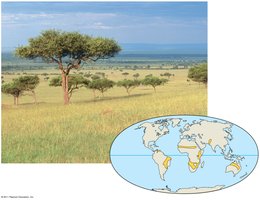
Earth’s Climate: Patterns and Determinants
Macroclimate and Microclimate
Macroclimate: Large-scale climate patterns, such as those affecting entire regions or continents.
Microclimate: Localized climate conditions that can vary over small distances, influenced by features like shade, elevation, or proximity to water.
Global Climate Patterns
Global climate is primarily determined by solar energy and the movement of Earth in space. The sun’s warming effect causes temperature variations, which drive evaporation and the circulation of air and water, ultimately shaping climate zones and biomes.
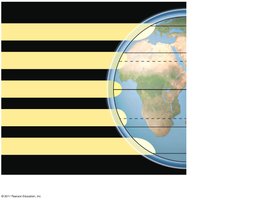
Latitudinal Variation in Sunlight
Sunlight strikes the equator more directly than at higher latitudes, resulting in warmer temperatures near the equator and cooler temperatures toward the poles.
This variation drives global patterns of temperature and precipitation.
Global Air Circulation and Precipitation Patterns
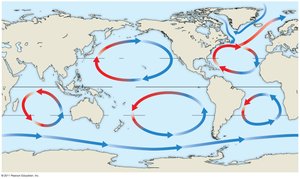
Air circulation cells and prevailing winds are established by the uneven heating of Earth’s surface and its rotation. These patterns influence where deserts, rainforests, and temperate zones are found.
Rising air masses near the equator release moisture, causing high precipitation in the tropics.
Descending dry air at about 30° north and south creates arid climates (deserts).
Trade winds and westerlies are major wind belts that affect climate and weather patterns.
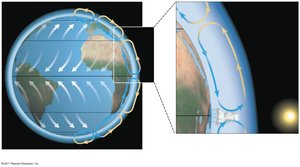
Regional and Local Effects on Climate
Climate is further modified by regional and local factors such as seasonality, proximity to large bodies of water, and the presence of mountains.
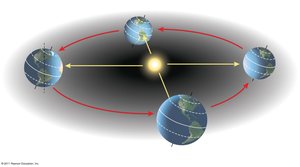
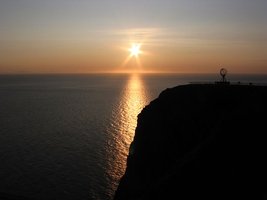
Seasonality: Caused by the tilt of Earth’s axis and its orbit around the sun, leading to changes in temperature and day length throughout the year.
Bodies of Water: Oceans and lakes moderate climate by absorbing and releasing heat, influencing temperature and precipitation patterns.
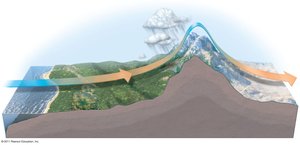
Mountains: Affect climate by blocking air masses, creating rain shadows, and influencing sunlight exposure and temperature with elevation.
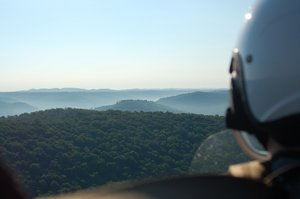
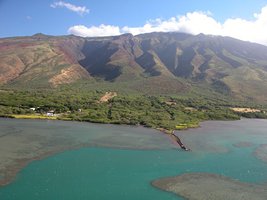
Mountains and the Rain Shadow Effect
Mountains force air to rise, cool, and release moisture on the windward side, creating lush environments.
The leeward side receives dry, descending air, resulting in arid conditions (rain shadow).
Elevation affects temperature: every 1,000 m increase results in a temperature drop of about 6°C.
Microclimate and Environmental Variation
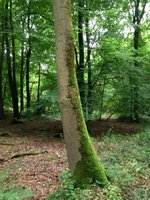
Microclimates are shaped by fine-scale differences in abiotic factors (temperature, light, water, nutrients) and biotic factors (other organisms).
Examples include shaded forest floors, south-facing slopes, or areas near water bodies.
Terrestrial Biomes: Structure and Distribution
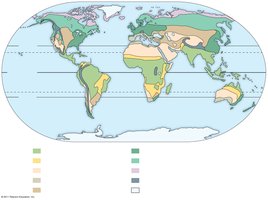
Definition and Classification
Biomes: Major life zones characterized by vegetation type (terrestrial) or physical environment (aquatic).
Climate is the primary determinant of biome distribution.
Biomes often transition gradually into one another across ecotones.
Vertical Layering in Biomes
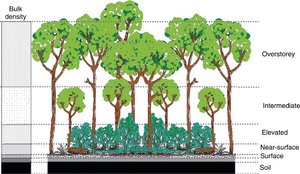
Forests exhibit vertical stratification: canopy, understory, shrub layer, ground layer, and root layer.
This structure supports diverse habitats and species.
Convergent Evolution in Biomes
Similar environmental pressures can lead to similar adaptations in unrelated species (convergent evolution).
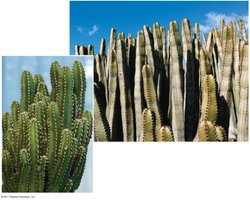
Example: Cacti in North America and euphorbs in Africa both have succulent stems but evolved independently.
Disturbance and Biome Dynamics
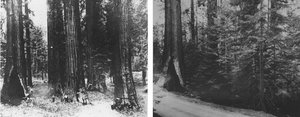
Disturbance: Events like storms, fires, or human activity that alter communities and influence biome structure.
Some biomes, such as savannas and grasslands, are maintained by frequent disturbances like fire.
Examples of Major Terrestrial Biomes
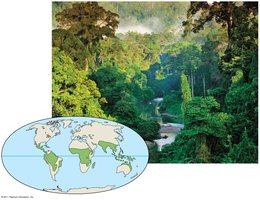
Tropical Forest: High biodiversity, constant warm temperatures, and high rainfall; found near the equator.
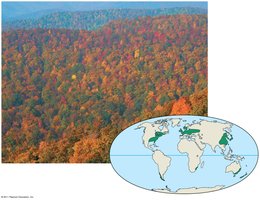
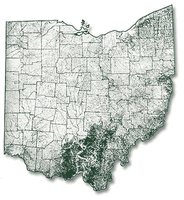
Temperate Broadleaf Forest: Deciduous trees, significant seasonal variation, found in midlatitudes.
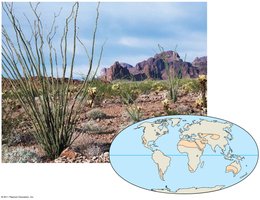
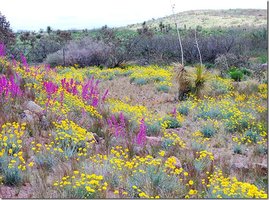
Desert: Low precipitation, can be hot or cold, plants and animals adapted to aridity.
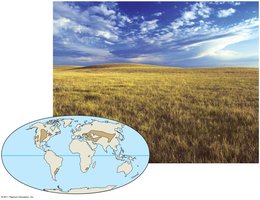
Temperate Grassland: Seasonal drought, fire-adapted grasses, large grazers, often converted to agriculture.
Aquatic Biomes: Diversity and Zonation
Overview of Aquatic Biomes
Cover most of Earth’s surface and are classified by physical and chemical characteristics.
Marine biomes: ~3% salt concentration; include oceans, coral reefs, and estuaries.
Freshwater biomes: <0.1% salt; include lakes, rivers, and wetlands.
Zonation in Aquatic Biomes
Defined by depth, light penetration, and distance from shore.
Key zones: littoral, limnetic, photic, aphotic, benthic, pelagic, neritic, oceanic, intertidal, abyssal.
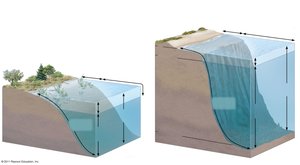
Thermocline and Seasonal Turnover
Thermocline: A temperature boundary separating warm upper water from cold deeper water in lakes and oceans.
Many lakes undergo seasonal turnover, mixing nutrients and oxygen.
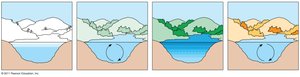
Types of Aquatic Biomes
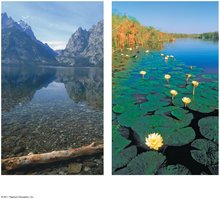
Lakes: Oligotrophic (nutrient-poor, oxygen-rich, deep) vs. eutrophic (nutrient-rich, oxygen-poor, shallow).
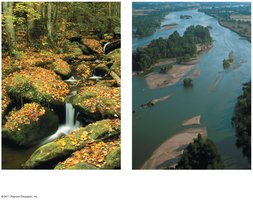
Streams and Rivers: Headwaters are cold, clear, and oxygen-rich; downstream waters are warmer, more turbid, and less oxygenated.
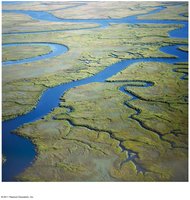
Estuaries: Transition zones between river and sea, highly productive, variable salinity.
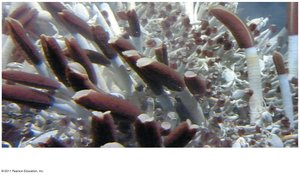
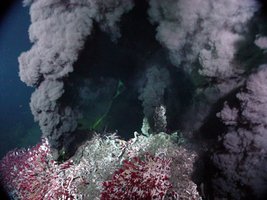
Marine Benthic Zone: Seafloor below coastal and pelagic zones; deep areas (abyssal) are cold, high-pressure, and host unique communities.
Species Distribution and Limiting Factors
Ecological and Evolutionary Time
Ecological time: Short-term interactions between organisms and their environment.
Evolutionary time: Long-term adaptation and changes in species distributions through natural selection.
Factors Limiting Species Distribution
Dispersal: Movement of individuals away from their origin or high-density areas; limits range expansion.
Behavior and Habitat Selection: Organisms may not occupy all suitable habitats due to behavioral preferences.
Biotic Factors: Interactions with other species (predation, competition, disease) can limit distribution.
Abiotic Factors: Physical and chemical factors (temperature, water, sunlight, wind, soil) influence where species can survive and reproduce.
Global Climate Change and Species Ranges
Past and predicted climate changes can shift species distributions, reduce ranges, or cause extinctions if dispersal is limited.
Summary Table: Abiotic vs. Biotic Factors Affecting Distribution
Abiotic Factors | Biotic Factors |
|---|---|
Temperature | Predation |
Water availability | Competition |
Sunlight | Parasitism |
Wind | Disease |
Soil nutrients and structure | Mutualism |
Additional info: These notes integrate foundational concepts from ecology, biogeography, and environmental science, providing a comprehensive overview suitable for college-level biology students preparing for exams on the biosphere, biomes, and species distributions.
