 Back
Biomes, Climate, and Species Distribution: Study Notes for College Biology
Study Guide - Smart Notes
 Tailored notes based on your materials, expanded with key definitions, examples, and context.
Biomes and Species Distributions
Introduction to Biomes and Climate
Biomes are major ecological communities defined primarily by their dominant vegetation and climate. The distribution of biomes and the species within them is determined by both abiotic (nonliving) and biotic (living) factors. Climate, which includes long-term patterns of temperature, precipitation, sunlight, and wind, is a key determinant of biome structure and species distribution.
Climate: The long-term prevailing weather conditions in an area.
Abiotic factors: Nonliving components such as temperature, water, sunlight, and nutrients.
Biotic factors: Living components, including interactions with other organisms.
Earth’s Climate: Patterns and Processes
Global Climate Patterns
Global climate patterns are primarily shaped by solar energy and the movement of Earth in space. The sun’s warming effect causes temperature variations, which drive evaporation and the circulation of air and water, ultimately influencing the distribution of biomes.
Macroclimate: Large-scale climate patterns (e.g., regional, global).
Microclimate: Fine-scale climate variations (e.g., under a log, within a forest).
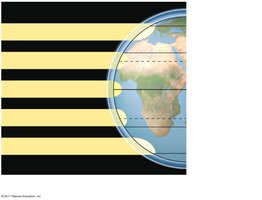
Latitudinal Variation in Sunlight
The intensity of sunlight varies with latitude, affecting temperature and climate. The equator receives direct sunlight, while higher latitudes receive sunlight at a lower angle, spreading energy over a larger area and resulting in cooler temperatures.
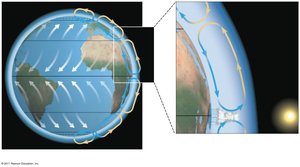
Global Air Circulation and Precipitation Patterns
Solar radiation and Earth's rotation create global patterns of air movement and precipitation. Warm, moist air rises near the equator, cools, and releases moisture, resulting in high precipitation in the tropics. Dry air descends at around 30° north and south, creating arid zones (deserts).
Trade winds: Blow from east to west in the tropics.
Westerlies: Blow from west to east in temperate zones.
Regional and Local Effects on Climate
Climate is also influenced by regional and local factors such as seasonality, proximity to large bodies of water, and mountains. These factors can create microclimates and unique ecological conditions.
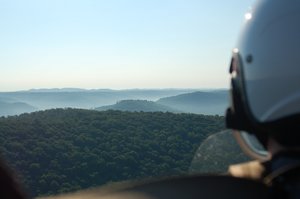
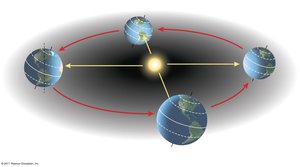
Seasonality
Seasonal changes in climate are caused by the tilt of Earth's axis and its orbit around the sun. This results in varying day lengths, solar intensity, and temperature throughout the year, especially at higher latitudes.
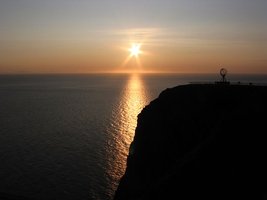
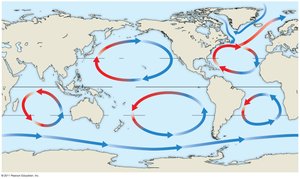
Bodies of Water and Ocean Currents
Large bodies of water and ocean currents moderate climate by absorbing and releasing heat. Water heats and cools more slowly than land, leading to milder climates near coasts. Ocean currents transport warm or cold water, influencing coastal climates.
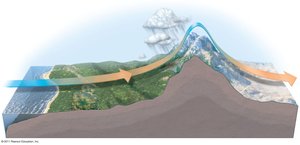
Mountains
Mountains affect climate by blocking air flow and causing precipitation on the windward side, while creating dry conditions (rain shadow) on the leeward side. Elevation also influences temperature, with higher altitudes being cooler.
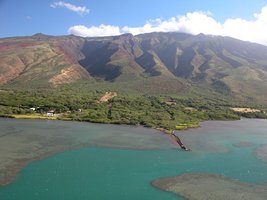
Microclimate
Microclimates are created by small-scale variations in abiotic factors such as sunlight, wind, and moisture. These can be influenced by features like vegetation, rocks, and water bodies.
Terrestrial Biomes: Structure and Distribution
Overview of Terrestrial Biomes
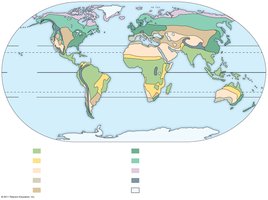
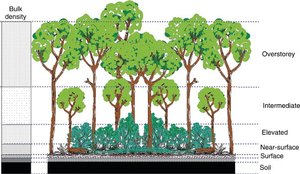
Terrestrial biomes are classified by their predominant vegetation and climate. They often transition gradually into one another through ecotones. Vertical layering of vegetation is common, especially in forests.
Ecotone: A region of transition between two biomes.
Vertical layering: Different plant layers (canopy, understory, ground layer, etc.).
Convergent Evolution in Biomes
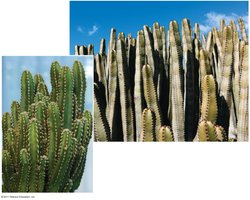
Similar environmental pressures can lead to similar adaptations in unrelated species, a process known as convergent evolution. For example, cacti in North America and euphorbs in Africa have similar forms but are not closely related.
Disturbance and Biome Structure
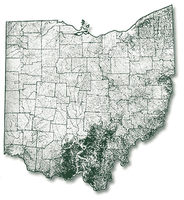
Disturbances such as fire, storms, or human activity can alter the structure and composition of biomes. Some biomes, like savannas and grasslands, are maintained by frequent disturbances.
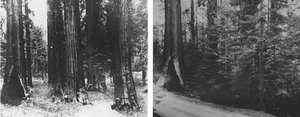
Examples of Major Terrestrial Biomes
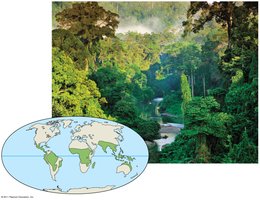
Tropical Forest
Located near the equator, tropical forests have high temperatures and, in rain forests, consistent rainfall. They are characterized by high biodiversity and intense competition for light.
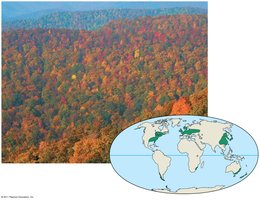
Temperate Broadleaf Forest
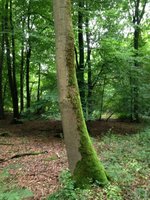
Found in midlatitudes, these forests experience significant precipitation year-round and have distinct seasons. Deciduous trees dominate in the Northern Hemisphere.
Desert
Deserts are found near 30° latitude and in continental interiors. They have low, unpredictable precipitation and can be hot or cold. Plants and animals are adapted to conserve water.
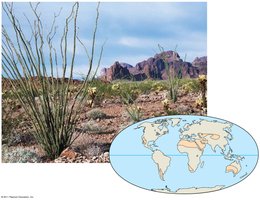
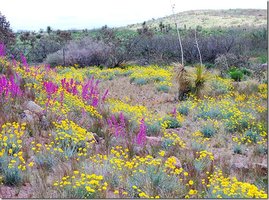
Temperate Grassland
These biomes have cold, dry winters and hot, wet summers. Grasses and forbs dominate, and the biome is maintained by fire and grazing. Many grasslands have been converted to agriculture.
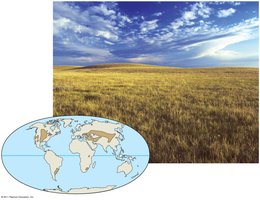
Aquatic Biomes: Diversity and Zonation
Overview of Aquatic Biomes
Aquatic biomes cover most of Earth's surface and are classified by physical and chemical characteristics. Marine biomes have higher salt concentrations than freshwater biomes. Zonation is a key feature, with different zones based on depth, light, and distance from shore.
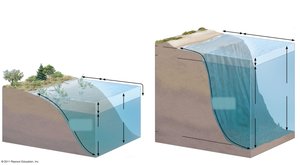
Thermocline and Seasonal Turnover
In many lakes and oceans, a thermocline separates warm surface water from cold deeper water. Temperate lakes often undergo seasonal turnover, mixing nutrients and oxygen.
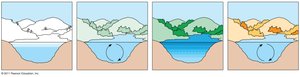
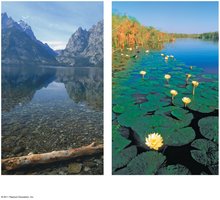
Lakes: Oligotrophic vs. Eutrophic
Lakes are classified by nutrient content and oxygen levels. Oligotrophic lakes are nutrient-poor and oxygen-rich, while eutrophic lakes are nutrient-rich and often oxygen-poor.
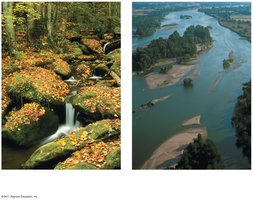
Streams and Rivers
Headwaters are typically cold, clear, and oxygen-rich, while downstream sections are warmer, more turbid, and less oxygenated. Streams and rivers support diverse communities of organisms.
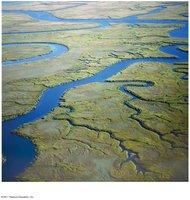
Estuaries
Estuaries are transition zones between rivers and seas, with variable salinity and high productivity. They support diverse communities of plants and animals.
Marine Benthic Zone
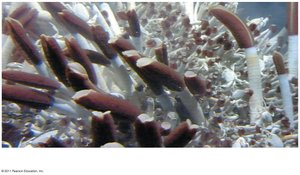
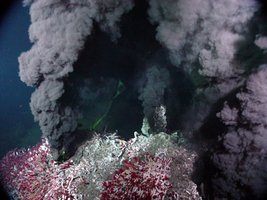
The marine benthic zone includes the seafloor below coastal and offshore waters. Organisms here are adapted to cold, high-pressure environments. Hydrothermal vents support unique communities based on chemoautotrophic bacteria.
Species Distribution and Limiting Factors
Ecological and Evolutionary Time
Species distributions are shaped by ecological interactions (short-term) and evolutionary processes (long-term adaptation). Ecologists study where species occur and the factors that limit their distribution.
Ecological time: Immediate interactions between organisms and environment.
Evolutionary time: Long-term adaptation through natural selection.
Factors Limiting Species Distribution
Species may be absent from an area due to limitations in dispersal, behavior, biotic interactions (e.g., predation, competition), or abiotic factors (e.g., temperature, water, soil).
Dispersal: Movement of individuals away from their origin or high-density areas.
Behavior: Habitat selection can limit distribution.
Biotic factors: Predation, competition, disease, etc.
Abiotic factors: Temperature, water, sunlight, wind, soil, etc.
Dispersal and Range Expansion
Dispersal influences the global distribution of organisms. Natural range expansions and adaptive radiation can lead to new distributions.
Global Climate Change and Species Ranges
Changes in Earth's climate can alter species distributions, sometimes leading to range contractions or extinctions if species cannot disperse or adapt quickly enough.
Species Translocations
Intentional or accidental movement of species can reveal their potential range and impact local ecosystems if they establish in new areas.
Abiotic Factors Affecting Distribution
Key abiotic factors include temperature, water, sunlight, wind, and soil. These factors vary in space and time and can limit where species are able to survive and reproduce.
Local Adaptation
Populations may adapt to local abiotic conditions, such as altitude, leading to variation in traits like plant height or tolerance to environmental stress.
