 Back
Biomolecules: Structure and Function of Carbohydrates and Lipids
Study Guide - Smart Notes
 Tailored notes based on your materials, expanded with key definitions, examples, and context.
Biomolecules
Introduction
Biomolecules are essential components of cells, playing critical roles in structure, function, and energy storage. The four main classes are carbohydrates, lipids, proteins, and nucleic acids. Each class is composed of specific monomers: carbohydrates (sugars), lipids (fatty acids and glycerol), proteins (amino acids), and nucleic acids (nucleotides).
Carbohydrates
Monosaccharides
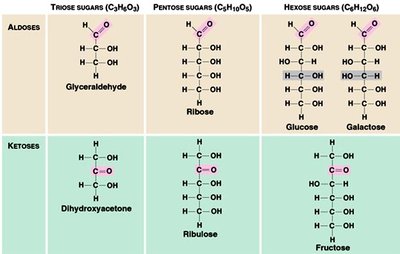
Monosaccharides are the simplest carbohydrates, serving as monomers for disaccharides and polysaccharides. They are classified by the number of carbon atoms: trioses (3C), pentoses (5C), hexoses (6C), etc. Their general formula is $(CH_2O)_n$.
Structure: Contains a carbonyl group (C=O) and multiple hydroxyl groups (-OH). Can be an aldose (aldehyde group) or ketose (ketone group).
Function: Main energy source due to many C-H bonds; also serve as building blocks for larger molecules.
No. of C atoms | General Name | Chemical Formula | Examples | Functions |
|---|---|---|---|---|
3 | Triose sugar | C3H6O3 | Glyceraldehyde | Intermediate in respiration/photosynthesis |
5 | Pentose sugar | C5H10O5 | Ribose, Deoxyribose | RNA, DNA, ATP components |
6 | Hexose sugar | C6H12O6 | Glucose, Fructose, Galactose | Main energy source, components of disaccharides |
Properties of Monosaccharides
Physical: Sweet, soluble, crystalline.
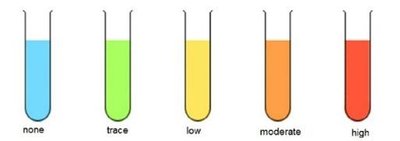
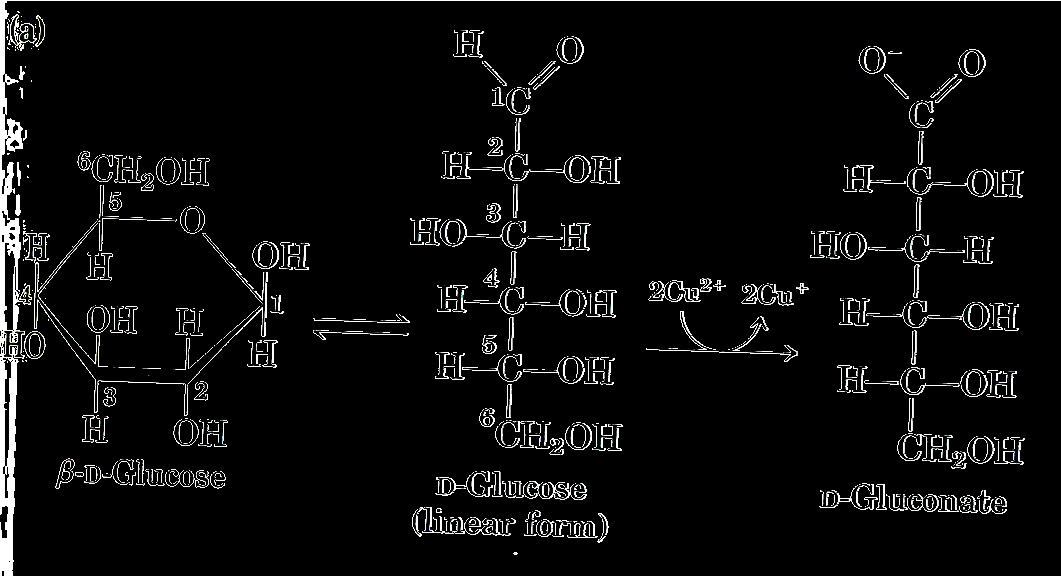
Chemical: All are reducing sugars (can reduce Cu2+ to Cu+ in Benedict's test).
Benedict's Test: Used to detect reducing sugars. The color change from blue to orange-red indicates increasing concentration of reducing sugar.
Oxidation of glucose in Benedict's test involves the conversion of the open-chain form of glucose to gluconate, with Cu2+ reduced to Cu+.
Isomerism in Monosaccharides
Glucose exists in equilibrium between open-chain and ring forms. The ring structure can be either α-glucose or β-glucose, differing in the position of the hydroxyl group on carbon-1.
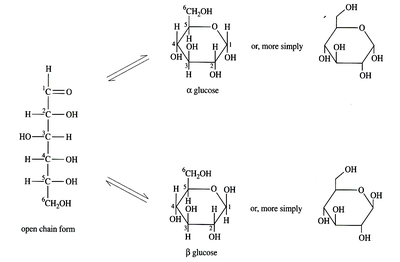
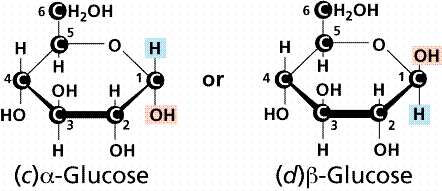
α-glucose: OH group on C1 is below the ring.
β-glucose: OH group on C1 is above the ring.
Disaccharides
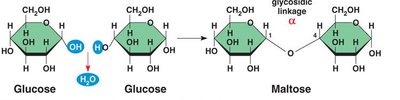
Disaccharides are formed by condensation reactions between two monosaccharides, creating a glycosidic bond and releasing water. The bond type depends on the participating carbons.
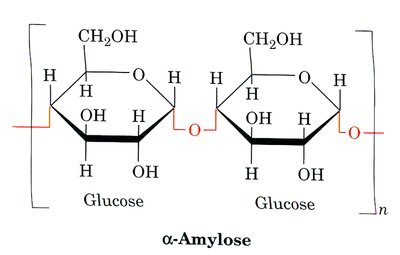
Maltose: α-1,4-glycosidic bond (glucose + glucose)
Sucrose: α-1,2-glycosidic bond (glucose + fructose)
Lactose: β-1,4-glycosidic bond (glucose + galactose)
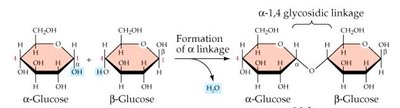
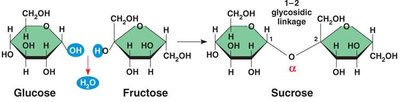
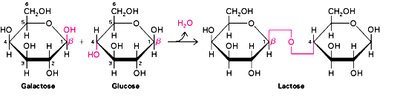
Physical properties: Sweet, soluble, crystalline.
Chemical properties: Most are reducing sugars except sucrose.
Hydrolysis: Glycosidic bonds can be broken by acid or enzyme hydrolysis, yielding monosaccharides.
Polysaccharides
Polysaccharides are polymers of monosaccharides linked by glycosidic bonds. They can be storage (starch, glycogen) or structural (cellulose).
Starch
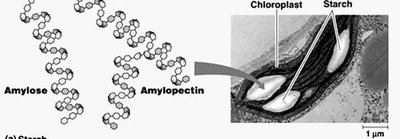
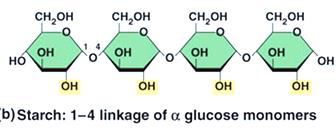
Starch is a plant storage polysaccharide composed of α-glucose monomers. It consists of two components:
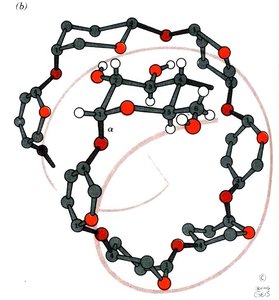
Amylose: Unbranched, α-1,4-glycosidic bonds, helical structure.
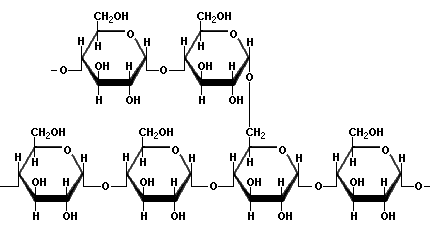
Amylopectin: Branched, α-1,4 and α-1,6-glycosidic bonds.
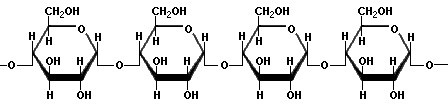
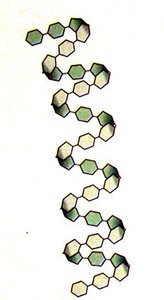
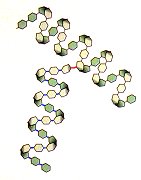
Amylose coils into a helical structure stabilized by hydrogen bonds.
Amylopectin is highly branched, allowing rapid hydrolysis and compact storage.
Starch grains accumulate in chloroplasts of plant cells.
Glycogen
Glycogen is the main storage polysaccharide in animals, structurally similar to amylopectin but with more extensive branching.
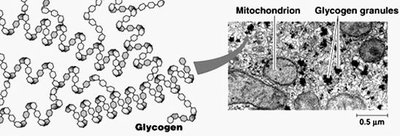
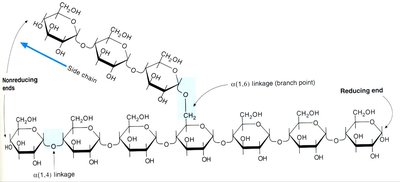
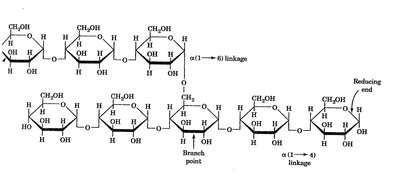
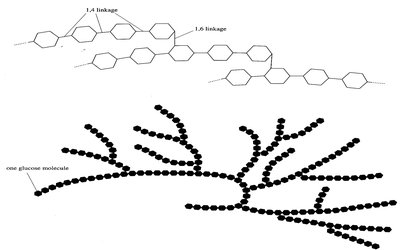
Allows rapid mobilization of glucose units for energy.
Stored in liver and muscle cells.
Cellulose
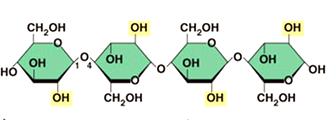
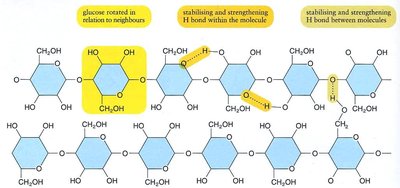
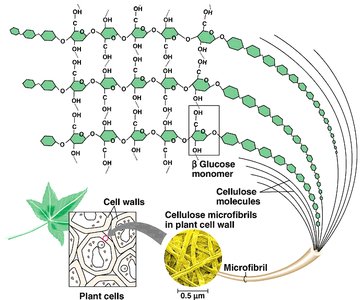
Cellulose is a structural polysaccharide in plant cell walls, composed of β-glucose monomers linked by β-1,4-glycosidic bonds. Adjacent glucose molecules are rotated 180°, forming straight, unbranched chains.
Chains run parallel, forming microfibrils via extensive hydrogen bonding.
High tensile strength and permeability due to macrofibril arrangement.
Lipids
Triglycerides
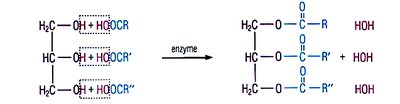
Triglycerides are the most common lipids, formed by condensation of three fatty acids and one glycerol molecule, creating three ester bonds and releasing three water molecules.
Fatty acids: Long hydrocarbon chains with a carboxyl group. Can be saturated (no double bonds) or unsaturated (one or more double bonds).
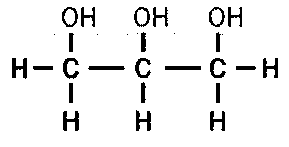
Glycerol: A three-carbon alcohol with three hydroxyl groups.
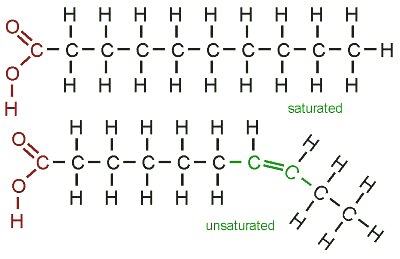
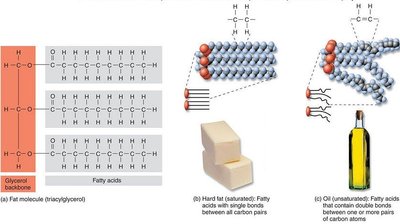
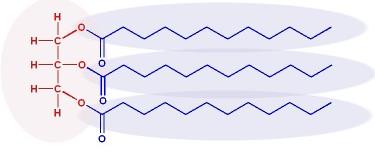
Physical properties: Fats (solid at room temp) have saturated fatty acids; oils (liquid at room temp) have unsaturated fatty acids.
Solubility: Insoluble in water, soluble in organic solvents.
Function: Energy storage, heat insulation, protection, buoyancy.
Phospholipids
Phospholipids are major components of cell membranes, consisting of one glycerol, two fatty acids, and one phosphate group. They are amphipathic, with a hydrophilic head and hydrophobic tails.
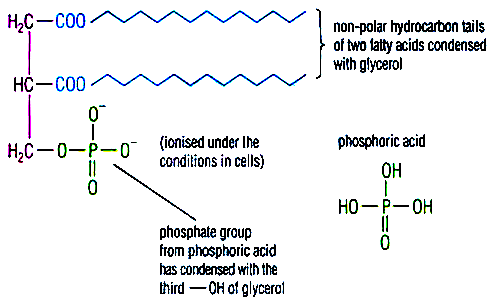
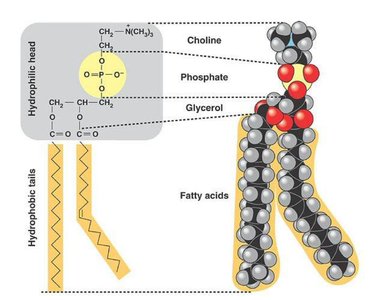
Form bilayers in aqueous environments, creating cell membranes.
Can form micelles for fat transport.
Steroids and Sterols
Steroids are lipids with a four-ring carbon skeleton. Cholesterol is a key sterol in animals, serving as a precursor for steroid hormones and regulating membrane fluidity.
Insoluble in water, transported as lipoproteins.
LDL and HDL are types of lipoproteins with different effects on cardiovascular health.
*Additional info: The notes above expand on the original content with academic context, including definitions, examples, and structural explanations. All included images are directly relevant to the explanations provided and reinforce key concepts in carbohydrate and lipid structure and function.*
