 Back
Biomolecules: Structure and Function of Carbohydrates and Lipids
Study Guide - Smart Notes
 Tailored notes based on your materials, expanded with key definitions, examples, and context.
Biomolecules
Introduction
Biomolecules are essential components of cells, playing critical roles in structure, function, and energy storage. The four major classes are carbohydrates, lipids, proteins, and nucleic acids. This guide focuses on carbohydrates and lipids, their monomers, structures, and functions.
Carbohydrates
Monosaccharides
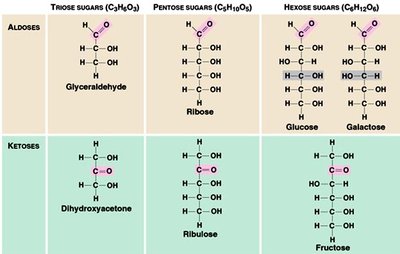
Monosaccharides are the simplest carbohydrates, serving as monomers for disaccharides and polysaccharides. They are classified by the number of carbon atoms: trioses (3C), pentoses (5C), hexoses (6C), etc. Their general formula is $(CH_2O)_n$.
Structure: Monosaccharides contain a carbonyl group (C=O) and multiple hydroxyl groups (-OH). They are either aldoses (aldehyde group) or ketoses (ketone group).
Examples: Glucose, fructose, galactose, ribose, deoxyribose.
Function: Main energy source for cellular respiration; building blocks for larger molecules.
Type | Formula | Example | Function |
|---|---|---|---|
Triose | C3H6O3 | Glyceraldehyde | Intermediate in metabolism |
Pentose | C5H10O5 | Ribose, Deoxyribose | RNA, DNA component |
Hexose | C6H12O6 | Glucose, Fructose, Galactose | Energy source |
Properties of Monosaccharides
Physical: Sweet, soluble, crystalline.
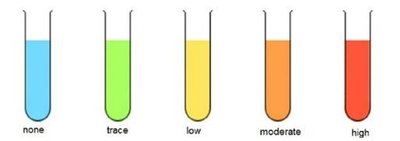
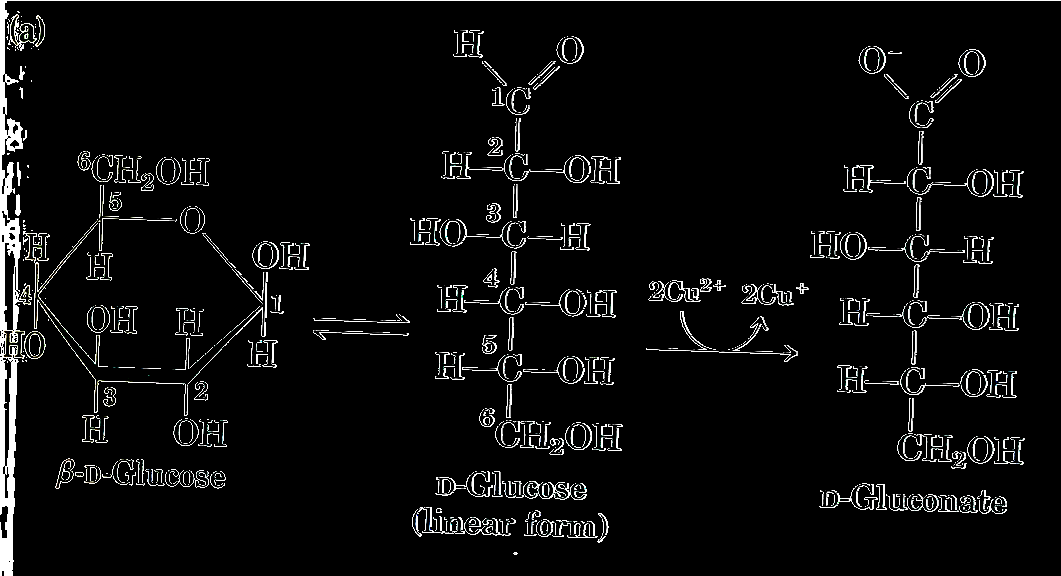
Chemical: Reducing sugars; can reduce Cu2+ to Cu+ in Benedict's test.
Monosaccharides exist in equilibrium between open-chain and ring forms. For glucose, the ring form predominates in solution.
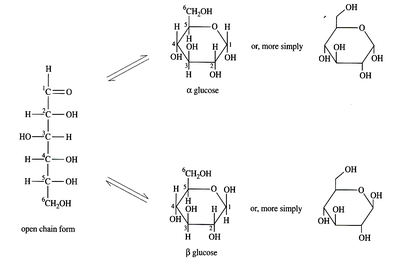
Isomers of Glucose
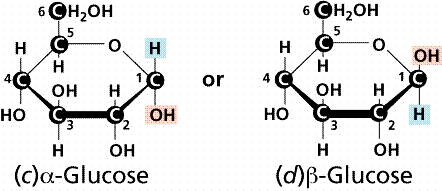
Glucose exists as α-glucose and β-glucose, differing in the position of the hydroxyl group on carbon-1. These isomers have the same formula but different structures, affecting their biological roles.
Disaccharides
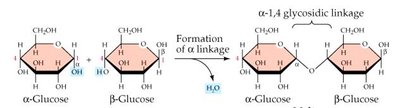
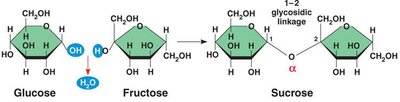
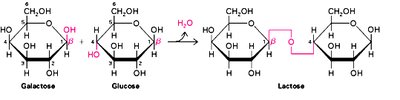
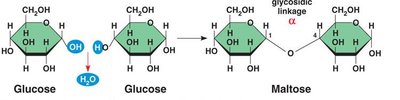
Disaccharides are formed by condensation reactions between two monosaccharides, creating a glycosidic bond and releasing water. Common examples include maltose, sucrose, and lactose.
Maltose: Glucose + Glucose (α-1,4-glycosidic bond)
Sucrose: Glucose + Fructose (α-1,2-glycosidic bond)
Lactose: Glucose + Galactose (β-1,4-glycosidic bond)
Disaccharides can be hydrolyzed by acids or enzymes to yield monosaccharides.
Polysaccharides
Polysaccharides are polymers of monosaccharides linked by glycosidic bonds. They are classified as storage (starch, glycogen) or structural (cellulose) polysaccharides.
Starch
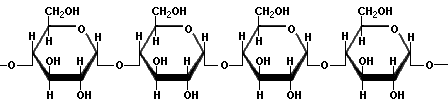
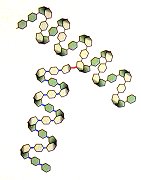
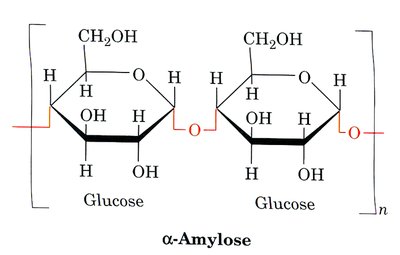
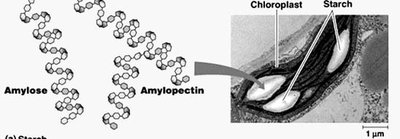
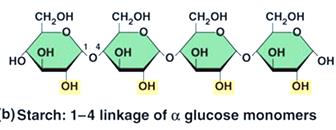
Starch is a plant storage polysaccharide composed of α-glucose monomers. It consists of two components:
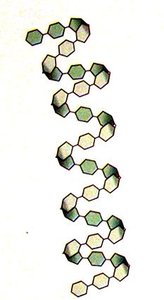
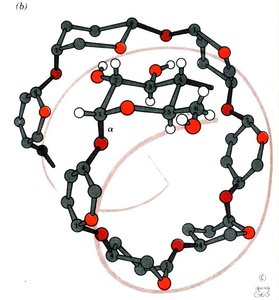
Amylose: Unbranched, α-1,4-glycosidic bonds, helical structure.
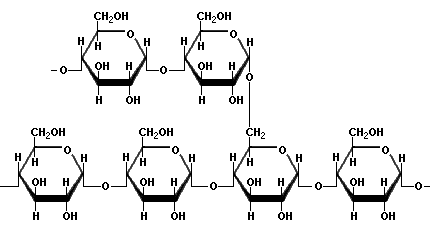
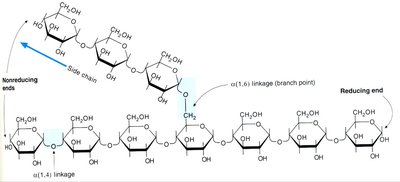
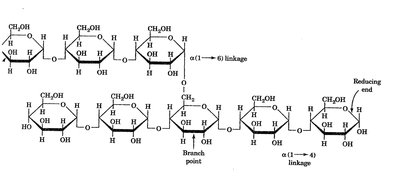
Amylopectin: Branched, α-1,4 and α-1,6-glycosidic bonds.
Glycogen
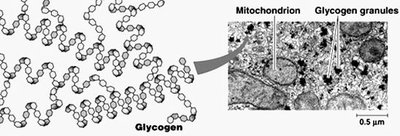
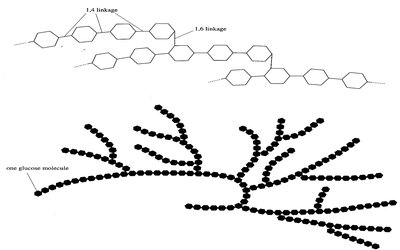
Glycogen is the main storage polysaccharide in animals, structurally similar to amylopectin but with more extensive branching, making it highly compact and easily hydrolyzed.
Cellulose
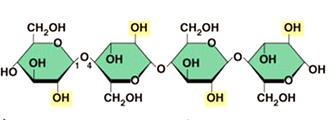
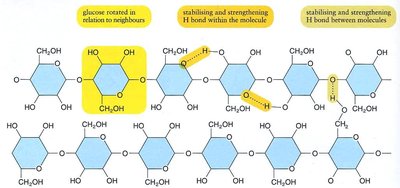
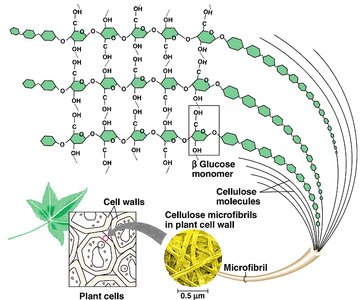
Cellulose is a structural polysaccharide in plants, composed of β-glucose monomers linked by β-1,4-glycosidic bonds. Its straight, unbranched chains form microfibrils, providing high tensile strength to cell walls.
Lipids
Triglycerides
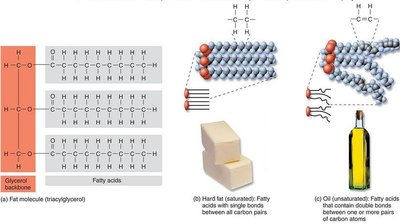
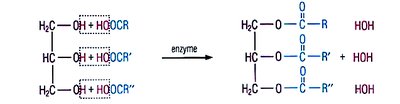
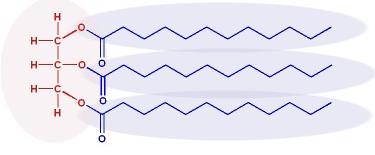
Triglycerides are the most common lipids, consisting of three fatty acids and one glycerol molecule. They are formed by condensation reactions, creating ester bonds and releasing water.
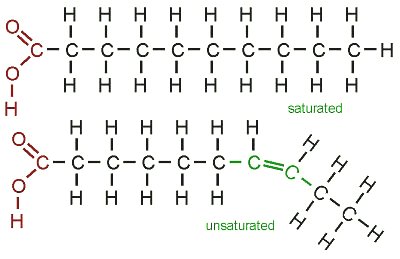
Fatty acids: Long hydrocarbon chains with a carboxyl group. Can be saturated (no double bonds) or unsaturated (one or more double bonds).
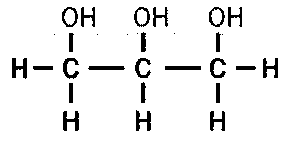
Glycerol: A three-carbon alcohol with hydroxyl groups.
Properties and Functions of Triglycerides
Physical: Fats (solid at room temperature) have saturated fatty acids; oils (liquid) have unsaturated fatty acids.
Solubility: Insoluble in water, soluble in organic solvents.
Function: Energy storage, heat insulation, protection, buoyancy.
Phospholipids
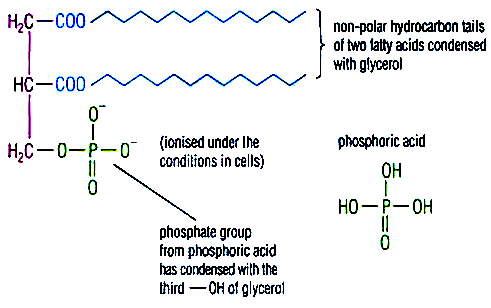
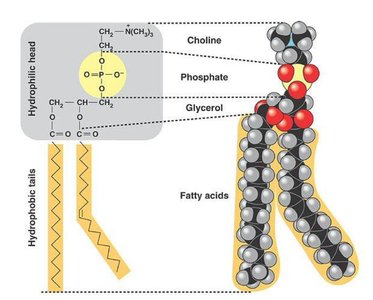
Phospholipids are major components of cell membranes, consisting of one glycerol, two fatty acids, and one phosphate group. They are amphipathic, with a hydrophilic head and hydrophobic tails.
Functions of Phospholipids
Form cell membrane bilayers (Fluid Mosaic Model).
Participate in cell-cell recognition and adhesion.
Assist in fat transport and neurotransmitter formation.
Summary Table: Carbohydrate and Lipid Monomers
Biomolecule | Monomer |
|---|---|
Carbohydrates | Sugars (saccharides) |
Lipids | Fatty acids and glycerol |
Proteins | Amino acids |
Nucleic Acids | Nucleotides |
Additional info: The notes above expand on the original content by providing detailed explanations, definitions, and examples for each biomolecule, as well as relevant chemical equations and structural comparisons. All included images directly reinforce the molecular structures and reactions discussed in the text.
