 Back
Biomolecules: Structure and Function of Carbohydrates and Lipids
Study Guide - Smart Notes
 Tailored notes based on your materials, expanded with key definitions, examples, and context.
Biomolecules: Structure and Function of Carbohydrates and Lipids
Introduction to Biomolecules
Biomolecules are essential organic molecules that constitute living organisms and are fundamental to cellular structure and function. The four major classes are carbohydrates, lipids, proteins, and nucleic acids. Each class is built from specific monomers and performs distinct biological roles.
Carbohydrates: Main energy source and storage
Lipids: Main component of cell membranes and energy storage
Proteins: Structural and enzymatic functions
Nucleic acids: Store and transmit hereditary information
Carbohydrates
Monosaccharides
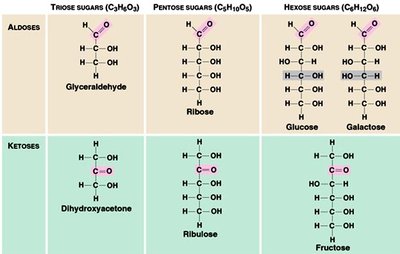
Monosaccharides are the simplest carbohydrates and serve as the monomers for disaccharides and polysaccharides. They are classified by the number of carbon atoms and the position of their carbonyl group.
General formula: (CH2O)n, where n > 3
Functional groups: Carbonyl (C=O) and multiple hydroxyl (-OH) groups
Classification: Aldoses (aldehyde group) or ketoses (ketone group)
No. of C atoms | General Name | Examples | Functions |
|---|---|---|---|
3 | Triose | Glyceraldehyde | Intermediate in respiration/photosynthesis |
5 | Pentose | Ribose, Deoxyribose | RNA, DNA, ATP components |
6 | Hexose | Glucose, Fructose, Galactose | Main energy source |
Properties of Monosaccharides
Physical: Sweet, soluble, crystalline
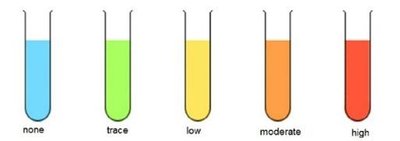
Chemical: All are reducing sugars (can reduce Cu2+ to Cu+ in Benedict's test)
The Benedict's test is used to detect reducing sugars. The color change from blue to green, yellow, orange, or red indicates increasing concentrations of reducing sugar.
Monosaccharide Isomerism
Glucose exists in multiple forms: open-chain, α-glucose, and β-glucose. The ring forms are more stable and predominant in solution.
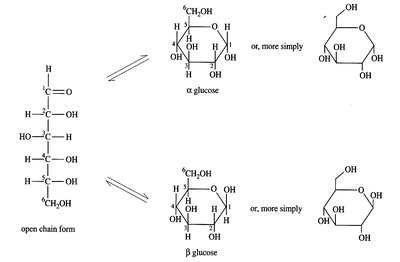
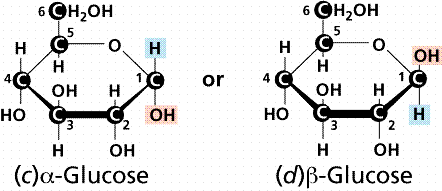
α-glucose: Hydroxyl group on C1 is below the ring
β-glucose: Hydroxyl group on C1 is above the ring
Other hexose isomers include fructose and galactose, which differ in atomic arrangement and function.
Disaccharides
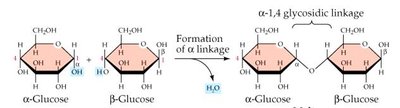
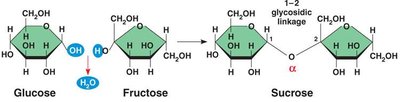
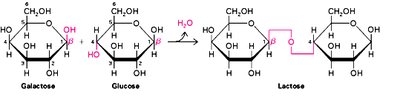
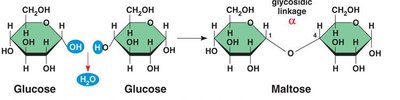
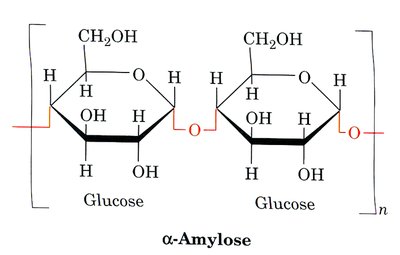
Disaccharides are formed by a condensation reaction between two monosaccharides, creating a glycosidic bond and releasing water. The bond can be α-1,4, α-1,2, or β-1,4 depending on the sugars involved.
Maltose: Glucose + Glucose (α-1,4-glycosidic bond)
Sucrose: Glucose + Fructose (α-1,2-glycosidic bond)
Lactose: Glucose + Galactose (β-1,4-glycosidic bond)
Polysaccharides
Polysaccharides are long chains of monosaccharide units linked by glycosidic bonds. They can be storage or structural polysaccharides.
Storage Polysaccharides
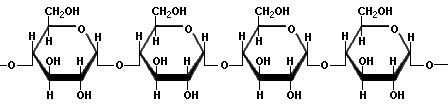
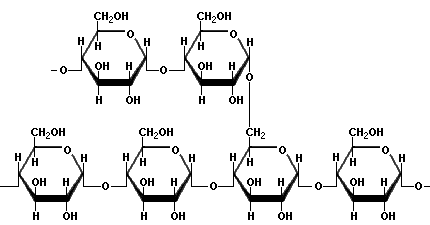
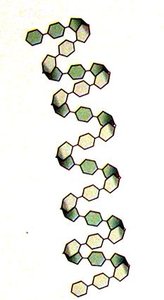
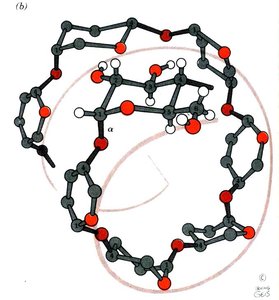
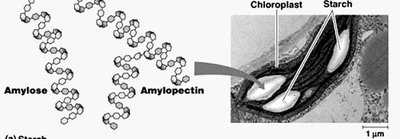
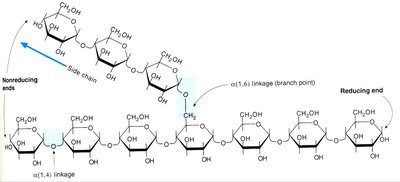
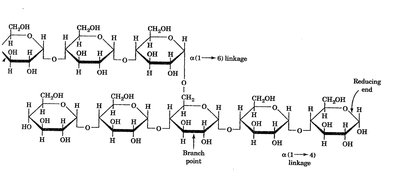
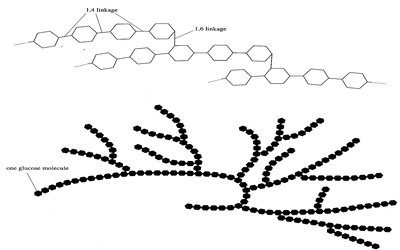
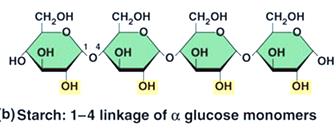
Starch: Main storage in plants; composed of amylose (unbranched, α-1,4) and amylopectin (branched, α-1,4 and α-1,6)
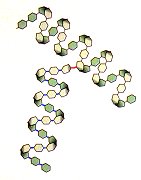
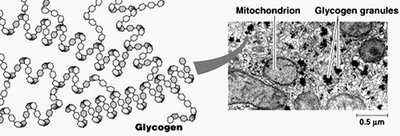
Glycogen: Main storage in animals; highly branched (α-1,4 and α-1,6)
Structural Polysaccharides
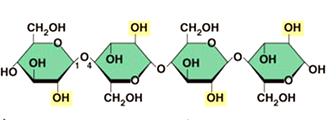
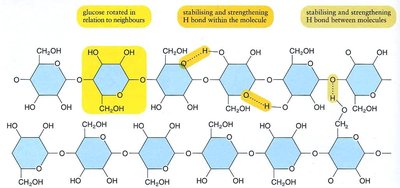
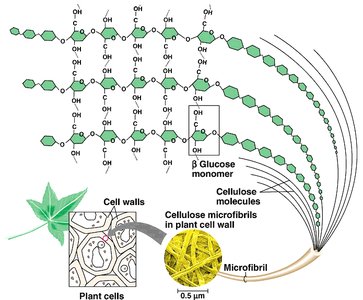
Cellulose: Main component of plant cell walls; composed of β-glucose units linked by β-1,4-glycosidic bonds, forming straight, unbranched chains that associate into microfibrils for high tensile strength.
Lipids
Triglycerides
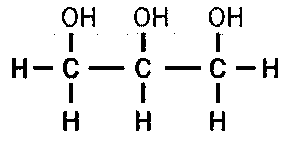
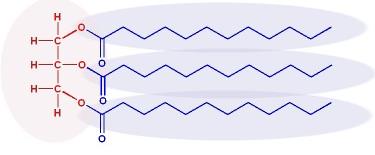
Triglycerides are the most common lipids, consisting of three fatty acids esterified to one glycerol molecule. Fatty acids can be saturated (no double bonds) or unsaturated (one or more double bonds).
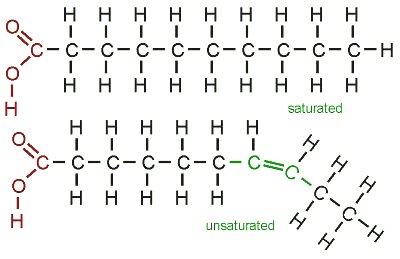
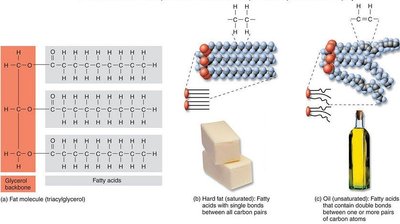
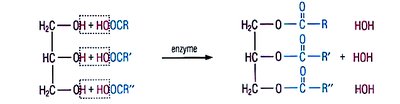
Formation: Condensation reaction forms three ester bonds and releases three water molecules.
Properties: Insoluble in water, soluble in organic solvents, lower density than water, high energy content.
Phospholipids
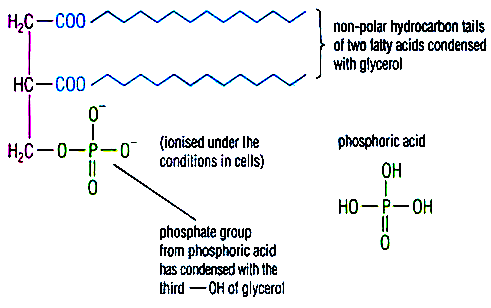
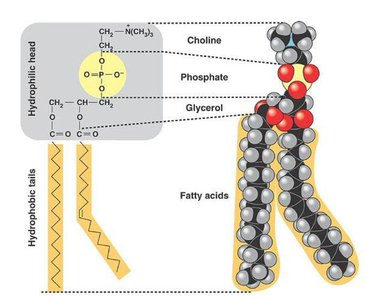
Phospholipids are major components of cell membranes, consisting of a glycerol backbone, two fatty acids, and a phosphate group. They are amphipathic, with hydrophilic heads and hydrophobic tails, allowing them to form bilayers in aqueous environments.
Steroids and Sterols
Steroids have a characteristic structure of four fused carbon rings. Cholesterol is a key sterol in animals, serving as a precursor for steroid hormones and a regulator of membrane fluidity.
Summary Table: Key Biomolecules
Biomolecule | Monomer | Bond Type | Example | Function |
|---|---|---|---|---|
Carbohydrate | Monosaccharide | Glycosidic | Starch, Glycogen, Cellulose | Energy storage, structure |
Lipid | Fatty acid, Glycerol | Ester | Triglyceride, Phospholipid | Energy storage, membranes |
Protein | Amino acid | Peptide | Enzymes, Collagen, Hemoglobin | Catalysis, structure, transport |
Nucleic Acid | Nucleotide | Phosphodiester | DNA, RNA | Genetic information |
Additional info: The notes above are structured to cover the core concepts of biomolecules, focusing on carbohydrates and lipids, as outlined in the syllabus. Images included are directly relevant to the chemical structures, reactions, and biological roles discussed in each section.
