 Back
Biomolecules: Structure, Function, and Diversity in Living Systems
Study Guide - Smart Notes
 Tailored notes based on your materials, expanded with key definitions, examples, and context.
Biomolecules: The Chemical Foundations of Life
Introduction to Biomolecules
Living cells are composed of a limited set of small molecules that are assembled into large, complex macromolecules. These macromolecules are essential for the structure and function of all living organisms. The four major classes of biomolecules are carbohydrates, lipids, proteins, and nucleic acids. Each class is built from smaller subunits called monomers, which are linked together to form polymers (except most lipids).
Carbohydrates: Energy storage and structural support
Lipids: Long-term energy storage, membrane structure, signaling
Proteins: Catalysis, structure, transport, signaling
Nucleic acids: Information storage and transfer
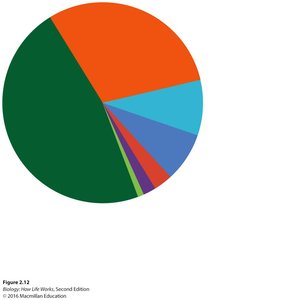
Cells are composed of about 80% water, with the remaining 20% consisting of these biomolecules in varying proportions.
Monomers and Polymers: Building Blocks of Life
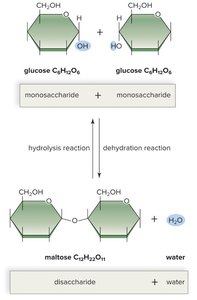
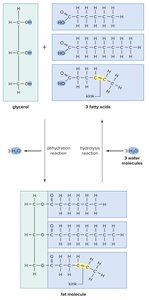
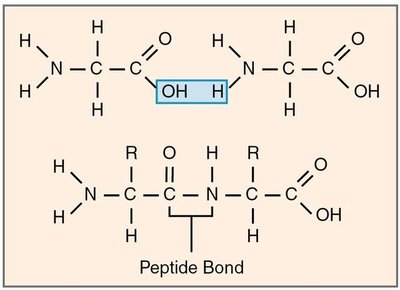
Most biomolecules are polymers, long chains of repeating monomer units. The process of linking monomers to form polymers is called dehydration synthesis (or condensation), while breaking polymers into monomers occurs via hydrolysis.
Dehydration Synthesis: Removes a water molecule to form a new bond between monomers.
Hydrolysis: Adds a water molecule to break a bond, releasing monomers.
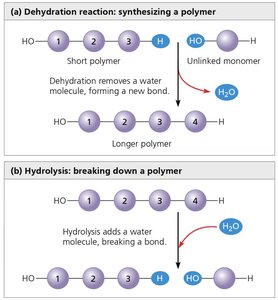
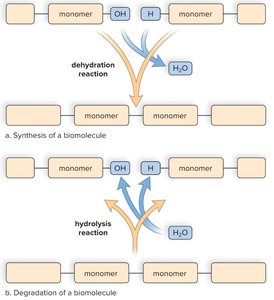
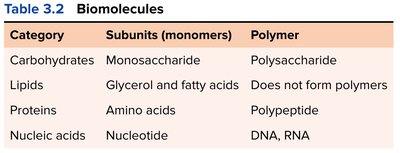
Table: Major Biomolecules, Their Monomers, and Polymers
Category | Subunits (Monomers) | Polymer |
|---|---|---|
Carbohydrates | Monosaccharide | Polysaccharide |
Lipids | Glycerol and fatty acids | Does not form true polymers |
Proteins | Amino acids | Polypeptide |
Nucleic acids | Nucleotide | DNA, RNA |
Carbon: The Backbone of Biological Molecules
Properties of Carbon
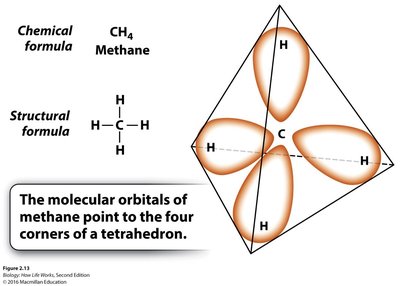
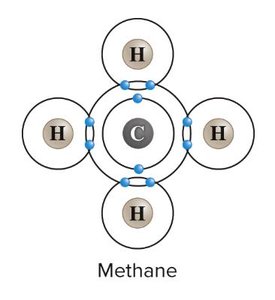
Carbon is the central element in organic molecules due to its ability to form four covalent bonds, allowing for a diversity of stable structures including chains, branches, and rings. This versatility underlies the molecular diversity of life.
Can form single, double, or triple bonds
Can bond with many elements (H, O, N, S, P, etc.)
Allows for complex 3D shapes and functional diversity
Structural Diversity of Carbon Compounds
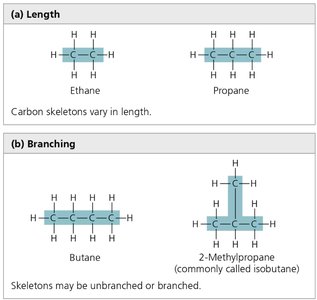
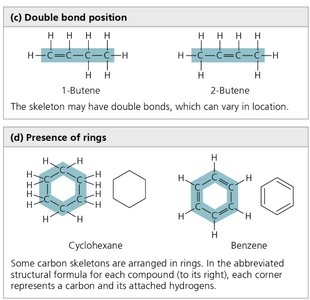
Carbon skeletons can vary in length, branching, double bond position, and ring formation, contributing to the diversity of organic molecules.
Length: Chains of varying length
Branching: Unbranched or branched chains
Double bond position: Location of double bonds can vary
Rings: Formation of ring structures
Functional Groups: Chemical Properties of Biomolecules
Key Functional Groups in Biology
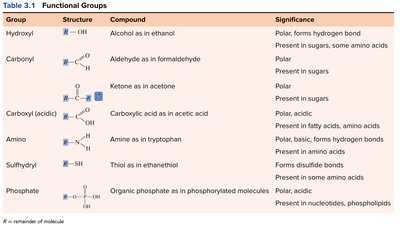
Functional groups are specific groups of atoms attached to carbon skeletons that determine the chemical reactivity and properties of organic molecules. Only a few functional groups are common in biological molecules, but they are critical for molecular function.
Group | Structure | Compound | Significance |
|---|---|---|---|
Hydroxyl | –OH | Alcohols | Polar, forms hydrogen bonds |
Carbonyl | –C=O | Aldehydes, ketones | Polar, present in sugars |
Carboxyl | –COOH | Carboxylic acids | Polar, acidic |
Amino | –NH2 | Amines | Polar, basic |
Sulfhydryl | –SH | Thiols | Forms disulfide bonds |
Phosphate | –PO4 | Organic phosphates | Polar, acidic |
Functional Groups and Reactivity
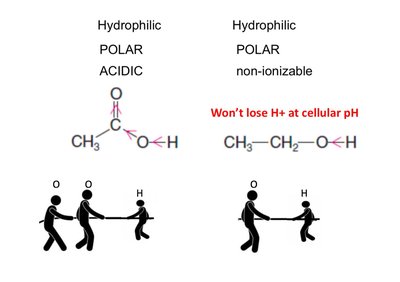
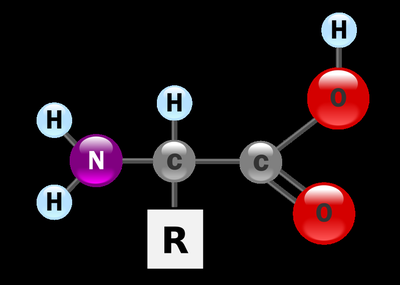
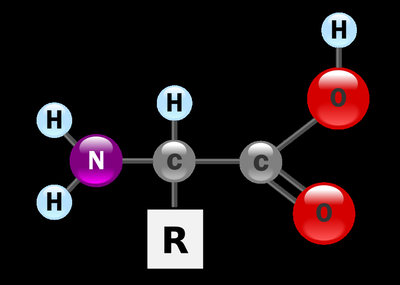
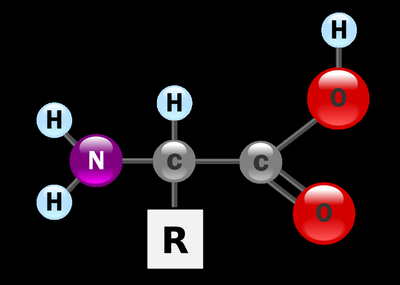
The presence and arrangement of functional groups affect the polarity, acidity, and reactivity of biomolecules. For example, carboxyl groups are acidic and can donate protons, while amino groups are basic and can accept protons.


Carbohydrates
Structure and Function
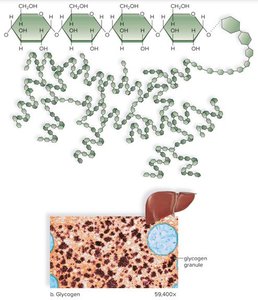
Carbohydrates are composed of monosaccharides (simple sugars) that can be linked to form disaccharides and polysaccharides. They serve as energy sources and structural materials in cells.
Monosaccharide: Single sugar unit (e.g., glucose)
Disaccharide: Two monosaccharides joined by dehydration synthesis (e.g., maltose)
Polysaccharide: Long chains of monosaccharides (e.g., starch, glycogen, cellulose)
Lipids
Structure and Function
Lipids are a diverse group of hydrophobic molecules, including fats, phospholipids, and steroids. Fats are formed from glycerol and fatty acids via dehydration synthesis, but lipids do not form true polymers.
Fats (triglycerides): Energy storage, insulation
Phospholipids: Major component of cell membranes
Steroids: Hormones and membrane components
Proteins
Structure and Function
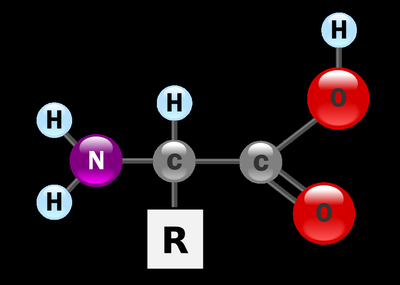
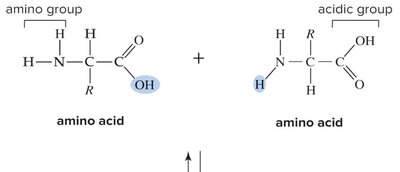
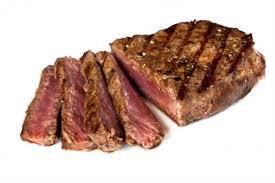
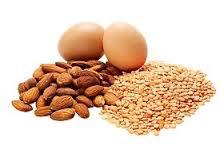
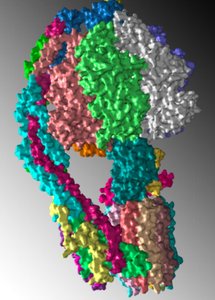
Proteins are polymers of amino acids linked by peptide bonds. They perform a vast array of functions, including catalysis (enzymes), structure, transport, and signaling. The structure of a protein determines its function and is organized into four levels:
Primary structure: Sequence of amino acids
Secondary structure: Local folding (alpha helices, beta sheets) due to hydrogen bonding
Tertiary structure: Overall 3D shape due to side chain interactions
Quaternary structure: Association of multiple polypeptide subunits
Amino Acid Properties and Protein Folding
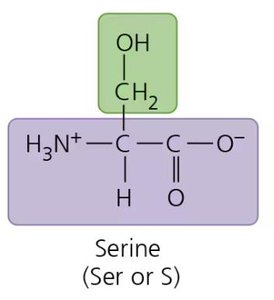
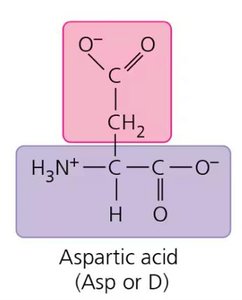
The chemical nature of amino acid side chains (R groups) determines protein folding and function. Side chains can be hydrophobic, hydrophilic, acidic, or basic, affecting protein structure and interactions. Changes in temperature or pH can denature proteins, altering their function.
Nucleic Acids
Structure and Function
Nucleic acids (DNA and RNA) are polymers of nucleotides. They store and transmit genetic information. Each nucleotide consists of a sugar, a phosphate group, and a nitrogenous base. DNA is double-stranded and stable, while RNA is single-stranded and more versatile.
DNA: Deoxyribonucleic acid, double helix, bases A, T, G, C
RNA: Ribonucleic acid, single strand, bases A, U, G, C
Nucleotide Structure and Polymerization
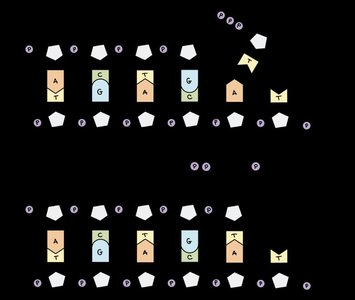
Nucleotides are joined by phosphodiester bonds between the 5' phosphate and 3' hydroxyl groups, giving nucleic acids directionality (5' to 3'). Base pairing (A-T/U, G-C) via hydrogen bonds stabilizes the double helix in DNA.
Purines: Adenine (A), Guanine (G)
Pyrimidines: Cytosine (C), Thymine (T, DNA only), Uracil (U, RNA only)
DNA Replication
During DNA replication, the two strands separate and serve as templates for new complementary strands, ensuring genetic information is accurately copied.
ATP: A Special Nucleotide
Adenosine triphosphate (ATP) is a nucleotide that serves as the primary energy currency in cells, storing and transferring energy for cellular processes.
Class Recap and Key Concepts
pH and its impact on biomolecules
The central role of carbon in biomolecule structure
Functional groups and their importance in molecular diversity
Polymerization and depolymerization: dehydration synthesis and hydrolysis
Structure and function of carbohydrates, lipids, proteins, and nucleic acids
Additional info: This guide integrates foundational concepts from General Biology, including the chemical context of life, molecular diversity, and the structure and function of macromolecules, as outlined in standard introductory biology curricula.
