 Back
Biomolecules: Structure, Function, and Enzymatic Activity
Study Guide - Smart Notes
 Tailored notes based on your materials, expanded with key definitions, examples, and context.
Biomolecules: The Chemical Basis of Life
Introduction to Biomolecules
Biomolecules are organic macromolecules essential for life, composed primarily of carbon, hydrogen, oxygen, nitrogen, and sometimes phosphorus and sulfur. They are classified into four major groups: carbohydrates, lipids, proteins, and nucleic acids. Each group has distinct structures and functions that are fundamental to cellular processes.
Carbohydrates: Serve as fuel and structural materials.
Lipids: Function in energy storage, membrane structure, and signaling.
Proteins: Perform a vast array of cellular functions, including catalysis (enzymes), structure, transport, and regulation.
Nucleic Acids: Store and transmit genetic information.
Carbohydrates
Structure and Classification
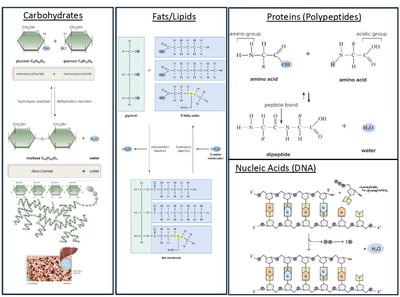
Carbohydrates are composed of carbon, hydrogen, and oxygen, typically in a 1:2:1 ratio. They exist as monosaccharides (simple sugars), disaccharides (two monosaccharides linked), and polysaccharides (long chains of monosaccharides).
Monosaccharides: Glucose, fructose
Disaccharides: Sucrose, lactose
Polysaccharides: Starch, glycogen, cellulose
Monosaccharides can be joined by dehydration synthesis to form disaccharides and polysaccharides. Hydrolysis breaks these polymers back into monomers.
Lipids
Structure and Types
Lipids are hydrophobic molecules, mainly composed of carbon and hydrogen. Unlike other biomolecules, they are not true polymers. Major types include fats (triglycerides), phospholipids, sterols, and waxes.
Fats (Triglycerides): Three fatty acids linked to glycerol; used for energy storage and insulation.
Phospholipids: Major components of cell membranes, with hydrophilic heads and hydrophobic tails.
Sterols: Include cholesterol and hormones.
Waxes: Provide waterproofing in plants and animals.
Proteins
Structure and Levels of Organization
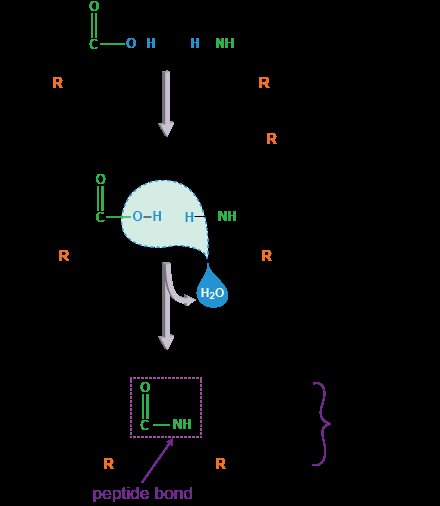
Proteins are polymers of amino acids linked by peptide bonds. Their structure is organized into four levels:
Primary Structure: Linear sequence of amino acids.
Secondary Structure: Local folding into alpha helices and beta sheets, stabilized by hydrogen bonds.
Tertiary Structure: Overall 3D shape formed by interactions among side chains (R groups).
Quaternary Structure: Association of multiple polypeptide subunits.
The function of a protein is determined by its shape, which is in turn determined by its amino acid sequence and the interactions among its side chains.
Amino Acids: Structure and Properties
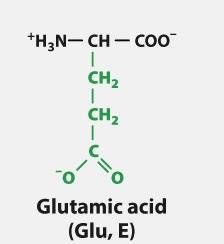
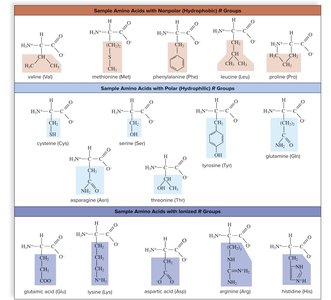
There are 20 standard amino acids, each with a central carbon (alpha carbon) bonded to an amino group, a carboxyl group, a hydrogen atom, and a variable side chain (R group). The properties of the side chain determine the characteristics of the amino acid (hydrophobic, hydrophilic, acidic, or basic).
Protein Functions
Proteins perform a wide variety of functions in cells:
Category | Function |
|---|---|
Enzymes | Catalyze (speed up) biochemical reactions |
Structural proteins | Provide physical stability and movement |
Defensive proteins | Recognize and respond to nonself substances (e.g., antibodies) |
Signaling proteins | Control physiological processes (e.g., hormones) |
Receptor proteins | Receive and respond to chemical signals |
Membrane transporters | Regulate passage of substances across cellular membranes |
Storage proteins | Store amino acids for later use |
Transport proteins | Bind and carry substances within the organism |
Gene regulatory proteins | Determine the rate of expression of a gene |
Motor proteins | Cause movement of structures in the cell |
Protein Denaturation
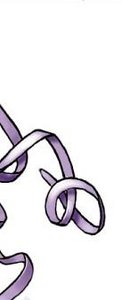
Denaturation is the loss of a protein's native structure due to changes in pH, temperature, or other environmental factors. The primary structure (amino acid sequence) remains intact, but secondary, tertiary, and quaternary structures are disrupted, leading to loss of function.
Enzymes: Biological Catalysts
Enzyme Structure and Function
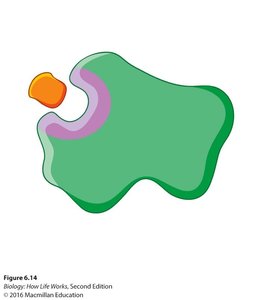
Enzymes are proteins that accelerate chemical reactions by lowering the activation energy required. Each enzyme has a specific active site where the substrate binds, forming an enzyme-substrate complex. The enzyme is not consumed in the reaction and can be reused.
Lock and Key Model: The substrate fits precisely into the enzyme's active site.
Induced Fit Model: The enzyme changes shape slightly to accommodate the substrate.
Mechanisms of Enzyme Action
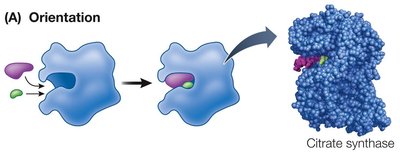
Orientation: Enzymes bring substrates together in the correct orientation for reaction.
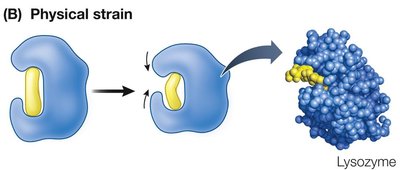
Physical Strain: Enzymes apply stress to substrate bonds, making them easier to break.
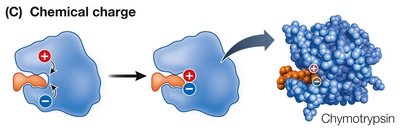
Chemical Microenvironment: Enzymes provide an optimal environment for the reaction (e.g., acidic or basic conditions).
Enzyme Kinetics and Regulation
The rate of enzymatic reactions depends on substrate concentration, enzyme concentration, and the presence of inhibitors or activators.
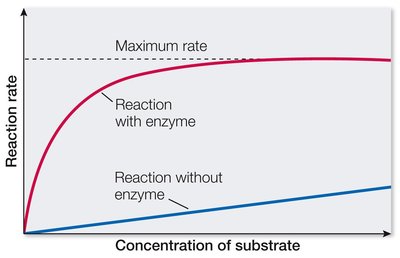
Substrate Concentration: As substrate concentration increases, the reaction rate increases until the enzyme is saturated and the maximum rate (Vmax) is reached.
Inhibitors:
Competitive Inhibitors: Compete with the substrate for the active site; can be overcome by increasing substrate concentration.
Non-competitive (Allosteric) Inhibitors: Bind to a site other than the active site, changing the enzyme's shape and reducing its activity; cannot be overcome by increasing substrate concentration.
Enzyme activity can also be regulated by activators, such as phosphorylation by kinases or dephosphorylation by phosphatases.
Nucleic Acids
Structure and Function
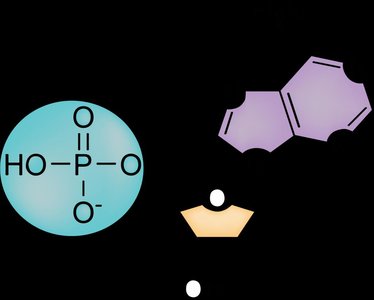
Nucleic acids are polymers of nucleotides, each consisting of a phosphate group, a five-carbon sugar (ribose or deoxyribose), and a nitrogenous base. The two main types are DNA and RNA.
DNA (Deoxyribonucleic Acid): Double-stranded, stores genetic information.
RNA (Ribonucleic Acid): Single-stranded, involved in protein synthesis and gene regulation.
DNA vs RNA
DNA: Deoxyribose sugar, bases A, T, C, G, double helix structure.
RNA: Ribose sugar, bases A, U, C, G, single-stranded.
Genetic information flows from DNA to RNA to protein (the central dogma of molecular biology):
Transcription: DNA is transcribed into RNA.
Translation: RNA is translated into protein.
Summary Table: Biomolecules
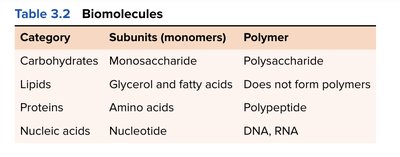
Category | Subunits (Monomers) | Polymer |
|---|---|---|
Carbohydrates | Monosaccharide | Polysaccharide |
Lipids | Glycerol and fatty acids | Does not form polymers |
Proteins | Amino acids | Polypeptide |
Nucleic acids | Nucleotide | DNA, RNA |
Additional info: This guide covers the structure, function, and regulation of the four major classes of biomolecules, with a focus on proteins and enzymes, as well as the basics of nucleic acids. It is suitable for introductory college-level biology courses.
