 Back
Biomolecules: Structure, Function, and Synthesis in General Biology
Study Guide - Smart Notes
 Tailored notes based on your materials, expanded with key definitions, examples, and context.
Biomolecules: Structure and Function
Overview of Biomolecules
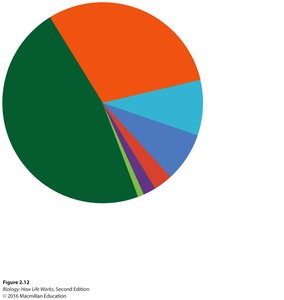
Biomolecules are essential organic compounds that form the basis of life. Cells synthesize large macromolecules from a limited set of small molecules, primarily through polymerization. The four major classes of biomolecules are nucleic acids, proteins, carbohydrates, and lipids. These macromolecules are typically polymers, composed of repeating monomer units.
Nucleic acids (~15%): DNA and RNA, polymers of nucleotides.
Proteins (~50%): Polypeptides, polymers of amino acids.
Carbohydrates (~15%): Polysaccharides, polymers of monosaccharides.
Lipids (~15%): Not true polymers, but composed of glycerol and fatty acids.
Cells are composed of approximately 80% water, with the remaining 20% consisting of these biomolecules in the proportions listed above.
Monomers and Polymers
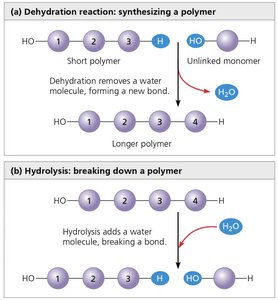
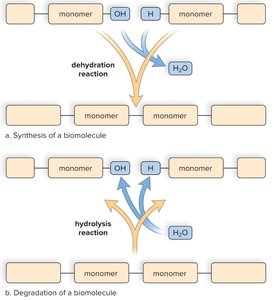
Macromolecules are often called polymers because they are made from identical or similar building blocks called monomers. The process of assembling polymers from monomers is called dehydration synthesis (condensation), while breaking polymers into monomers is called hydrolysis.
Dehydration Synthesis: Removes a water molecule to form a new bond between monomers.
Hydrolysis: Adds a water molecule to break a bond, releasing monomers.
Categories of Biomolecules
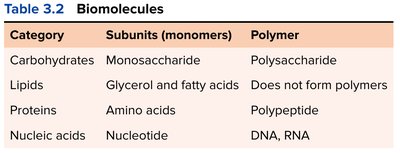
The four main categories of biomolecules differ in their monomers and polymers:
Category | Subunits (Monomers) | Polymer |
|---|---|---|
Carbohydrates | Monosaccharide | Polysaccharide |
Lipids | Glycerol and fatty acids | Does not form polymers |
Proteins | Amino acids | Polypeptide |
Nucleic acids | Nucleotide | DNA, RNA |
Carbon: The Backbone of Life
Properties of Carbon
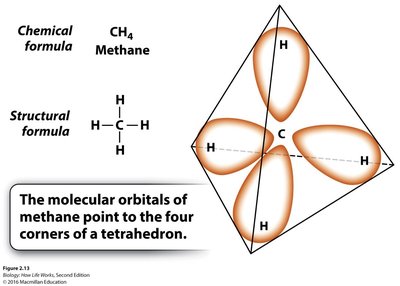
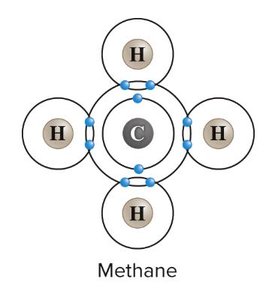
Carbon is the central element in organic molecules due to its ability to form four covalent bonds, allowing for a variety of molecular shapes and functions. Carbon-based molecules are called organic compounds.
Can bond to four other atoms.
Can branch in up to four directions.
Each bond can rotate freely, enabling diverse molecular structures.
Carbon Skeletons
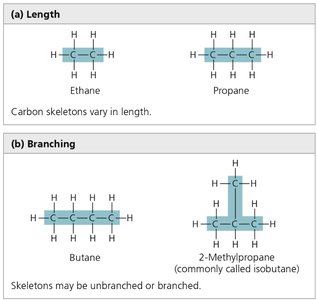
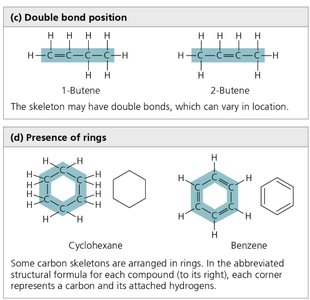
Carbon skeletons can vary in length, branching, double bond position, and presence of rings, contributing to molecular diversity.
Length: Ethane, propane
Branching: Butane, 2-methylpropane
Double bond position: 1-butene, 2-butene
Rings: Cyclohexane, benzene
Functional Groups in Biomolecules
Key Functional Groups
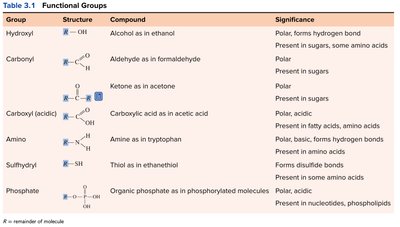
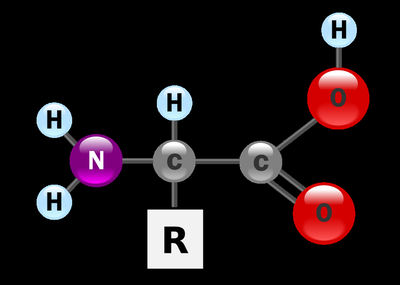
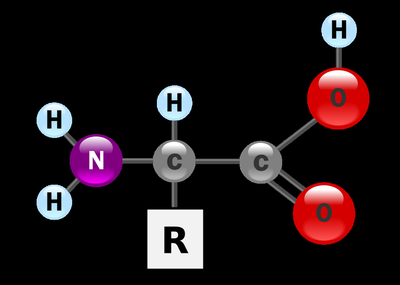
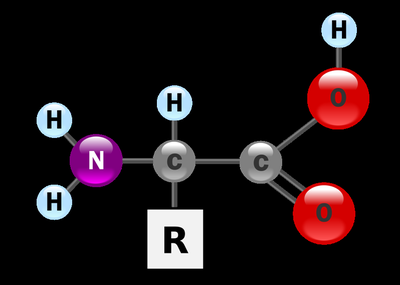
Functional groups are specific groups of atoms attached to the carbon backbone that participate in chemical reactions and determine the properties of biomolecules. A relatively small number of functional groups underlie life’s structural and functional diversity.
Group | Structure | Compound | Significance |
|---|---|---|---|
Hydroxyl | –OH | Alcohol (ethanol) | Polar, forms hydrogen bonds |
Carbonyl | –C=O | Aldehyde, ketone | Polar, present in sugars |
Carboxyl | –COOH | Carboxylic acid | Polar, acidic |
Amino | –NH2 | Amine | Polar, basic |
Sulfhydryl | –SH | Thiols | Forms disulfide bonds |
Phosphate | –PO4 | Organic phosphate | Polar, acidic |
Functional Group Identification and Properties
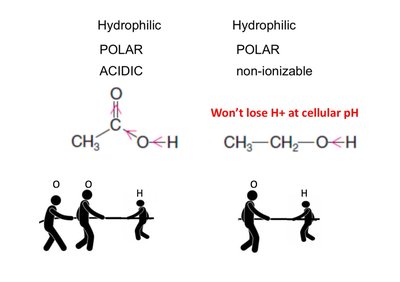
Functional groups can be identified in molecular structures and are responsible for the chemical behavior of biomolecules. For example, amino groups can gain a positive charge in aqueous environments, while carboxyl groups can lose a hydrogen ion and become negatively charged.


Carbohydrates
Structure and Synthesis
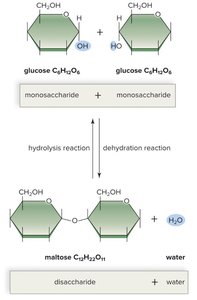
Carbohydrates are composed of monosaccharide monomers, such as glucose. Two monosaccharides can join via dehydration synthesis to form a disaccharide, such as maltose, with the release of a water molecule.
Monosaccharide formula: C6H12O6
Disaccharide formula (from two glucose): C12H22O11
Polysaccharides
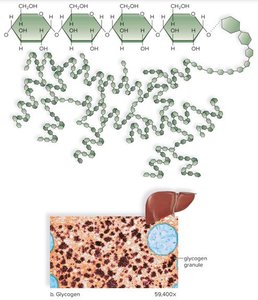
Polysaccharides, such as glycogen, are long chains of monosaccharides and serve as energy storage molecules in animals.
Lipids
Structure and Synthesis
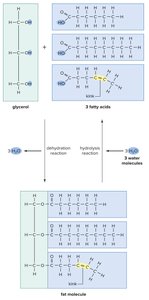
Lipids are not true polymers but are formed from glycerol and fatty acids. The synthesis of a fat molecule involves dehydration reactions, resulting in the formation of triglycerides and water.
Proteins
Structure and Synthesis
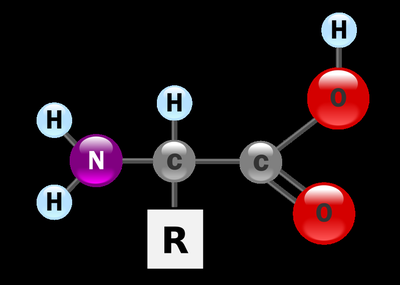
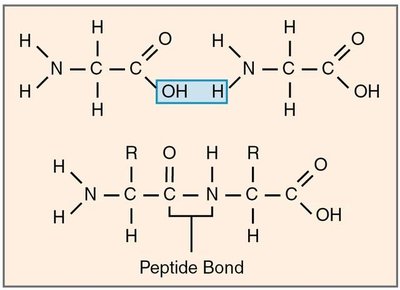
Proteins are polymers of amino acids, linked by peptide bonds formed via dehydration synthesis. The sequence of amino acids determines the protein’s structure and function.
Protein Structure Levels
Primary structure: Sequence of amino acids connected via peptide bonds.
Secondary structure: Hydrogen bonds between backbone groups form alpha helices and beta sheets.
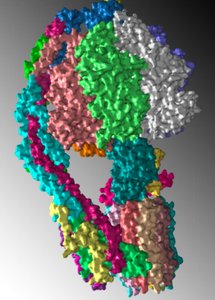
Tertiary structure: Interactions between side chains (hydrophobic, ionic, hydrogen bonds) determine 3D folding.
Quaternary structure: Multiple polypeptide subunits interact (e.g., hemoglobin).
Protein Denaturation
Changes in temperature or pH can disrupt hydrogen and ionic bonds, causing proteins to lose their three-dimensional structure and become inactive (denatured).
Amino Acid Side Chains
The properties of amino acid side chains (acidic, basic, polar, nonpolar) determine protein folding and function. At cellular pH, most side chains are charged and can form ionic bonds.
Nucleic Acids
Structure and Function
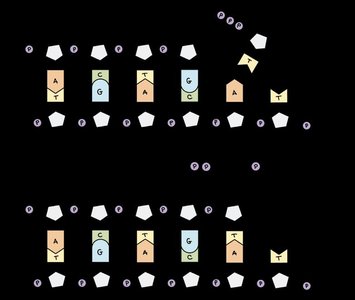
Nucleic acids (DNA and RNA) are polymers of nucleotide monomers. DNA stores genetic information, while RNA is involved in protein synthesis and other cellular functions.
Nucleotide structure: Composed of a sugar, phosphate group, and nitrogenous base.
Directionality: Nucleic acids have 5' and 3' ends, determined by the sugar-phosphate backbone.
Types of Nucleic Acids
DNA: Double-stranded helix, more stable, bases A, G, C, T.
RNA: Single-stranded, less stable, bases A, G, C, U.
Base Pairing and Replication
In DNA, bases pair via hydrogen bonds: A with T (two bonds), G with C (three bonds). The two strands are antiparallel. During replication, each strand serves as a template for a new strand.
%A = %T
%G = %C
Phosphodiester Bonds
Nucleotides are linked by phosphodiester bonds, formed via dehydration synthesis, connecting the 3' hydroxyl of one nucleotide to the 5' phosphate of the next.
ATP: Cellular Energy Currency
Adenosine Triphosphate (ATP) is a nucleotide that serves as the primary energy carrier in cells, mainly produced in mitochondria.
pH and Biomolecules
Impact of pH
pH affects the charge and behavior of biomolecules, especially proteins. Acids donate hydrogen ions (H+), while bases accept them. The charge of amino acid side chains changes with pH, influencing protein folding and function.
Summary and Practice
Understand pH and its impact on biomolecules.
Recognize the role of carbon in biomolecules.
Identify functional groups and their properties.
Describe dehydration synthesis and hydrolysis in polymer formation and breakdown.
Additional info: This study guide expands on brief lecture points to provide a comprehensive overview of biomolecules, their structure, synthesis, and function, suitable for General Biology college students.
