 Back
Biomolecules: The Chemical Basis of Life
Study Guide - Smart Notes
 Tailored notes based on your materials, expanded with key definitions, examples, and context.
Biomolecules: The Chemical Basis of Life
Elemental Composition of Living Matter
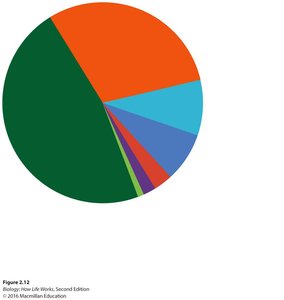
Living organisms are primarily composed of a few key elements, with carbon, hydrogen, and oxygen making up the majority of biological mass. Other essential elements include nitrogen, phosphorus, sulfur, potassium, calcium, sodium, chlorine, and magnesium.
Carbon (C): 47%
Oxygen (O): 30%
Hydrogen (H): 9%
Nitrogen (N): 8%
Magnesium (Mg): 2%
Phosphorus (P): 3%
Others: 1%
Carbon: Life’s Chemical Backbone
Properties of Carbon
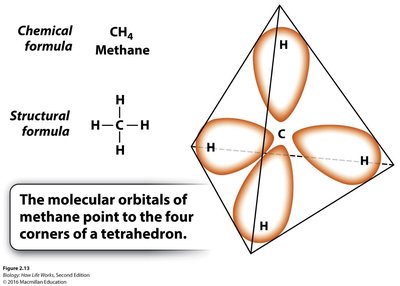
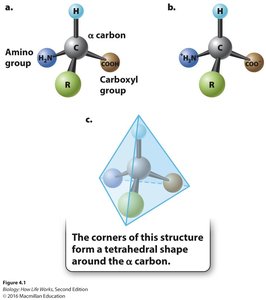
Carbon is the foundation of organic molecules due to its unique bonding properties. It can form four covalent bonds, allowing for a diversity of stable structures such as chains, branches, and rings.
Bonding: Carbon can bond to four other atoms, forming tetrahedral geometry.
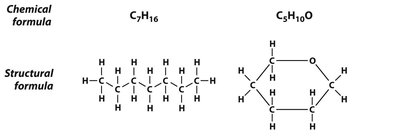
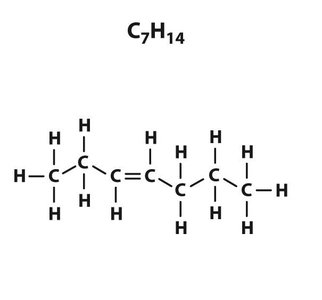
Structural Diversity: Carbon atoms can link to form straight chains, branched chains, rings, and double bonds.
Organic Compounds: Molecules containing carbon-carbon bonds are called organic compounds.
Functional Groups in Biological Molecules
Functional groups are specific groups of atoms attached to the carbon backbone that determine the chemical reactivity and properties of organic molecules. Common functional groups include hydroxyl, carbonyl, carboxyl, amino, and phosphate groups.
Hydroxyl (-OH): Found in alcohols; polar and hydrophilic.
Carbonyl (C=O): Found in aldehydes and ketones; polar.
Carboxyl (-COOH): Acts as an acid; can donate H+ ions.
Amino (-NH2): Acts as a base; can accept H+ ions.
Phosphate (-PO4): Important in energy transfer (e.g., ATP).
Macromolecules: Structure and Synthesis
Classes of Biomolecules
Cells are composed of four major classes of macromolecules, each with distinct monomers and functions:
Proteins: Polymers of amino acids (~50% of cell dry mass)
Nucleic Acids: Polymers of nucleotides (~15%)
Carbohydrates: Polymers of monosaccharides (~15%)
Lipids: Diverse group, not always polymers (~15%)
Cells are about 80% water; the remaining 20% consists of these macromolecules.
Polymerization: Dehydration Synthesis and Hydrolysis
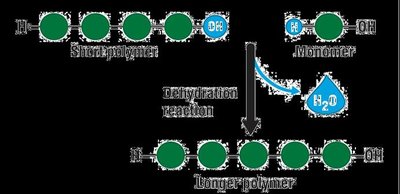
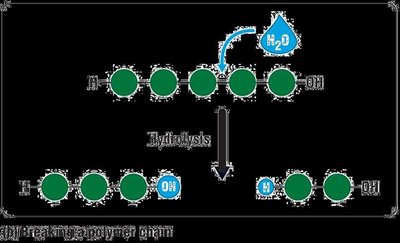
Macromolecules are assembled from monomers by dehydration synthesis (removal of water to form a bond) and broken down by hydrolysis (addition of water to break a bond). Both processes require enzymes.
Dehydration Synthesis: Joins monomers by removing a water molecule.
Hydrolysis: Breaks polymers into monomers by adding water.
Proteins: Structure and Function
Amino Acids: The Monomers of Proteins
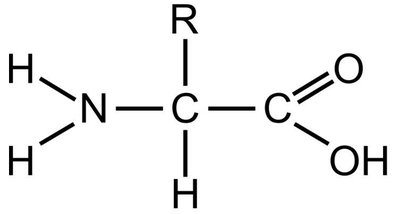
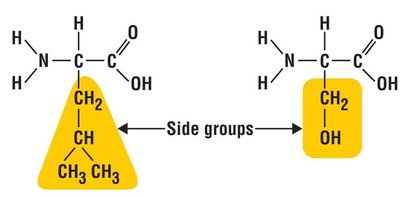
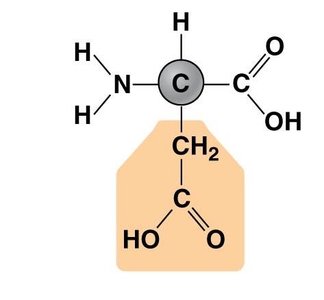
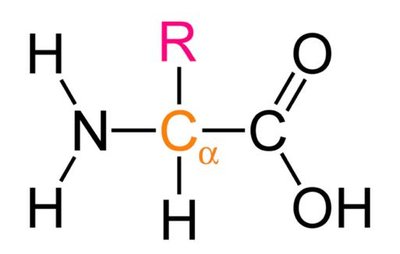
Proteins are polymers made from amino acid monomers. Each amino acid contains a central (alpha) carbon, an amino group, a carboxyl group, a hydrogen atom, and a variable side chain (R group).
Peptide Bonds: Amino acids are linked by peptide bonds formed via dehydration synthesis.
Side Chains (R groups): Determine the properties and function of each amino acid.
Properties of Amino Acids
The chemical nature of the side chain (R group) classifies amino acids as hydrophobic, hydrophilic, acidic, or basic. The side chains influence protein folding and function.
Hydrophobic: Non-polar side chains, avoid water.
Hydrophilic: Polar or charged side chains, interact with water.
Acidic: Side chains that donate H+ (negatively charged at cellular pH).
Basic: Side chains that accept H+ (positively charged at cellular pH).
Protein Structure: Four Levels of Organization
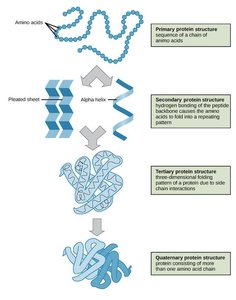
Protein function depends on its three-dimensional structure, which is organized into four levels:
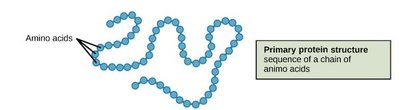
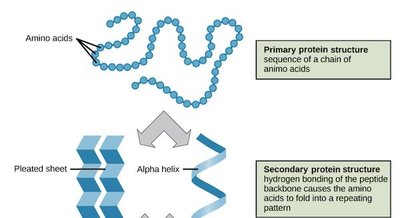
Primary Structure: Linear sequence of amino acids joined by peptide bonds.
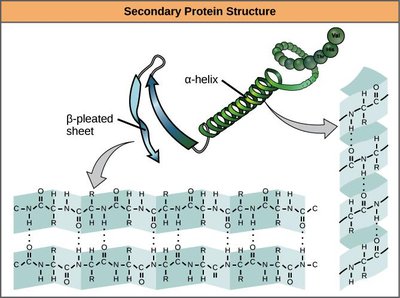
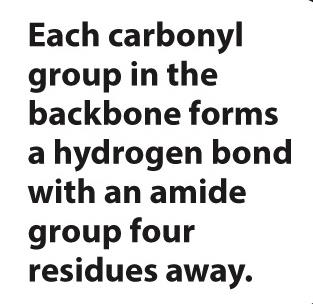
Secondary Structure: Local folding into alpha helices and beta sheets, stabilized by hydrogen bonds.
Tertiary Structure: Overall 3D shape formed by interactions among side chains (hydrophobic, ionic, hydrogen bonds, disulfide bridges).
Quaternary Structure: Association of multiple polypeptide chains (subunits).
Protein Denaturation
Proteins can lose their structure and function (denature) due to changes in temperature, pH, or mutations. Denaturation disrupts hydrogen and ionic bonds, leading to loss of biological activity.
Example: Sickle cell anemia is caused by a mutation that alters hemoglobin structure.
Nucleic Acids: DNA and RNA
Structure and Function
Nucleic acids are polymers of nucleotides and serve as the genetic material of cells. DNA stores genetic information, while RNA is involved in protein synthesis and gene regulation.
Nucleotide Structure: Each nucleotide consists of a phosphate group, a five-carbon sugar (ribose or deoxyribose), and a nitrogenous base.
DNA: Double-stranded helix, more stable, bases are A, T, G, C.
RNA: Single-stranded, less stable, bases are A, U, G, C.
Directionality and Bonding
Nucleic acids have directionality, with a 5' phosphate end and a 3' hydroxyl end. Nucleotides are joined by phosphodiester bonds formed via dehydration synthesis.
Base Pairing: In DNA, A pairs with T (2 hydrogen bonds), G pairs with C (3 hydrogen bonds).
Antiparallel Strands: The two DNA strands run in opposite directions (5' to 3' and 3' to 5').
Replication and Function
During DNA replication, the two strands separate and serve as templates for new strands, ensuring genetic information is accurately copied. Nucleotides also serve other cellular functions, such as energy transfer (e.g., ATP).
Summary Table: Macromolecules and Their Monomers
Polymer | Monomer | Monomer Structure |
|---|---|---|
Protein | Amino Acid |
|
Nucleic Acid | Nucleotide | Phosphate + Sugar + Base |
Carbohydrate | Monosaccharide | e.g., Glucose (C6H12O6) |
Lipid | Fatty Acid & Glycerol | Varies (not always a true polymer) |
