 Back
Biotechnology: Principles, Techniques, and Applications
Study Guide - Smart Notes
 Tailored notes based on your materials, expanded with key definitions, examples, and context.
Biotechnology: Principles, Techniques, and Applications
Introduction to Biotechnology
Biotechnology utilizes biological systems and living organisms to develop or make products, often involving the manipulation of DNA. Modern biotechnology has revolutionized medicine, agriculture, environmental science, and forensic analysis by enabling precise genetic modifications and large-scale production of valuable biological molecules.
Applications: Pharmaceutical production (hormones, vaccines), medical diagnostics, genetically modified crops, environmental cleanup, forensic analysis, and genomic sequencing.
Key Techniques: Recombinant DNA technology, DNA cloning, PCR, gel electrophoresis, nucleic acid hybridization, DNA sequencing, and CRISPR gene editing.
Recombinant DNA Technology (DNA Cloning)
Principles and Goals
Recombinant DNA technology, also known as DNA cloning, involves combining DNA from different sources to create new genetic combinations. The main goal is to isolate and amplify specific DNA sequences for study or manipulation.
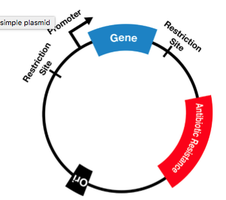
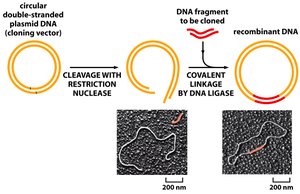
Vectors: Plasmids (circular DNA molecules) are commonly used as vectors to carry and replicate foreign DNA in host cells.
Enzymes: Restriction endonucleases cut DNA at specific sequences, ligases join DNA fragments, and polymerases synthesize DNA or RNA.
Selection: Selectable markers (e.g., antibiotic resistance genes) allow identification of cells containing recombinant plasmids.
Bacterial Transformation and Selection
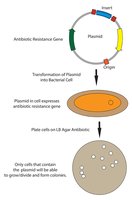
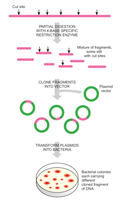
Bacterial transformation is the process by which bacteria take up plasmid DNA. Only bacteria that acquire plasmids with antibiotic resistance genes can grow on selective media, forming colonies that each contain identical plasmid DNA.
Mass Production: Bacteria are ideal for producing large quantities of DNA or protein products due to their rapid growth and ease of culture.
Restriction Enzymes
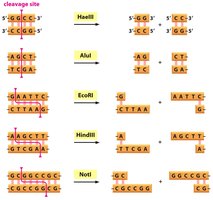
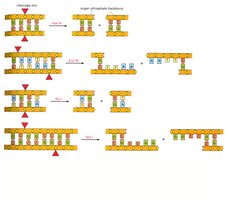
Restriction enzymes are nucleases that recognize specific, often palindromic, DNA sequences and cleave the DNA at or near these sites. Different enzymes have different recognition sequences, producing fragments with 'sticky' or 'blunt' ends.
Specificity: Each restriction enzyme recognizes a unique sequence, allowing precise DNA manipulation.
Fragment Lengths: The frequency of cut sites depends on the length of the recognition sequence (e.g., 4-base, 6-base, 8-base cutters).
Formation of Recombinant DNA
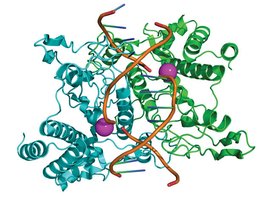
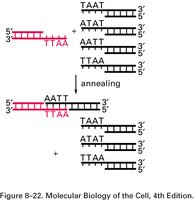
Restriction enzymes generate compatible ends on DNA fragments, which can be joined together by DNA ligase to form recombinant DNA molecules. This allows insertion of foreign DNA into plasmid vectors.
Base Pairing: DNA fragments with complementary ends can anneal and be covalently linked.
DNA Libraries
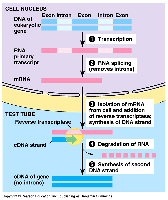
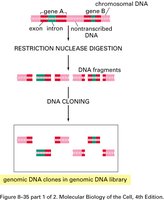
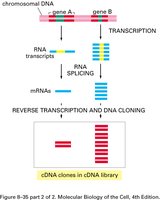
DNA libraries are collections of cloned DNA fragments. There are two main types: genomic DNA libraries and cDNA libraries.
Genomic Library: Contains DNA fragments representing the entire genome, including coding and non-coding regions.
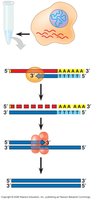
cDNA Library: Contains DNA copies of mRNA (cDNA), representing only the expressed genes of a cell or tissue.
Identification of Cloned Genes
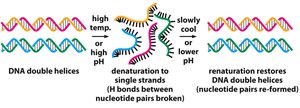
Specific DNA fragments can be identified using genetic complementation, DNA sequence analysis, or antibodies against the encoded protein. Nucleic acid hybridization is a key technique for detecting specific sequences.
Hybridization: Complementary base pairing between a labeled probe and target DNA allows detection of specific sequences.

Gel Electrophoresis
Principles and Applications
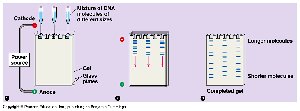
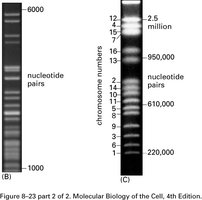
Gel electrophoresis separates DNA fragments by size as they migrate through a gel matrix under an electric field. DNA is negatively charged and moves toward the positive electrode; smaller fragments migrate faster.
Applications: Analysis of DNA fragments, verification of cloning, and preparation for sequencing.
Polymerase Chain Reaction (PCR)
Principle and Steps
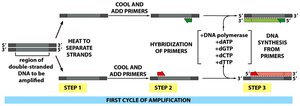
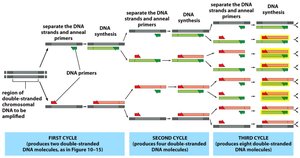
PCR is a technique for amplifying specific DNA sequences using repeated cycles of denaturation, primer annealing, and DNA synthesis. It enables rapid and specific amplification from minimal starting material.
Steps: 1) Denaturation (95°C), 2) Annealing (~55°C), 3) Extension (72°C). Repeated for ~30 cycles.
Components: Template DNA, primers, dNTPs, buffer, and heat-stable DNA polymerase (e.g., Taq polymerase).
Applications of PCR
Genetic testing and diagnostics
Pathogen detection
Paleogenomics (ancient DNA analysis)
Forensic identification
DNA Sequencing
Sanger (Dideoxy) Sequencing
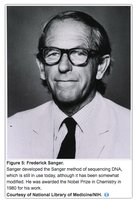
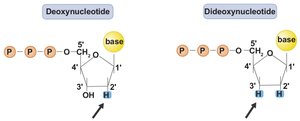
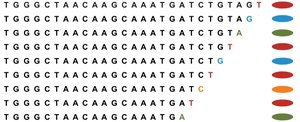
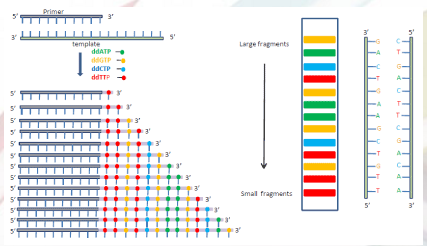
The Sanger method uses dideoxynucleotides (ddNTPs) as chain terminators in DNA synthesis. Incorporation of a ddNTP stops extension, generating fragments of varying lengths that can be separated and read to determine the DNA sequence.
Key Principle: Each ddNTP is labeled (e.g., with a fluorescent dye) to identify the terminating base.
Next-Generation Sequencing
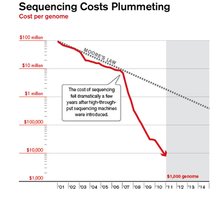
High-throughput sequencing technologies allow simultaneous sequencing of millions of DNA fragments, dramatically reducing cost and time compared to Sanger sequencing.

CRISPR/Cas Genome Editing
Principles and Mechanism
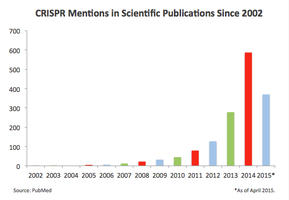
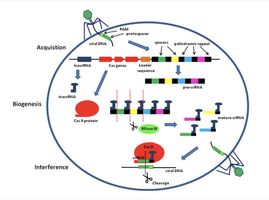
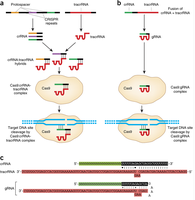
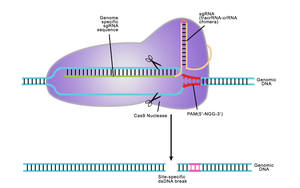
CRISPR/Cas is a microbial adaptive immune system adapted for genome editing. It uses guide RNA (gRNA) to direct the Cas9 nuclease to a specific DNA sequence, where it introduces a double-stranded break. The cell's repair mechanisms can then be harnessed to disrupt or modify genes.
Components: CRISPR array (spacer sequences), Cas genes (including Cas9), guide RNA (crRNA + tracrRNA or single-guide RNA).
PAM Sequence: Cas9 requires a protospacer adjacent motif (PAM, 5'-NGG-3') next to the target site for cleavage.
Applications and Ethical Considerations
Gene editing in diverse organisms (bacteria, plants, animals, humans)
Correction of genetic diseases in model organisms
Development of disease-resistant crops and animals
Potential for gene drives to control pest populations
Ethical debates regarding human germline editing and ecological impacts
Applications and Societal Impact
Biotechnology in Medicine, Agriculture, and Environment
Production of pharmaceuticals (e.g., insulin, growth hormone)
Transgenic animals and plants for research and food production
Bioremediation using genetically modified organisms
Forensic DNA analysis
Ethical and Safety Considerations
Regulation of genetically modified organisms (GMOs)
Privacy concerns with genomic data
Guidelines for safe and ethical use of biotechnology
Summary Table: Genomic vs. cDNA Libraries
Feature | Genomic Library | cDNA Library |
|---|---|---|
Source | Entire genome (DNA) | mRNA (converted to cDNA) |
Content | Coding and non-coding regions | Only expressed genes (no introns) |
Applications | Genome mapping, gene discovery | Gene expression studies, protein production in bacteria |
Conclusion
Biotechnology integrates molecular biology techniques to manipulate DNA for research, medicine, agriculture, and industry. Mastery of these principles and methods is essential for understanding modern biology and its societal implications.
