 Back
BackBiotechnology: Tools, Applications, and Implications
Study Guide - Smart Notes
 Tailored notes based on your materials, expanded with key definitions, examples, and context.
Biotechnology: Tools, Applications, and Implications
Introduction to Biotechnology
Biotechnology is the use of living organisms, cells, and biological molecules to develop products and technologies for practical benefits. Modern biotechnology includes genetic engineering, which involves the direct manipulation of an organism's genetic material by adding, deleting, or transplanting genes. These advances have revolutionized medicine, agriculture, and forensic science.
Gene cloning: Making many identical copies of a gene or DNA segment.
Transgenic organisms: Organisms that have had foreign genes deliberately inserted into their genome.
DNA profiling: Comparing DNA samples to identify individuals or relationships.
DNA sequencing: Determining the precise order of nucleotides in a DNA molecule.
Gene Expression and Genetic Engineering
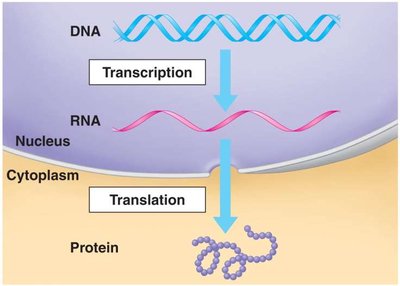
Gene expression is the process by which information from a gene is used to synthesize functional gene products, typically proteins. Genetic engineering manipulates this process to achieve desired traits or produce specific proteins.
Transcription: DNA is transcribed into messenger RNA (mRNA).
Translation: mRNA is translated into a protein by ribosomes in the cytoplasm.
Tools of Biotechnology
Restriction Enzymes and Recombinant DNA
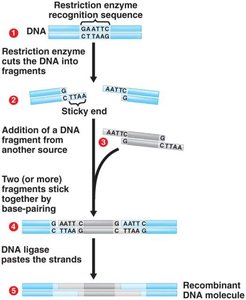
Restriction enzymes are proteins that cut DNA at specific sequences called restriction sites, producing fragments with 'sticky ends' that can be joined with DNA from other sources. DNA ligase is used to seal these fragments, creating recombinant DNA molecules.
Restriction enzymes: Recognize and cut specific DNA sequences.
DNA ligase: Enzyme that joins DNA fragments together.
Recombinant DNA: DNA molecules formed by laboratory methods of genetic recombination.
Polymerase Chain Reaction (PCR)
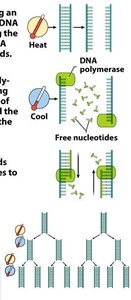
PCR is a technique used to amplify specific DNA sequences, making millions of copies from a small initial sample. It involves repeated cycles of heating and cooling to denature DNA, anneal primers, and extend new DNA strands using DNA polymerase.
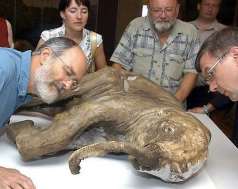
Applications: Forensics, medical diagnostics, research, and analysis of ancient DNA.
Plasmids and Gene Cloning in Bacteria
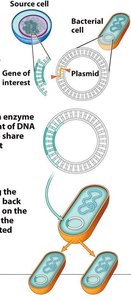
Plasmids are small, circular DNA molecules found in bacteria that can replicate independently of chromosomal DNA. They are commonly used as vectors to introduce foreign genes into bacterial cells, which then express the gene and replicate it as they divide.
Transformation: Introduction of recombinant plasmids into bacteria.
Cloning: As bacteria divide, they produce colonies of cells containing the recombinant DNA.
Reporter Genes: LacZ and GFP
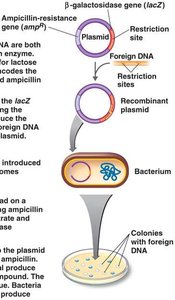
Reporter genes are used to identify cells that have successfully taken up foreign DNA. The LacZ gene encodes β-galactosidase, which turns colonies blue in the presence of X-gal. Insertion of foreign DNA disrupts LacZ, resulting in white colonies. The GFP (green fluorescent protein) gene causes cells to fluoresce green under UV light, providing a visual marker for gene expression.
LacZ reporter: Blue/white screening for recombinant bacteria.
GFP reporter: Visual confirmation of gene expression in living cells or organisms.

Applications of Biotechnology
Gene Cloning and Production of Human Proteins
Gene cloning allows for the production of medically important proteins, such as human insulin, by inserting the human gene into bacteria. The bacteria then produce the protein, which can be harvested and purified for therapeutic use.
Example: Production of insulin, growth hormone, and clotting factors.
Animal Cloning
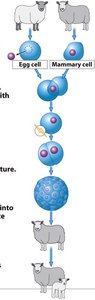
Animal cloning involves transferring the nucleus from a body cell into an enucleated egg cell, which is then stimulated to divide and develop into an embryo. The embryo is implanted into a surrogate mother, resulting in a clone genetically identical to the donor.
Applications: Agriculture, conservation, and research.
Transgenic Organisms
Transgenic organisms contain foreign DNA introduced through biotechnology. These include bacteria, yeast, plants, and animals engineered for specific traits or to produce valuable substances.
Transgenic bacteria and yeast: Used to produce insulin, growth hormone, clotting factors, vaccines, and other medications.
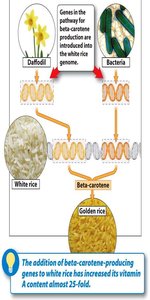
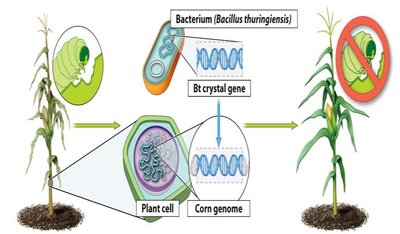
Transgenic plants: Genetically modified (GM) plants may be resistant to pests or herbicides, or have enhanced nutritional content (e.g., golden rice, Bt corn).
Transgenic animals: Used for research, production of pharmaceuticals, and agricultural improvements.

Examples of Transgenic Animals
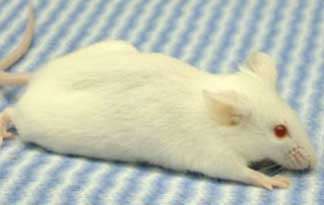
Cancer-resistant mice: Engineered to carry genes that suppress tumor growth.
Goats producing spider silk protein: Used for strong, lightweight materials.
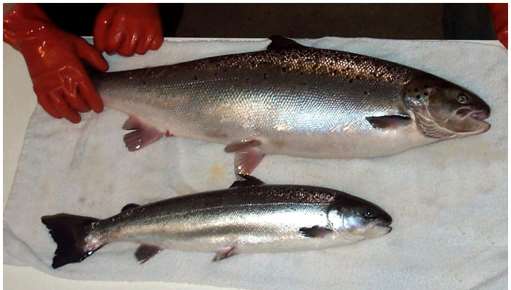
Transgenic salmon: Grow faster due to inserted growth hormone gene.

Gene Therapy
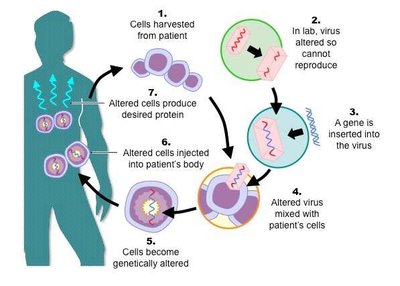
Gene therapy aims to treat or cure genetic diseases by introducing, removing, or altering genetic material within a patient's cells. There are two main approaches:
Ex vivo gene therapy: Cells are modified outside the body and then reintroduced.
In vivo gene therapy: Genes are delivered directly into the patient's body.
CRISPR Technology
CRISPR is a revolutionary gene-editing tool derived from bacterial immune systems. It allows for precise, efficient, and flexible editing of specific DNA sequences. CRISPR is being tested in clinical trials for blood disorders, cancer immunotherapy, bacterial infections, and metabolic diseases.
DNA Profiling and Forensic Applications
DNA profiling is used to identify individuals based on their unique DNA sequences. It is widely used in forensic science, paternity testing, and identifying remains.
Restriction Fragment Length Polymorphisms (RFLPs): DNA is cut with restriction enzymes, producing fragments of varying lengths.
Short Tandem Repeats (STRs): PCR amplifies regions with repeating DNA sequences; individuals differ in the number of repeats.
Gel electrophoresis: Separates DNA fragments by size for comparison.
Genomics
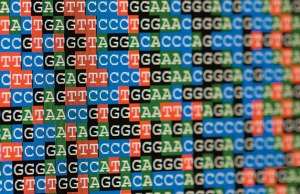
Genomics is the study of entire genomes, including the sequencing, analysis, and comparison of genetic material from different organisms. The Human Genome Project revealed that humans share a high percentage of coding DNA with other species, such as chimpanzees and mice, highlighting evolutionary relationships and the conservation of essential genes.
Human genome: 99% of coding regions are identical to chimpanzees; 88% to mice; 50% to bananas.
Ethical, Safety, and Social Issues
The use of biotechnology raises important ethical, safety, and social concerns, including the potential for unintended environmental effects, the creation of new allergens, decreased genetic diversity, and the need for regulation and oversight. Public debate continues over the use of genetically modified organisms (GMOs) in food and medicine.
Potential risks: Gene flow to wild species, resistance development, effects on non-target organisms.
Regulation: Varies by country; ongoing discussion about labeling and safety testing.
