 Back
Birds: Evolution, Adaptations, and Diversity
Study Guide - Smart Notes
 Tailored notes based on your materials, expanded with key definitions, examples, and context.
Birds: Evolution, Adaptations, and Diversity
Introduction to Birds (Class: Aves)
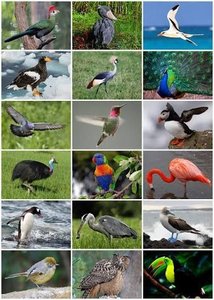
Birds, classified under Class Aves, are a highly diverse group of endothermic vertebrates characterized by feathers, beaks, and adaptations for flight. They are the only living descendants of dinosaurs and exhibit a wide range of ecological roles and morphological specializations.
Evolutionary Origins of Birds
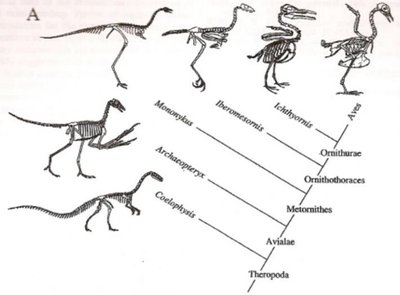
The evolutionary history of birds traces back to the Jurassic period, approximately 150 million years ago. Birds evolved from theropod dinosaurs, a subgroup of reptiles, and share many anatomical features with their ancestors.
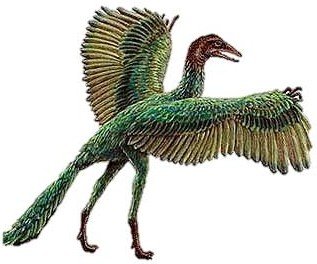
Fossil Record: The earliest undisputed bird fossil is Archaeopteryx lithographica, which displays both reptilian and avian features, such as feathered wings, a light skeleton, and elongated forelimbs.
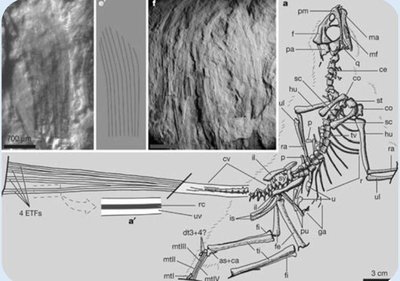
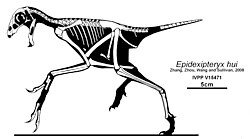
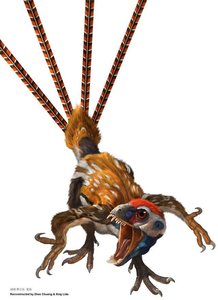
Transitional Forms: Other important fossils include Protoavis (controversial, Triassic period, lacks feathers) and Epidexipteryx hui (a feathered dinosaur, not a true bird).
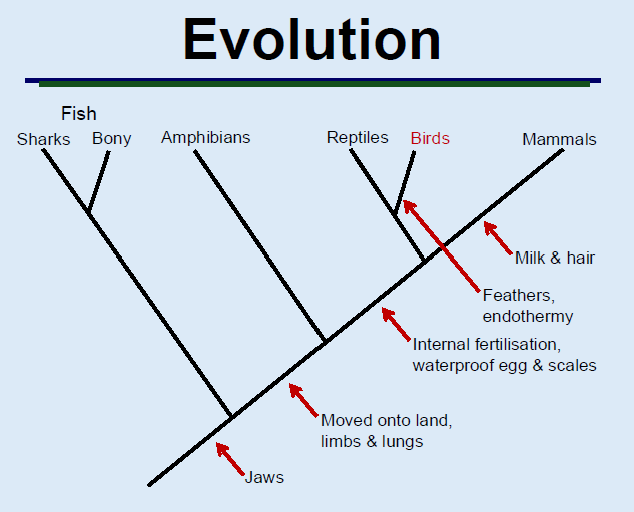
Key Evolutionary Traits: Feathers, endothermy, and the amniotic egg are major evolutionary innovations in the lineage leading to birds.
Why Did Birds Take to the Air?
The evolution of flight in birds provided several adaptive advantages:
Access to new food sources (e.g., flying insects)
Predator avoidance
Ability to travel great distances (migration)
Exploitation of seasonal breeding opportunities
Bird Adaptations for Flight
Birds possess a suite of anatomical and physiological adaptations that enable powered flight and high metabolic activity:
Wings and Feathers: Modified scales made of keratin, providing lift, insulation, waterproofing, camouflage, and courtship displays.
Lightweight Skeleton: Hollow (pneumatic) bones with internal struts for strength and reduced weight.
Enlarged Sternum (Keel): Provides attachment for powerful flight muscles (pectoralis and supracoracoideus).
Efficient Respiratory System: Elastic air sacs and unidirectional airflow maximize oxygen uptake.
Endothermy: Birds generate their own body heat and maintain a constant internal temperature (homeothermy).
Beak Adaptations: Lightweight, keratinous beaks adapted to diverse feeding strategies.
Feet and Claws: Variety of forms adapted for perching, grasping, swimming, and defense.
Acute Eyesight: Large, complex eyes with excellent color and UV vision.
Parental Care: Most birds exhibit elaborate parental care, often bi-parental, with complex nests and helpless offspring.
Feathers: Structure and Function
Feathers are a defining characteristic of birds, serving multiple functions:
Flight: The aerofoil shape of wings produces lift according to Bernoulli's Principle.
Insulation: Feathers trap air, reducing heat loss.
Waterproofing: Oiled or waxed feathers repel water.
Camouflage and Courtship: Coloration and ornamental feathers play roles in sexual selection and species recognition.
Feather structure includes a central shaft (rachis), branching barbs, and interlocking barbules for a smooth, windproof surface.
Beak Diversity and Feeding Strategies
Bird beaks are highly variable and adapted to specific diets and ecological niches:
Seed eaters (e.g., finches): Short, strong beaks
Insectivores (e.g., flycatchers): Slender, pointed beaks
Fish eaters (e.g., herons, puffins): Long, sharp beaks
Filter feeders (e.g., flamingos): Specialized beaks for filtering food from water
Nectar feeders (e.g., hummingbirds): Long, slender beaks
Raptors (e.g., eagles, owls): Hooked beaks for tearing meat
Darwin's Finches: Adaptive Radiation
Darwin's finches of the Galápagos Islands are a classic example of adaptive radiation, where beak size and shape evolved in response to different diets, illustrating natural selection and descent with modification.
Bird Skeleton and Musculature
Birds have a highly specialized skeleton for flight:
Hollow Bones: Reduce weight while maintaining strength.
Fused Bones: Increased rigidity (e.g., synsacrum, carpometacarpus).
Enlarged Sternum (Keel): Attachment for flight muscles.
Respiratory and Circulatory Systems
Birds have an efficient respiratory system with elastic air sacs and a four-chambered heart, supporting high metabolic rates required for flight.
Bird Diversity: Feet and Locomotion
Bird feet are adapted to various ecological roles:
Anisodactyl: Three toes forward, one back (perching)
Zygodactyl: Two toes forward, two back (climbing)
Heterodactyl: Unique to trogons
Syndactyl: Fused toes (kingfishers)
Pamprodactyl: All toes can pivot forward (swifts)
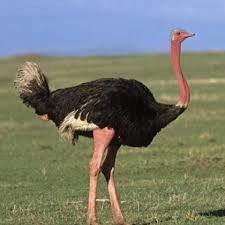
Tridactyl/Didactyl: Reduced toes (ostriches, some woodpeckers)
Raptorial: Strong talons (hawks, eagles)
Webbed/Lobed: Adapted for swimming (ducks, pelicans, grebes)
Bird Vision and Brain
Birds possess the largest eyes relative to body size in the animal kingdom, with advanced color vision (including UV) and well-developed visual and motor brain regions, supporting complex behaviors such as flight and hunting.
Flight Mechanics
Flight in birds is achieved through a combination of anatomical and physiological adaptations:
Wing shape and movement create lift (Bernoulli's Principle: increased speed of airflow over the wing reduces pressure, generating lift).
Large breast muscles power the wing stroke.
Hollow bones and efficient lungs reduce weight and maximize oxygen supply.
Parental Care and Reproduction
Birds exhibit elaborate parental care, with most species showing bi-parental care, complex nests, and the production of hard-shelled amniotic eggs. Derived reproductive traits include the absence of a urinary bladder, a single ovary in females, and seasonal enlargement of gonads.
Modern Bird Diversity and Radiation
Modern birds (Neornithes) underwent major adaptive radiation after the Cretaceous-Paleogene extinction, filling ecological niches left by extinct groups such as pterosaurs. Birds are often grouped into flightless birds, water birds, perching birds, and birds of prey.
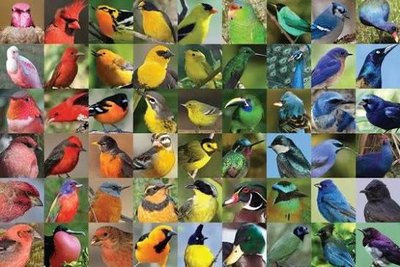
Specialized Birds: Examples
Penguins: Flightless, aquatic birds adapted to cold environments.
Hoatzin: Juveniles possess wing claws for climbing.
Hummingbirds: Capable of hovering and flying backward, with extremely high metabolic rates.
Migration and Navigation
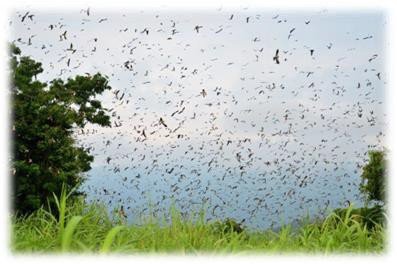
Many birds migrate thousands of kilometers annually, using mental maps based on topographical features, the sun, stars, wind direction, Earth's magnetic field, and odors. Migration routes are genetically programmed but can be fine-tuned by experience.
Flightless Birds
Flightless birds lack a sternal keel and have reduced pectoral muscles. Examples include ostriches and penguins. Penguins are adapted for swimming, using their wings as flippers.
Birds as Living Dinosaurs
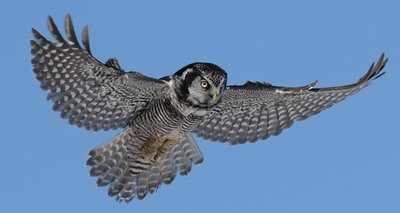
Birds are the only surviving lineage of dinosaurs, specifically derived from theropod ancestors. There are approximately 10,000–18,000 extant bird species, representing a remarkable evolutionary success story.
Summary Table: Key Bird Adaptations
Adaptation | Function |
|---|---|
Feathers | Flight, insulation, waterproofing, display |
Hollow bones | Reduce weight, maintain strength |
Enlarged sternum (keel) | Attachment for flight muscles |
Efficient lungs & air sacs | Maximize oxygen uptake |
Endothermy | Maintain constant body temperature |
Beak diversity | Adaptation to feeding strategies |
Specialized feet | Adaptation to locomotion and feeding |
Acute eyesight | Predation, navigation, foraging |
Parental care | Increased offspring survival |
Key Equations and Principles
Bernoulli's Principle (Lift in Flight):
Where P is pressure, \rho is fluid density, v is velocity, g is acceleration due to gravity, and h is height. In bird flight, faster airflow over the wing reduces pressure, generating lift.
Conclusion
Birds are a highly successful and diverse group of vertebrates, uniquely adapted for flight and occupying a wide range of ecological niches. Their evolutionary history, anatomical specializations, and behavioral adaptations make them a central topic in the study of vertebrate biology and evolution.
