 Back
Carbohydrate Structure and Function – General Biology Study Notes
Study Guide - Smart Notes
 Tailored notes based on your materials, expanded with key definitions, examples, and context.
Carbohydrate Structure and Function
Introduction to Carbohydrates
Carbohydrates are essential biomolecules composed of carbon, hydrogen, and oxygen. They serve as a primary energy source, structural material, and play key roles in cell recognition and signaling. Carbohydrates are classified based on their structure and functional groups.
Monosaccharides: Simple sugars, the building blocks of carbohydrates.
Disaccharides: Composed of two monosaccharides linked by glycosidic bonds.
Polysaccharides: Long chains of monosaccharide units, serving storage or structural roles.
General Structure of Carbohydrates
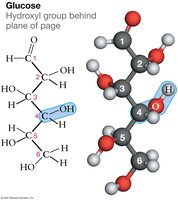
Carbohydrates contain a carbonyl group (C=O) and several hydroxyl groups (–OH). The arrangement of these groups determines the sugar's classification and properties.
Functions of Carbohydrates
Carbohydrates perform three primary functions in living organisms:
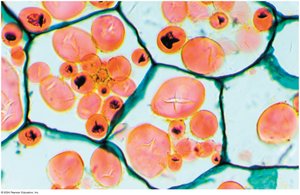
Energy Storage and Supply: Glucose is broken down to produce ATP, the universal energy currency of cells.
Structural Support: Polysaccharides like cellulose, chitin, and peptidoglycan provide rigidity to cell walls and exoskeletons.
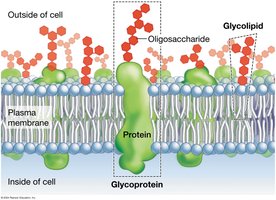
Cell Identity and Communication: Carbohydrates on cell surfaces (glycoproteins and glycolipids) act as recognition markers, crucial for immune response and cell-cell interactions.
Monosaccharide Structure and Classification
Aldose vs. Ketose
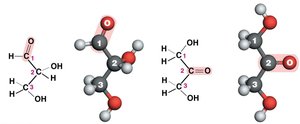
Monosaccharides are classified based on the position of their carbonyl group:
Aldose: Carbonyl group at the end of the carbon chain (an aldehyde).
Ketose: Carbonyl group within the carbon chain (a ketone).
Isomerism in Monosaccharides
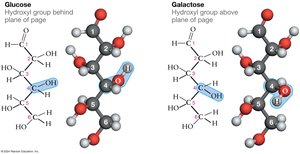
Isomers are molecules with the same molecular formula but different structures, leading to different biological functions. For example, glucose and galactose differ in the orientation of a single hydroxyl group, affecting their metabolism.
Ring Formation of Monosaccharides
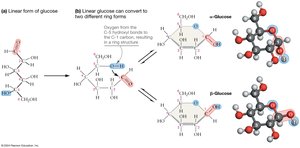
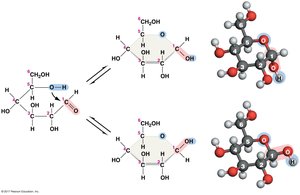
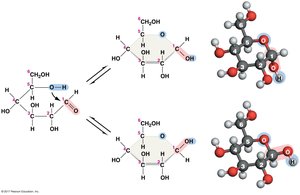
Monosaccharides often exist in ring forms in aqueous solutions. The ring forms when the next-to-last hydroxyl group reacts with the carbonyl carbon. The highest-numbered carbon remains outside the ring.
Alpha (α) vs. Beta (β) Anomers
The orientation of the hydroxyl group on the anomeric carbon (carbon 1 in glucose) determines whether the sugar is α or β:
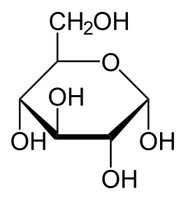
α-glucose: The –OH on the anomeric carbon is on the opposite side of the ring from the CH2OH group.
β-glucose: The –OH on the anomeric carbon is on the same side as the CH2OH group.
Disaccharides and Glycosidic Linkages
Formation of Glycosidic Bonds
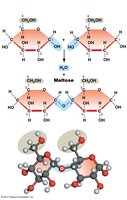
Disaccharides are formed when two monosaccharides are joined by a glycosidic linkage, a covalent bond formed via a dehydration reaction. The linkage is named based on the carbons involved and the configuration (α or β).
Example: Maltose is formed by an α-1,4-glycosidic linkage between two α-glucose molecules.
Polysaccharides: Structure and Function
Starch and Glycogen
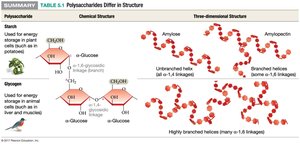
Starch (plants) and glycogen (animals) are storage polysaccharides composed of α-glucose units linked mainly by α-1,4-glycosidic bonds, with branching via α-1,6 linkages.
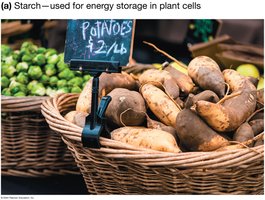
Starch: Energy storage in plants; consists of amylose (unbranched) and amylopectin (branched).
Glycogen: Energy storage in animals; highly branched structure for rapid mobilization of glucose.
Cellulose
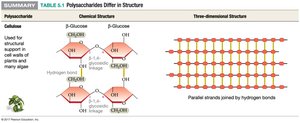
Cellulose is a structural polysaccharide found in plant cell walls, composed of β-glucose units linked by β-1,4-glycosidic bonds. The parallel strands are stabilized by hydrogen bonds, providing rigidity and strength.
Chitin and Peptidoglycan
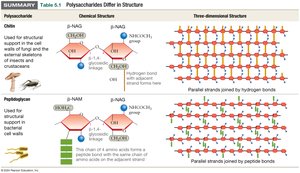
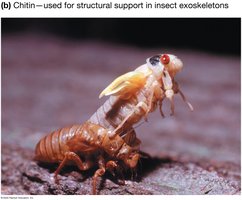
Chitin is a structural polysaccharide in fungal cell walls and arthropod exoskeletons, composed of N-acetylglucosamine (NAG) units. Peptidoglycan is found in bacterial cell walls, consisting of alternating NAG and N-acetylmuramic acid (NAM) units, cross-linked by peptides.
Carbohydrates as Energy Sources
Glucose vs. Fatty Acids
Glucose is the preferred energy source for most cells due to its rapid metabolism via glycolysis, which can occur anaerobically. Fatty acids yield more energy per gram but require oxygen and are metabolized more slowly.
Glucose: 4 kcal/g; water-soluble; used by all cells, especially red blood cells.
Stearic acid (fat): 9 kcal/g; more reduced carbons, higher energy content, but less accessible for quick energy needs.

Carbohydrates in Cell Recognition
Cell-Surface Carbohydrates and Identity
Carbohydrates attached to proteins and lipids on the cell surface (glycoproteins and glycolipids) serve as recognition markers. These markers are critical for immune response, blood group determination, and cell-cell communication.
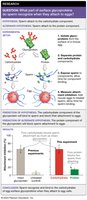
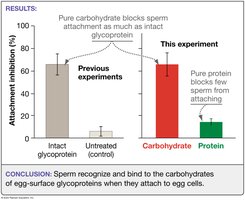
Experimental Evidence: Sperm-Egg Recognition
Experiments show that sperm recognize and bind to carbohydrates on the egg cell's surface glycoproteins. Pure carbohydrate can inhibit sperm attachment as effectively as intact glycoprotein, while pure protein does not, indicating the key role of carbohydrates in cell recognition.
Summary Table: Major Polysaccharides
Polysaccharide | Monomer | Linkage | Function | Example |
|---|---|---|---|---|
Starch | α-glucose | α-1,4 and α-1,6 | Energy storage (plants) | Potatoes, grains |
Glycogen | α-glucose | α-1,4 and α-1,6 | Energy storage (animals) | Liver, muscle |
Cellulose | β-glucose | β-1,4 | Structural support (plants) | Plant cell walls |
Chitin | N-acetylglucosamine | β-1,4 | Structural support (fungi, arthropods) | Fungal cell walls, insect exoskeletons |
Peptidoglycan | NAG & NAM | β-1,4 (with peptide cross-links) | Structural support (bacteria) | Bacterial cell walls |
Key Equations and Concepts
General formula for carbohydrates:
Glycosidic bond formation:
ATP production from glucose:
Additional info: The notes above expand on the original content by providing definitions, examples, and a summary table for clarity and completeness. All images included are directly relevant to the adjacent explanations and reinforce the educational content.
