 Back
Carbohydrates and Lipids: Structure, Classification, and Biological Roles
Study Guide - Smart Notes
 Tailored notes based on your materials, expanded with key definitions, examples, and context.
Carbohydrates
Classification of Carbohydrates
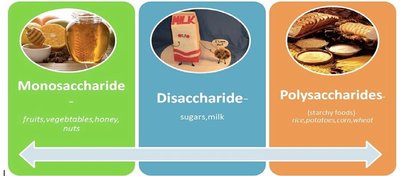
Carbohydrates are organic molecules composed of carbon, hydrogen, and oxygen, and are classified based on the number of sugar units they contain. They serve as energy sources and structural components in living organisms.
Monosaccharides: Single sugar units; simple carbohydrates. Examples include glucose, galactose, and fructose.
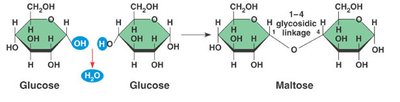
Disaccharides: Two sugar units; formed by joining two monosaccharides via dehydration reactions. Examples include lactose, sucrose, and maltose.
Polysaccharides: Many sugar units; complex carbohydrates. Examples include starch, glycogen, and cellulose.
Monosaccharides: Structure and Properties
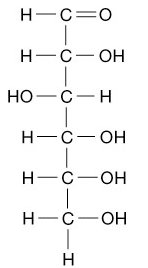
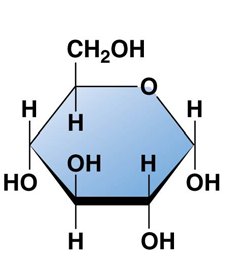
Monosaccharides are the simplest form of carbohydrates and cannot be broken down into smaller sugars. Their carbon skeletons vary in length, typically ranging from three to seven carbon atoms. The general formula is , with a carbon:hydrogen:oxygen ratio of 1:2:1.
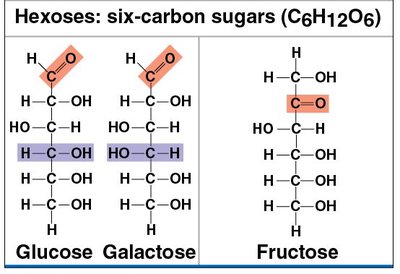
Hexoses: Six-carbon sugars, such as glucose, galactose, and fructose.
Isomers: Monosaccharides with the same chemical formula but different structural arrangements.
Monosaccharide Isomers
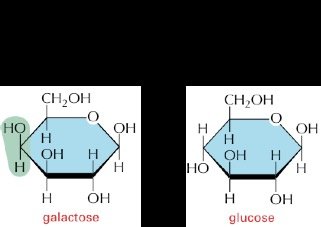
Isomers are molecules with the same molecular formula but different structural arrangements. Glucose, galactose, and fructose are isomers of C6H12O6, differing in the position of functional groups.
Formation of Disaccharides
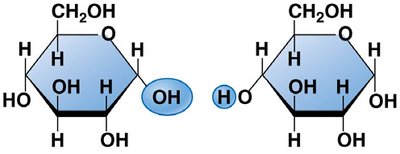
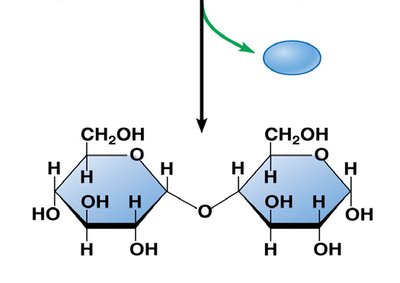
Disaccharides are formed when two monosaccharides join via a dehydration reaction, resulting in a glycosidic linkage. This process releases a molecule of water.
Glycosidic linkage: Covalent bond between two monosaccharides.
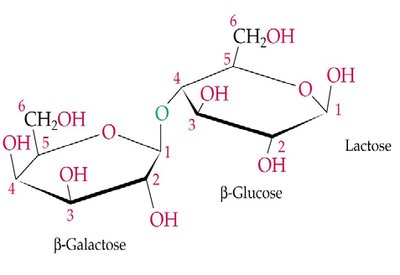
Examples: Lactose (glucose + galactose), sucrose (glucose + fructose), maltose (glucose + glucose).
Polysaccharides: Structure and Function
Polysaccharides are long chains of monosaccharide units linked by glycosidic bonds. Their structure and function depend on the type of sugar monomers and the positions of linkages.
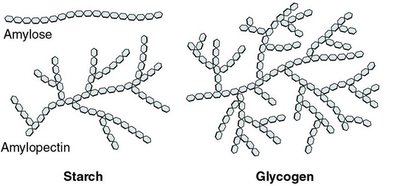
Starch: Energy storage in plants; composed of amylose (unbranched) and amylopectin (branched).
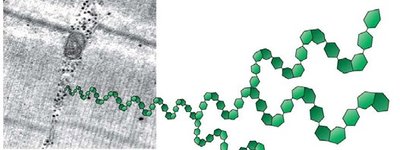
Glycogen: Energy storage in animals; highly branched structure.
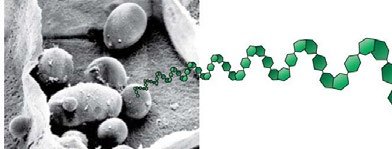
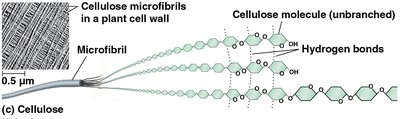
Cellulose: Structural component in plant cell walls; unbranched and forms microfibrils via hydrogen bonding.
Biochemical Roles of Carbohydrates
Carbohydrates play several essential roles in living organisms:
Energy: Immediate source of fuel for cellular processes.
Energy storage: Stored as glycogen in animals and starch in plants.
Structural molecules: Cellulose in plants provides rigidity; chitin in fungi and arthropods.
Supply carbon: Used for synthesis of other biomolecules.

Lipids
Classification and Properties of Lipids
Lipids are a diverse group of hydrophobic molecules that do not form polymers. They are insoluble in water and serve as energy storage, structural components, and signaling molecules.
Triglycerides: Fats and oils; storage of energy, insulation, and protection.
Phospholipids: Major component of cell membranes; amphiphilic nature.
Steroids: Cholesterol and hormones; four fused ring structure.

Triglycerides: Structure and Function
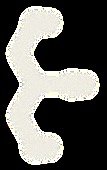
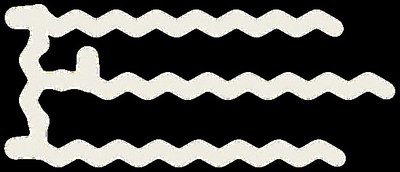
Triglycerides consist of a glycerol molecule joined to three fatty acids via dehydration reactions. They are the most common type and storage unit of lipids.
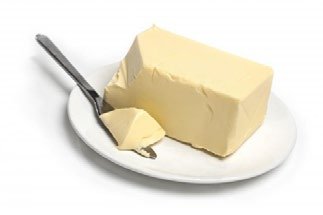
Fats: Solid at room temperature; rich in saturated fatty acids.
Oils: Liquid at room temperature; rich in unsaturated fatty acids.

Saturated vs. Unsaturated Fatty Acids
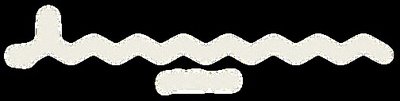
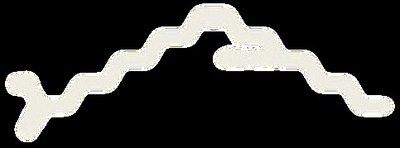
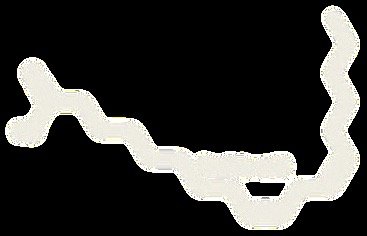
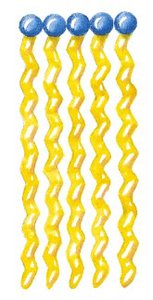
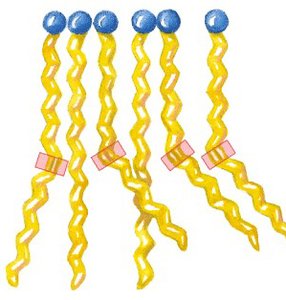
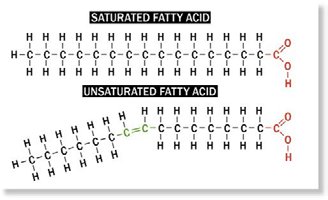
Fatty acids can be saturated (no double bonds) or unsaturated (one or more double bonds). This affects their physical properties and biological roles.
Saturated fatty acids: Pack tightly, solid at room temperature, high melting point.
Unsaturated fatty acids: Kinked, pack loosely, liquid at room temperature, low melting point.


Biological Functions of Fats
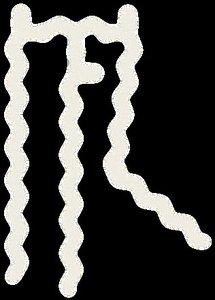
Fats are not just energy storage molecules; they also cushion organs, insulate the body, supply essential fatty acids, carry fat-soluble vitamins, and are necessary for healthy skin, eyesight, and brain development.
Essential Fatty Acids (EFAs)
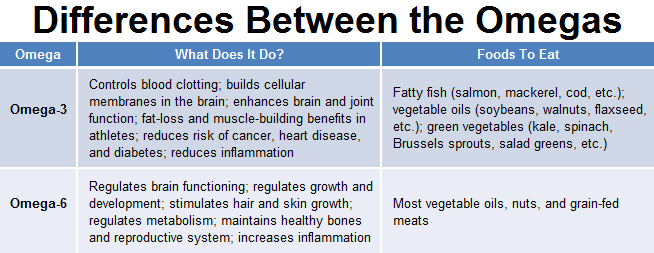
EFAs, such as omega-3 and omega-6 fatty acids, are not synthesized by the human body and must be obtained from the diet. They are crucial for normal growth and cardiovascular health.
Omega | What Does It Do? | Foods To Eat |
|---|---|---|
Omega-3 | Controls blood clotting; builds cellular membranes in the brain; enhances brain and joint function; reduces risk of cancer, heart disease, and diabetes; reduces inflammation | Fatty fish (salmon, mackerel, cod, etc.); vegetable oils (soybeans, walnuts, flaxseed, etc.); green vegetables (kale, spinach, Brussels sprouts, salad greens, etc.) |
Omega-6 | Regulates brain functioning; regulates growth and development; stimulates hair and skin growth; regulates metabolism; maintains healthy bones and reproductive system; increases inflammation | Most vegetable oils, nuts, and grain-fed meats |
Dietary Fats and Health
Processed fats, especially trans fats and overconsumed saturated fats, can contribute to cardiovascular disease. A healthy diet includes both unsaturated and saturated fats from natural sources.
Trans Fats and Hydrogenation
Trans fats are produced by hydrogenation, which adds hydrogen to unsaturated fats, converting them to saturated fats. This process increases bad cholesterol levels and is being phased out of the food market.
Phospholipids: Structure and Function
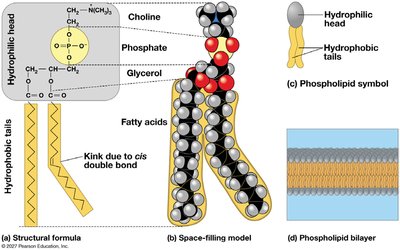
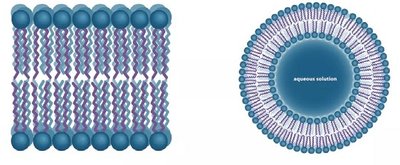
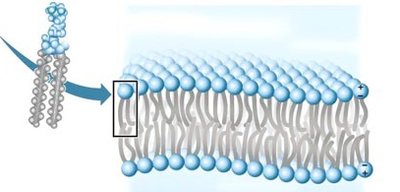
Phospholipids are composed of two fatty acids, a glycerol, and a polar group. They are amphiphilic, with hydrophobic tails and a hydrophilic head, and form the basis of cell membranes.
Bilayer arrangement: Hydrophobic tails face inward, hydrophilic heads face outward.
Role: Structural component of cell membranes, enabling compartmentalization and selective permeability.

Steroids: Structure and Function
Steroids are lipids with a carbon skeleton of four fused rings. Cholesterol is the most common steroid in humans, giving structure to cell membranes and serving as a precursor to steroid hormones.
Sex hormones: Androgens, estrogens, and progesterone.
Function: Regulation of physiological processes, including reproduction and metabolism.
Summary of Key Concepts
Carbohydrates
Monosaccharides, disaccharides, and polysaccharides differ in structure and function.
Polysaccharides serve as energy storage (starch, glycogen) and structural molecules (cellulose).
Carbohydrates are essential for energy, structure, and biosynthesis.
Lipids
Triglycerides, phospholipids, and steroids are the main classes of lipids.
Fatty acids can be saturated or unsaturated, affecting physical properties and health impacts.
Phospholipids form cell membranes; steroids regulate physiological functions.
Vocabulary
Carbohydrate
Glycosidic linkage
Glycogen
Starch
Cellulose
Mono / Di / Poly saccharide
Lipid
Triglyceride
Fatty Acids
Trans Fat
Study Guide Questions
List and recognize the four major classes of macromolecules. Name their monomers and polymers.
Distinguish between the names and structures of various monosaccharides, disaccharides, and polysaccharides.
Name the 3 different polysaccharides discussed in lecture. Which types of organisms are they each found in? How do they differ in function?
What roles do carbohydrates play in living organisms?
How do plants store carbohydrates for energy? Animals?
What are the 3 primary types of lipids? Name cellular examples of each.
How does the structure of a phospholipid differ from a triglyceride? How does its role in a cell differ?
Name 3 common steroids. What is the most common steroid in humans? What role does it play in physiology?
What is the most common energy storage unit of lipids?
Distinguish between fats and oils, and the chemical properties that differ between them.
What is the difference between a fat and a fatty acid?
How do saturated and unsaturated fats differ in both structure and in their physical properties?
Additional info: Academic context was added to clarify the structure, function, and classification of carbohydrates and lipids, as well as their roles in living organisms.
