 Back
Carbohydrates: Structure, Function, and Biological Importance
Study Guide - Smart Notes
 Tailored notes based on your materials, expanded with key definitions, examples, and context.
Carbohydrates: Structure, Function, and Biological Importance
Overview of Carbohydrates
Carbohydrates are essential biomolecules that serve as energy sources and structural components in living organisms. They are classified based on the number of sugar units: monosaccharides, disaccharides, and polysaccharides.
Monosaccharides: Simple Sugars
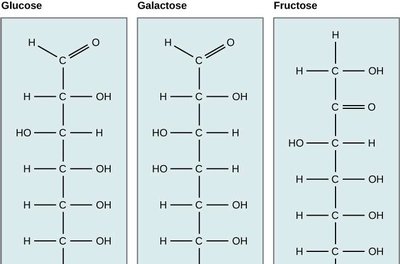
Monosaccharides are the simplest form of carbohydrates, consisting of a single sugar unit. They are classified by the number of carbon atoms (triose, pentose, hexose) and the type of carbonyl group (aldose or ketose).
Aldose: Contains an aldehyde group (e.g., glyceraldehyde).
Ketose: Contains a ketone group (e.g., dihydroxyacetone).
Common Monosaccharides: Glucose, galactose, and fructose are important hexoses in biology.




Ring and Linear Forms of Monosaccharides
Monosaccharides can exist in both linear and ring forms. In aqueous solutions, the ring form is predominant due to the reaction between the carbonyl and hydroxyl groups within the molecule.
Glucose: Can cyclize to form alpha (α) and beta (β) anomers.
Ribose and Fructose: Also form ring structures important for nucleic acids and metabolism.

Disaccharides: Formation and Breakdown
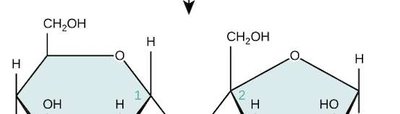
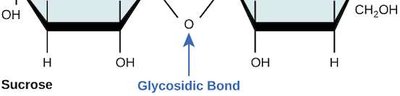
Disaccharides are formed by the covalent bonding of two monosaccharides through a dehydration reaction, resulting in a glycosidic bond. Hydrolysis of disaccharides breaks this bond, releasing the monosaccharide units.
Dehydration Reaction: Removal of a water molecule to form a glycosidic bond.
Hydrolysis: Addition of water to break the glycosidic bond.
Examples: Sucrose (glucose + fructose), lactose (glucose + galactose), maltose (glucose + glucose).



Polysaccharides: Storage and Structural Carbohydrates
Polysaccharides are long chains of monosaccharide units linked by glycosidic bonds. They serve as energy storage (starch, glycogen) or structural components (cellulose, chitin).
Starch: Storage polysaccharide in plants, composed of amylose (unbranched) and amylopectin (branched).
Glycogen: Storage polysaccharide in animals, highly branched.
Cellulose: Structural polysaccharide in plant cell walls, composed of β-glucose units.



Biological Importance of Carbohydrates
Carbohydrates are vital for energy metabolism, cellular structure, and signaling. They are involved in processes such as cellular respiration, photosynthesis, and cell recognition.
Energy Source: Glucose is the primary energy source for most organisms.
Structural Role: Cellulose provides rigidity to plant cell walls; chitin forms exoskeletons in arthropods.
Cell Communication: Glycoproteins and glycolipids on cell surfaces are involved in cell recognition and signaling.
Origin of Organic Molecules: Miller-Urey Experiment
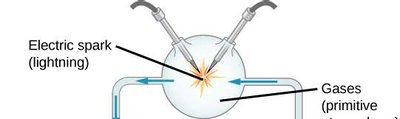
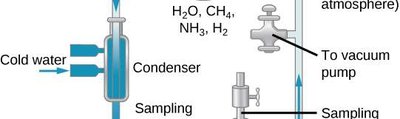
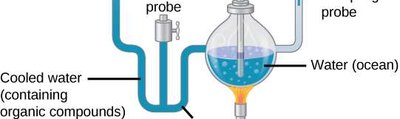
The Miller-Urey experiment demonstrated that organic molecules, including simple sugars, could be synthesized abiotically under conditions thought to resemble those of early Earth. This experiment provided evidence for the chemical origins of life.
Experimental Setup: Simulated early Earth atmosphere with water, methane, ammonia, and hydrogen; electric sparks mimicked lightning.
Results: Formation of amino acids and other organic compounds, supporting the hypothesis of abiotic synthesis of life's building blocks.
Summary Table: Classification of Carbohydrates
Type | Example(s) | Function |
|---|---|---|
Monosaccharide | Glucose, Fructose, Ribose | Energy source, building block |
Disaccharide | Sucrose, Lactose, Maltose | Transport, energy |
Polysaccharide | Starch, Glycogen, Cellulose | Storage, structure |
Key Equations
Dehydration Synthesis:
Hydrolysis:
