 Back
Carbohydrates: Structure, Types, and Functions
Study Guide - Smart Notes
 Tailored notes based on your materials, expanded with key definitions, examples, and context.
Carbohydrates: Structure, Types, and Functions
Overview of Carbohydrates
Carbohydrates are essential biomolecules composed of carbon (C), hydrogen (H), and oxygen (O). They serve as a primary energy source for living organisms and play structural and signaling roles in cells. Carbohydrates are classified based on their complexity into monosaccharides, disaccharides, oligosaccharides, and polysaccharides.
Classification of Carbohydrates
Simple Carbohydrates
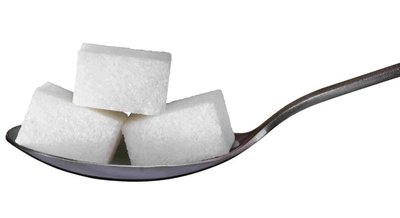
Monosaccharides: The simplest carbohydrates, consisting of a single sugar unit. Examples include glucose, fructose, and ribose.
Disaccharides: Composed of two monosaccharide units joined by a glycosidic bond. Examples include sucrose and lactose.
Complex Carbohydrates
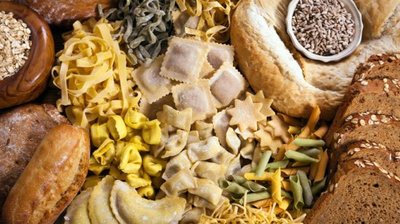
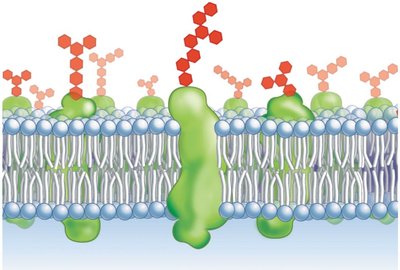
Oligosaccharides: Short chains of 3–10 monosaccharide units. Often found attached to proteins and lipids on cell surfaces, playing roles in cell recognition and signaling.
Polysaccharides: Long chains of monosaccharide units. Examples include starch, cellulose, and chitin.
Monosaccharides: Structure and Properties
Monosaccharides are the building blocks of carbohydrates. They typically contain 3–7 carbon atoms and are classified by the number of carbons (e.g., pentose for 5 carbons, hexose for 6 carbons). Common monosaccharides include glucose, galactose, and fructose.
Chemical Formula: General formula is (CH2O)n.
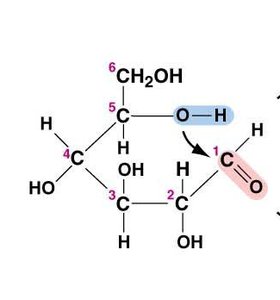
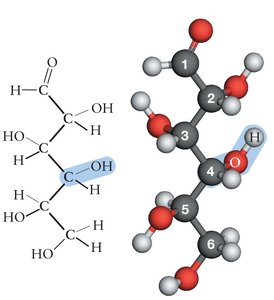
Functional Groups: Contain a carbonyl group (C=O) and multiple hydroxyl groups (–OH).
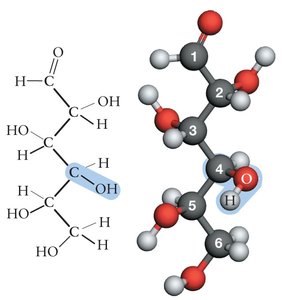
Ring and Linear Forms: Monosaccharides can exist in linear or ring forms; the ring form is predominant in aqueous solutions.
Isomerism in Monosaccharides
Structural Isomers: Monosaccharides with the same chemical formula but different structures (e.g., glucose and galactose).
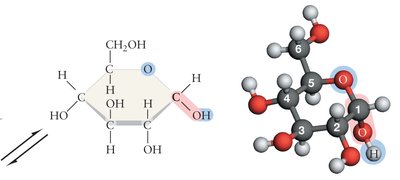
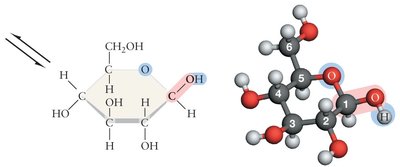
α and β Anomers: In ring form, the position of the hydroxyl group on the anomeric carbon (carbon 1) distinguishes α (down) and β (up) forms.
Monosaccharide Polymerization: Glycosidic Linkages
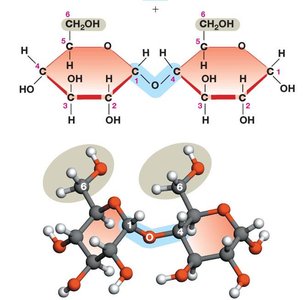
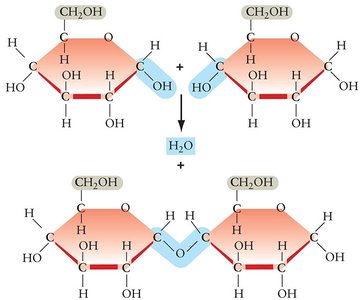
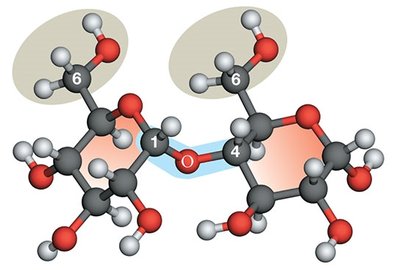
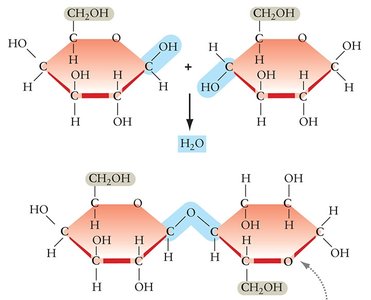
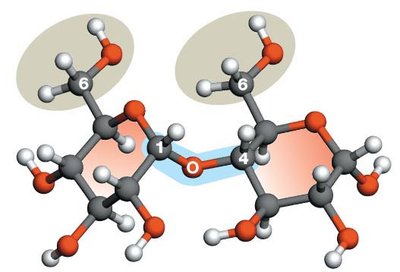
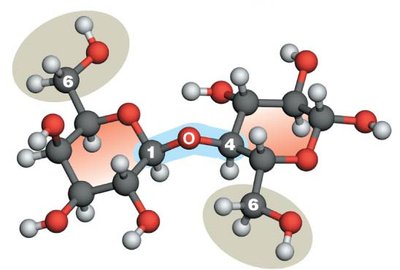
Monosaccharides are joined by glycosidic linkages through a dehydration reaction, forming disaccharides, oligosaccharides, or polysaccharides. The type of glycosidic bond (α or β) affects the structure and function of the resulting carbohydrate.
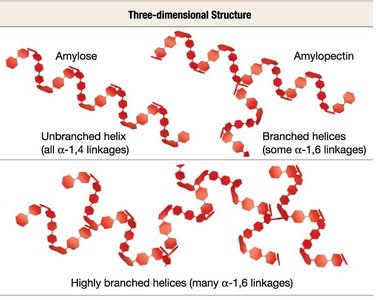
α-1,4 Glycosidic Linkage: Common in starch and glycogen; forms a helical structure.
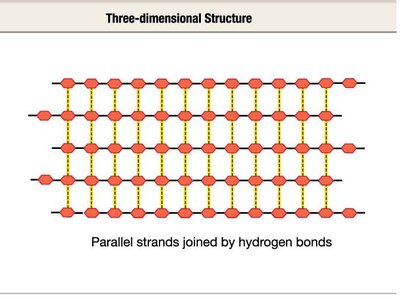
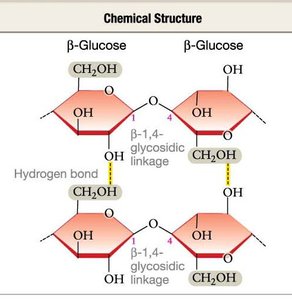
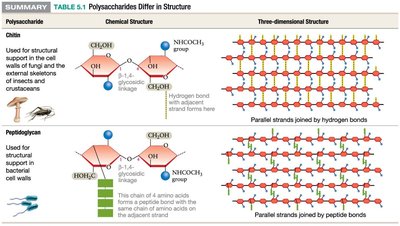
β-1,4 Glycosidic Linkage: Found in cellulose and chitin; forms straight, rigid structures.
Oligosaccharides and Glycoproteins
Oligosaccharides are often attached to proteins and lipids, forming glycoproteins and glycolipids. These molecules are crucial for cell-cell recognition, signaling, and immune responses.
Polysaccharides: Structure and Function
Polysaccharides are large, complex carbohydrates with diverse biological roles. Their structure determines their function in energy storage or providing structural support.
Storage Polysaccharides
Starch: The main storage polysaccharide in plants, composed of amylose (unbranched) and amylopectin (branched).
Glycogen: The main storage polysaccharide in animals, highly branched for rapid energy release.
Structural Polysaccharides
Cellulose: A major component of plant cell walls, composed of β-glucose units linked by β-1,4 glycosidic bonds. Provides rigidity and strength to plants.
Chitin: Found in the exoskeletons of arthropods and cell walls of fungi; similar to cellulose but with N-acetylglucosamine units.
Peptidoglycan: Found in bacterial cell walls; consists of sugar chains cross-linked by peptides.
Summary Table: Major Polysaccharides
Polysaccharide | Monomer | Linkage | Function | Location |
|---|---|---|---|---|
Starch | α-glucose | α-1,4 and α-1,6 | Energy storage | Plants |
Glycogen | α-glucose | α-1,4 and α-1,6 | Energy storage | Animals |
Cellulose | β-glucose | β-1,4 | Structural support | Plant cell walls |
Chitin | N-acetylglucosamine | β-1,4 | Structural support | Fungi, arthropods |
Peptidoglycan | Modified sugars + peptides | β-1,4 + peptide cross-links | Structural support | Bacteria |
Key Functions of Carbohydrates
Energy Storage: Starch and glycogen store energy for plants and animals, respectively.
Structural Support: Cellulose, chitin, and peptidoglycan provide rigidity to cell walls and exoskeletons.
Cell Recognition and Signaling: Oligosaccharides on cell surfaces are involved in cell-cell communication and immune responses.
Important Equations
General Formula for Monosaccharides:
Dehydration Reaction (Glycosidic Bond Formation):
Additional info: The diversity of carbohydrate structures allows for a wide range of biological functions, from energy metabolism to cellular communication and structural integrity in various organisms.
