 Back
Carbon and Life: pH, Buffers, and Functional Groups
Study Guide - Smart Notes
 Tailored notes based on your materials, expanded with key definitions, examples, and context.
pH and Buffers in Biological Systems
The pH Scale
The pH scale is a measure of the hydrogen ion concentration in a solution, defined as the negative logarithm of the H+ concentration. Lower pH values indicate higher acidity, while higher values indicate basicity.
Formula:
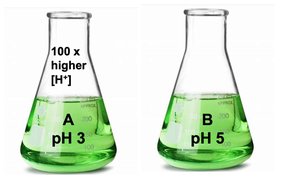
Each unit change in pH represents a tenfold change in [H+].
Example: pH 3 = M (1 mM) H+; pH 6 = M (1 μM) H+.
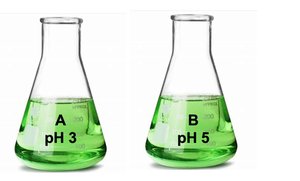
Comparison Example: Solution A (pH 3) has 100 times higher H+ concentration than Solution B (pH 5).
Buffers and Biological pH Stability
Buffers are substances that minimize changes in pH by absorbing or releasing H+ ions. They are essential for maintaining stable pH in cells and biological fluids.
Consist of a weak acid and its conjugate base.
Can donate or accept H+ as needed to resist pH changes.
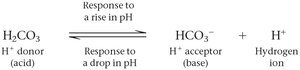
The carbonic acid-bicarbonate buffer system is crucial for maintaining blood pH at approximately 7.4.
Acidification and Ocean Chemistry
About 25% of anthropogenic CO2 is absorbed by the oceans, where it reacts with water to form carbonic acid, contributing to ocean acidification.
Reaction:
Ocean acidification threatens marine life by altering carbonate chemistry.

Carbon: The Backbone of Life
Importance of Carbon
Carbon is the central element in organic chemistry due to its ability to form four covalent bonds, allowing for a diversity of stable, complex molecules essential for life.
Organic compounds contain carbon and hydrogen (C-H bonds).
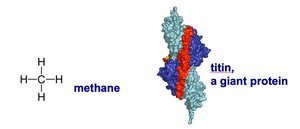
Range from simple molecules (e.g., methane) to large biomolecules (e.g., proteins).

Carbon Bonding and Structure
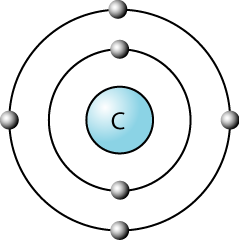
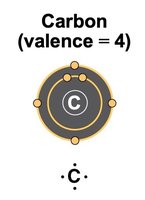
Carbon's four valence electrons allow it to form four covalent bonds, making it an ideal building block for complex molecules.
Can form single, double, or triple bonds.
Can bond with many elements, especially H, O, N, S, and P.

Orbital Hybridization
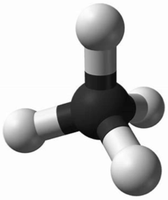
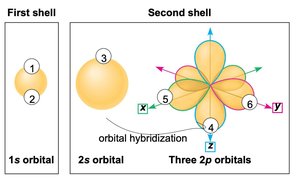
Orbital hybridization in carbon leads to four unpaired electrons, allowing for the formation of four equivalent bonds in a tetrahedral geometry.
Valence and Carbon Skeletons
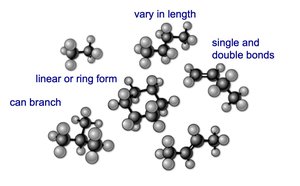
The valence of carbon (4) enables the formation of diverse carbon skeletons, which can vary in length, branching, and ring structure.
Hydrocarbons
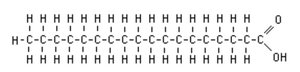
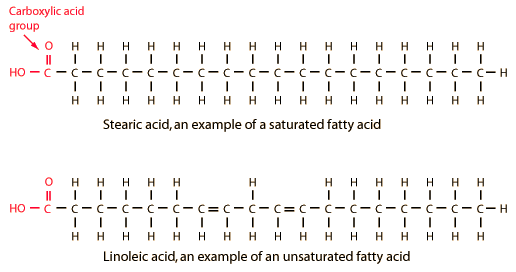
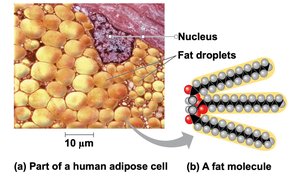
Hydrocarbons are organic molecules consisting only of carbon and hydrogen. They are nonpolar and can store large amounts of energy, making them important in biological molecules like fats.
Fatty acids are long hydrocarbon chains attached to a carboxyl group.
Isomers and Functional Groups
Isomers
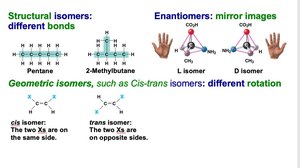
Isomers are compounds with the same molecular formula but different structures, resulting in different properties. Types include:
Structural isomers: Differ in covalent arrangement of atoms.
Geometric (cis-trans) isomers: Differ in spatial arrangement around a double bond.
Enantiomers: Mirror images due to an asymmetric carbon; important in pharmaceuticals as only one enantiomer is usually biologically active.
Enantiomers in Biology
Enantiomers can have drastically different effects in biological systems. For example, two enantiomers of a drug may have different biological activities.
Functional Groups
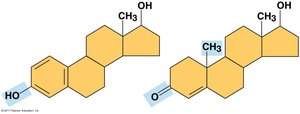
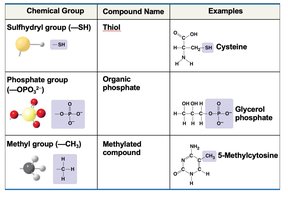
Functional groups are specific groups of atoms within molecules that have characteristic properties and chemical reactivity. They are key to the function of organic molecules in biology.
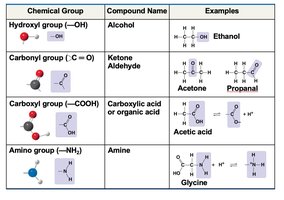
Common functional groups include hydroxyl, carbonyl, carboxyl, amino, sulfhydryl, phosphate, and methyl groups.
Chemical Group | Compound Name | Examples |
|---|---|---|
Hydroxyl (–OH) | Alcohol | Ethanol |
Carbonyl (C=O) | Ketone, Aldehyde | Acetone, Propanal |
Carboxyl (–COOH) | Carboxylic acid | Acetic acid |
Amino (–NH2) | Amine | Glycine |
Chemical Group | Compound Name | Examples |
|---|---|---|
Sulfhydryl (–SH) | Thiol | Cysteine |
Phosphate (–OPO32–) | Organic phosphate | Glycerol phosphate |
Methyl (–CH3) | Methylated compound | 5-Methylcytosine |
Summary: Understanding pH, buffers, the unique properties of carbon, isomerism, and functional groups is foundational for studying the chemistry of life and the structure and function of biomolecules.
