 Back
BackCarbon and the Molecular Diversity of Life & The Structure and Function of Large Biological Molecules
Study Guide - Smart Notes
 Tailored notes based on your materials, expanded with key definitions, examples, and context.
Carbon and the Molecular Diversity of Life
Organic Chemistry and the Origin of Life
Organic chemistry is the study of carbon-containing compounds, which are fundamental to all living organisms. The unique ability of carbon to form four covalent bonds allows for the creation of large, complex, and diverse molecules, making it the backbone of biological macromolecules.
Organic Compounds: Range from simple molecules like methane (CH4) to complex macromolecules such as proteins.
Stanley Miller's Experiment: Demonstrated that organic molecules could be synthesized abiotically under conditions thought to resemble those of early Earth, supporting the hypothesis that life could have originated from nonliving matter.
Major Elements of Life: Carbon (C), Hydrogen (H), Oxygen (O), Nitrogen (N), Sulfur (S), and Phosphorus (P) are common to all organisms, reflecting a shared evolutionary origin.

Carbon's Bonding Versatility
Carbon atoms can form diverse molecules by bonding to four other atoms, including other carbons, resulting in a variety of molecular skeletons and functional groups.
Tetrahedral Geometry: When carbon forms four single bonds, the molecule adopts a tetrahedral shape.
Carbon Skeletons: Can be straight, branched, or arranged in rings, and may include double bonds.
Hydrocarbons: Molecules consisting only of carbon and hydrogen; they are hydrophobic and can store large amounts of energy.
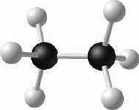
Isomers and Molecular Diversity
Isomers are compounds with the same molecular formula but different structures, leading to different properties.
Structural Isomers: Differ in the covalent arrangement of atoms.
Cis-Trans Isomers: Differ in spatial arrangement around double bonds.
Enantiomers: Mirror images due to an asymmetric carbon; often only one isomer is biologically active.
Functional Groups and Molecular Function
Chemical groups attached to carbon skeletons determine the properties and reactivity of organic molecules. The seven most important functional groups in biology are:
Hydroxyl (–OH): Alcohols; polar, forms hydrogen bonds.
Carbonyl (C=O): Ketones and aldehydes; found in sugars.
Carboxyl (–COOH): Carboxylic acids; acts as an acid.
Amino (–NH2): Amines; acts as a base.
Sulfhydryl (–SH): Thiols; forms disulfide bonds in proteins.
Phosphate (–OPO32–): Organic phosphates; involved in energy transfer (e.g., ATP).
Methyl (–CH3): Methylated compounds; affects gene expression.
ATP: The Energy Currency of the Cell
Adenosine triphosphate (ATP) is a nucleotide that stores potential energy for cellular processes. Hydrolysis of ATP releases energy by converting it to ADP and inorganic phosphate.
The Structure and Function of Large Biological Molecules
Classes of Biological Molecules
There are four major classes of large biological molecules:
Carbohydrates – Energy storage and structural support
Lipids – Energy storage, membrane structure, signaling
Proteins – Catalysis, structure, transport, signaling, defense
Nucleic Acids – Storage and transmission of genetic information
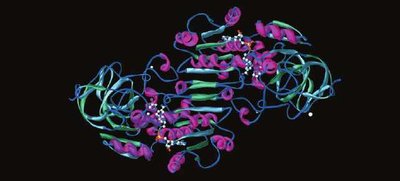
Polymers and Monomers
Most biological macromolecules (except lipids) are polymers built from monomers via dehydration reactions and broken down by hydrolysis.
Dehydration Reaction: Joins monomers by removing water.
Hydrolysis: Breaks polymers into monomers by adding water.
Carbohydrates
Carbohydrates include monosaccharides (simple sugars), disaccharides, and polysaccharides.
Monosaccharides: Glucose, fructose, galactose; serve as fuel and building blocks.
Disaccharides: Sucrose, lactose, maltose; formed by glycosidic linkages.
Polysaccharides: Starch (plants), glycogen (animals), cellulose (plant cell walls), chitin (exoskeletons, fungal cell walls).

Lipids
Lipids are hydrophobic molecules, including fats, phospholipids, and steroids.
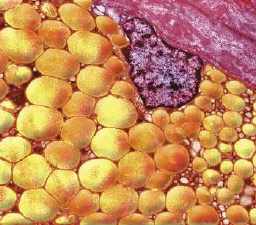
Fats (Triglycerides): Glycerol + 3 fatty acids; energy storage.
Saturated vs. Unsaturated Fats: Saturated fats have no double bonds (solid at room temp); unsaturated fats have cis double bonds (liquid at room temp).
Phospholipids: Glycerol + 2 fatty acids + phosphate group; form cell membranes.
Steroids: Four fused rings; cholesterol is a key component of membranes and precursor to hormones.
Proteins
Proteins are polymers of amino acids (20 types), joined by peptide bonds. They have diverse functions and complex structures.
Levels of Protein Structure:
Primary: Amino acid sequence
Secondary: Alpha helices and beta sheets (hydrogen bonding)
Tertiary: 3D folding due to side chain interactions
Quaternary: Association of multiple polypeptides
Denaturation: Loss of structure and function due to environmental changes.
Enzymes: Proteins that catalyze biochemical reactions.



Nucleic Acids
Nucleic acids (DNA and RNA) are polymers of nucleotides, which consist of a sugar, phosphate group, and nitrogenous base.
DNA: Double helix, stores genetic information, bases: A, T, C, G.
RNA: Single-stranded, involved in gene expression, bases: A, U, C, G.
Base Pairing: A–T (DNA), A–U (RNA), C–G.
Gene Expression: DNA → RNA → Protein.
Genomics and Proteomics
Advances in DNA sequencing have enabled genomics (study of whole genomes) and proteomics (study of protein sets), transforming biological research and applications in evolution, medicine, and ecology.
Table: Comparison of Major Biological Molecules
Class | Monomer | Polymer | Bond Type | Function |
|---|---|---|---|---|
Carbohydrates | Monosaccharide | Polysaccharide | Glycosidic linkage | Energy, structure |
Lipids | Fatty acid, glycerol | Triglyceride, phospholipid | Ester linkage | Energy, membranes |
Proteins | Amino acid | Polypeptide | Peptide bond | Catalysis, structure, transport |
Nucleic Acids | Nucleotide | Polynucleotide | Phosphodiester bond | Genetic information |
Additional info: This guide covers the core concepts from Chapters 4 and 5 of a college-level biology course, focusing on the chemical basis of life and the structure and function of biological macromolecules. It is suitable for exam preparation and foundational understanding in biochemistry and cell biology.
