 Back
Carbon and the Molecular Diversity of Life: Organic Molecules and Functional Groups
Study Guide - Smart Notes
 Tailored notes based on your materials, expanded with key definitions, examples, and context.
Carbon and Molecular Diversity: Organic Molecules
Introduction to Organic Molecules
Organic molecules are the foundation of biological systems, characterized by the presence of carbon atoms bonded to hydrogen, oxygen, nitrogen, and other elements. The diversity of organic molecules underlies the complexity of life, with four fundamental categories: carbohydrates, lipids, proteins, and nucleic acids.
Structure and Bonding of Carbon
Valence and Bonding Patterns
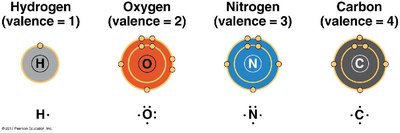
Carbon atoms have four valence electrons, allowing them to form up to four covalent bonds with other atoms. This property enables carbon to serve as the backbone for a vast array of molecular structures, including chains, rings, and branched molecules.
Hydrocarbons
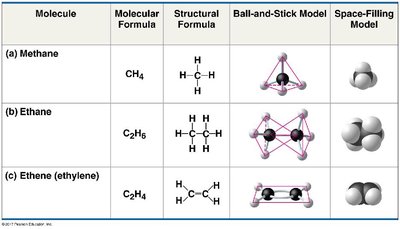
Hydrocarbons are organic molecules consisting entirely of carbon and hydrogen. They can vary in length, branching, and the presence of double or triple bonds, contributing to molecular diversity.
Nomenclature and Variation in Organic Molecules
Number of Carbon Atoms and Bond Types
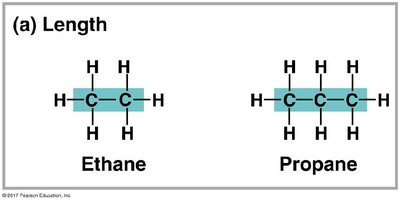
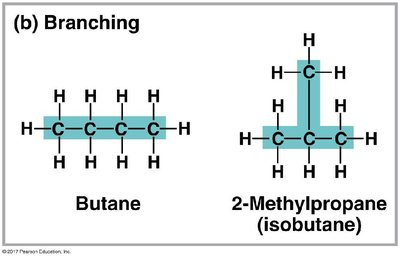
The nomenclature of organic molecules is based on the number of carbon atoms and the types of bonds (single, double, triple) between them. The structure of hydrocarbons can be linear, branched, or cyclic.
Length: Molecules can have varying numbers of carbon atoms (e.g., ethane vs. propane).
Branching: Carbon chains may be unbranched or branched (e.g., butane vs. isobutane).
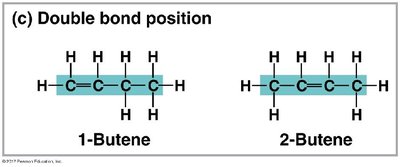
Double Bond Position: The location of double bonds affects molecular properties (e.g., 1-butene vs. 2-butene).
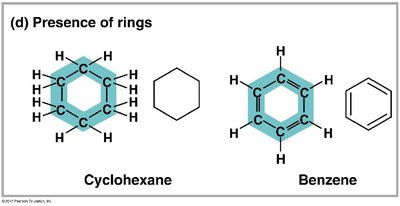
Rings: Some hydrocarbons form rings (e.g., cyclohexane, benzene).
Isomers: Structural Diversity
Types of Isomers
Isomers are molecules with the same chemical formula but different structures, leading to different properties. There are three main types:
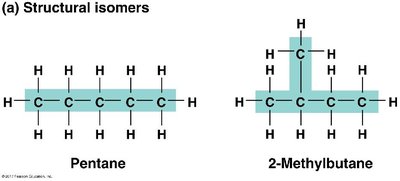
Structural Isomers: Differ in the covalent arrangement of atoms (e.g., pentane vs. 2-methylbutane).
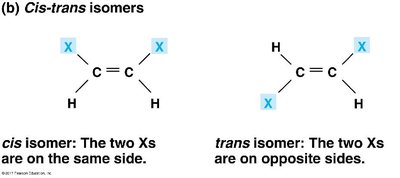
Cis-Trans (Geometric) Isomers: Differ in spatial arrangement around a double bond (cis: same side, trans: opposite sides).
Enantiomers: Mirror-image isomers that are non-superimposable, often with different biological activities.
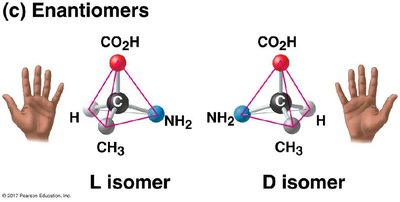
Biological Importance of Isomers
Enantiomers can have dramatically different effects in biological systems. For example, only one enantiomer of a drug may be biologically active.
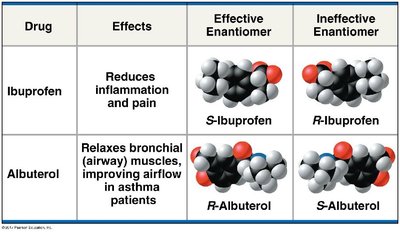
Functional Groups in Organic Molecules
Definition and Importance
Functional groups are specific groups of atoms within molecules that confer characteristic chemical properties and reactivity. They are critical in determining the behavior of organic molecules in biological systems.
Participate in chemical reactions
Confer specific properties (e.g., polarity, acidity, basicity)
Determine molecular interactions and biological function
Major Functional Groups
Functional Group | Structure | Properties & Example |
|---|---|---|
Hydroxyl (–OH) |
| Polar, forms hydrogen bonds; found in alcohols (e.g., ethanol) |
Carbonyl (C=O) |
| Found in ketones and aldehydes; increases reactivity |
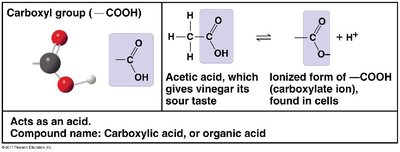
Carboxyl (–COOH) |
| Acts as an acid; found in amino acids and fatty acids |
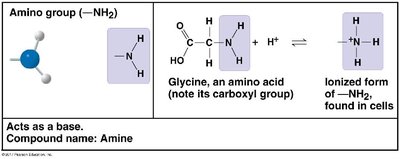
Amino (–NH2) |
| Acts as a base; found in amino acids |
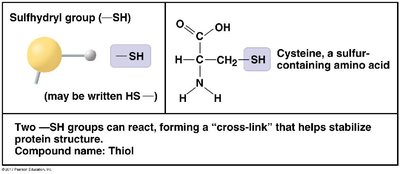
Sulfhydryl (–SH) |
| Forms disulfide bonds; found in some amino acids (e.g., cysteine) |
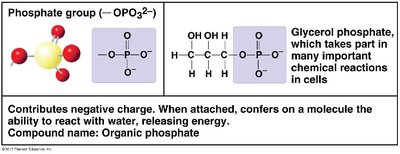
Phosphate (–OPO32−) |
| Contributes negative charge; important in energy transfer (e.g., ATP) |
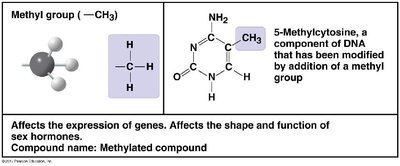
Methyl (–CH3) |
| Affects gene expression; found in DNA and hormones |
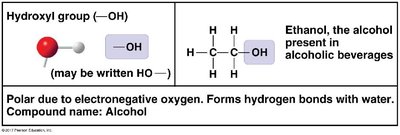
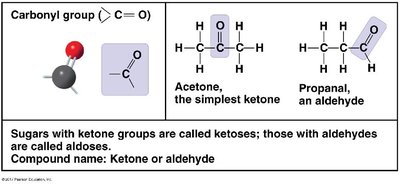
Functional Groups and Biological Activity
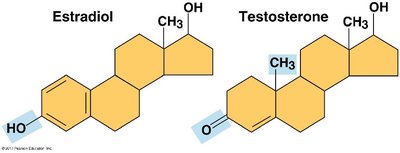
The presence and arrangement of functional groups determine the function of biological molecules. For example, the difference between the hormones estradiol and testosterone is due to the presence of different functional groups.
Shape Determines Function
Molecular Shape and Biological Function
The three-dimensional shape of a molecule, determined by the arrangement of its atoms and functional groups, is critical for its biological function. Even small changes in structure can lead to significant differences in activity, as seen with isomers and functional group modifications.
Summary Table: Functional Groups and Their Properties
Group | Structure | Properties | Example |
|---|---|---|---|
Hydroxyl | –OH | Polar, forms H-bonds | Alcohols |
Carbonyl | C=O | Polar, reactive | Ketones, Aldehydes |
Carboxyl | –COOH | Acidic | Amino acids, Fatty acids |
Amino | –NH2 | Basic | Amino acids |
Sulfhydryl | –SH | Forms disulfide bonds | Cysteine |
Phosphate | –OPO32− | Negative charge, energy transfer | ATP, DNA |
Methyl | –CH3 | Gene expression | DNA, hormones |
Additional info: The diversity of organic molecules is essential for the complexity and specificity of biological processes. Understanding the structure, bonding, and functional groups of organic molecules is foundational for further study in biochemistry, cell biology, and physiology.
